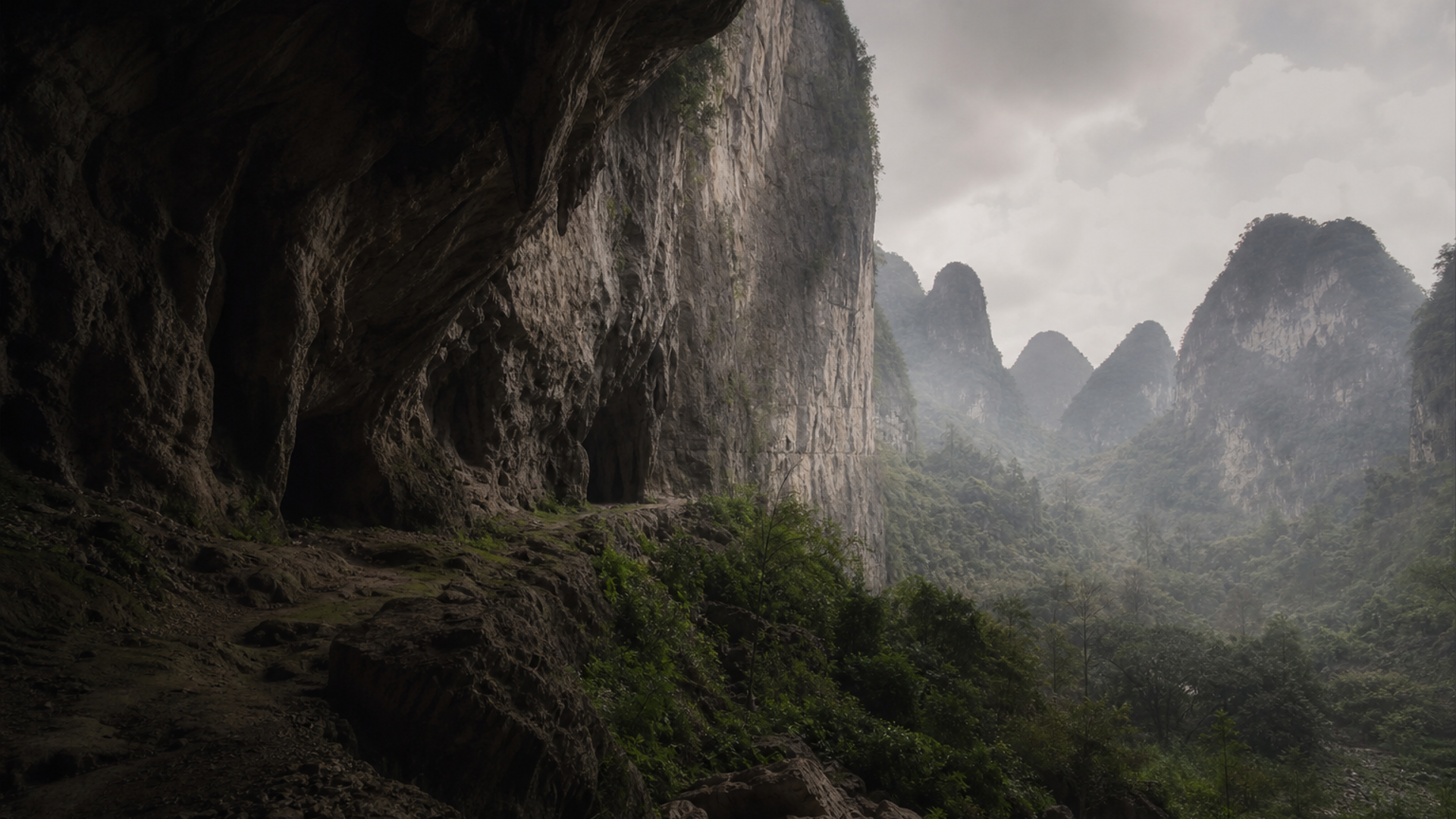
Archaeological inference, regional ethnography, and landscape archaeology combine to suggest how people who used Banda Cave may have lived. Across Guangxi in the early medieval period, settlements commonly exploited wet-rice terraces in valleys, supplemented by upland horticulture, hunting, fishing, and the gathering of forest resources. Social life was likely organized at the village and kin-group scale, with seasonal movements between riverine fields and wooded slopes.
Cave interment can reflect practical choices—rock shelter, protection from floodplain disturbance—or social signaling, but the Banda Cave assemblage lacks a large published grave inventory to say whether burials were everyday community graves or reserved for particular lineages or statuses. Material culture from contemporary Guangxi sites often shows interaction with broader southern Chinese networks: trade items, shared ceramic forms, and stylistic echoes of lowland cultures.
Archaeobotanical and zooarchaeological datasets from the wider region document rice cultivation and riverine resource use, but whether the Banda individuals practiced identical economies is not yet proven. The portrait that emerges is of resilient communities negotiating a rich, mobile hinterland beneath the growing reach of Sui–Tang polities.