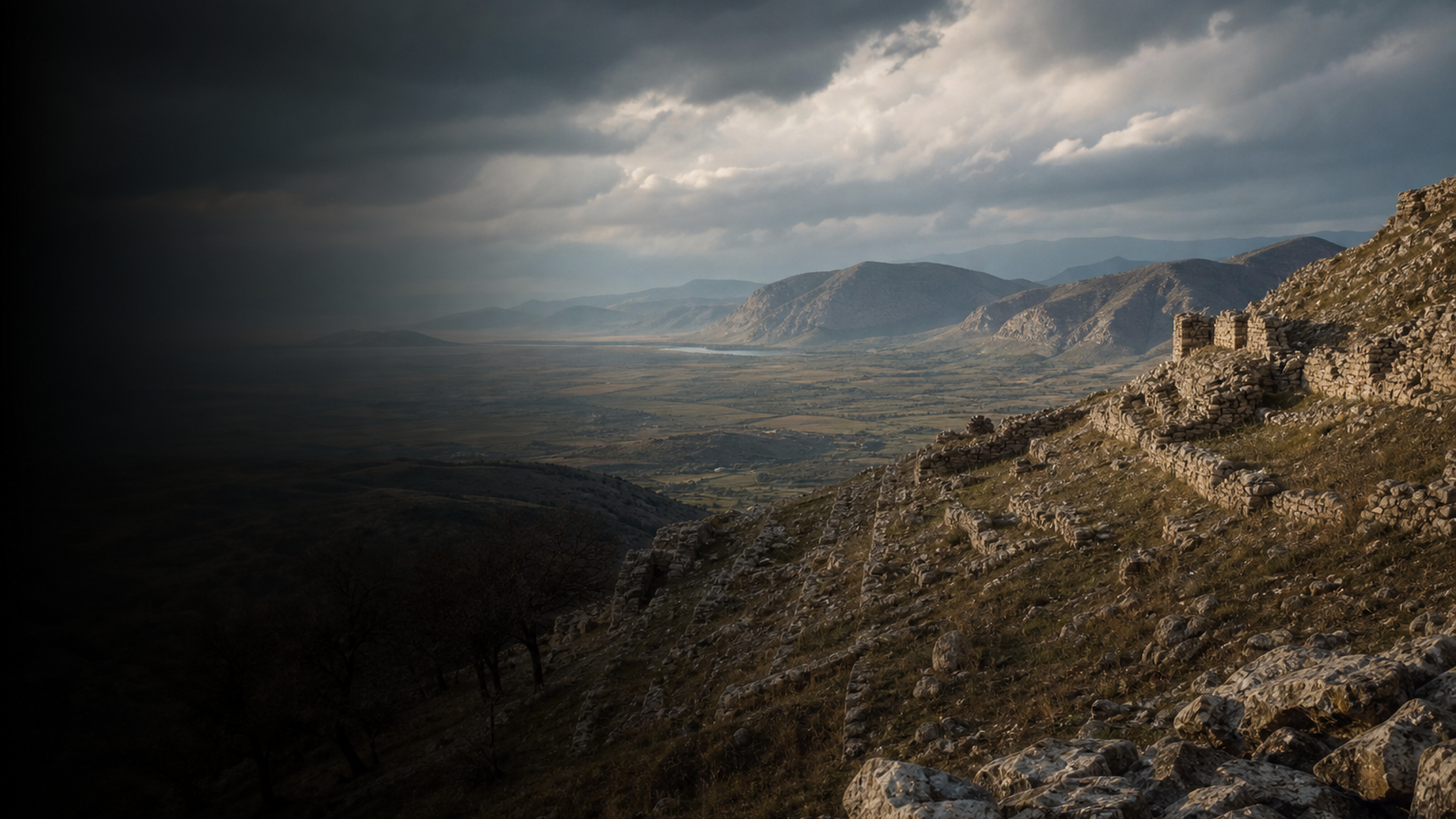
The Korça Basin has historically been a patchwork of arable fields, pastures, and villages set against upland zones—landscapes that shaped rhythms of work, diet, and mobility. Archaeological indicators from the wider region record mixed farming, seasonal pasturing, and local craft production during the Post‑Medieval period. In rural settlements like Barç, daily life would have centered on family farms, seasonal cycles, and participation in regional markets, where goods, ideas, and people intermingled.
Burial practices recovered archaeologically in southeastern Albania often reflect a mix of longstanding Christian rites and adaptations under new governance; in some localities, grave goods are minimal, suggesting modest rural households. The two sampled individuals from Barç likely belonged to such village contexts, though osteological details are limited and not reported here. Material culture and settlement patterns across the Korça Basin indicate resilience of local lifeways alongside incremental changes—new coinage, administrative shifts, and movement of artisans and soldiers—that shaped social networks. These networks are the conduits by which genes, languages, and cultural practices flowed, a point the genetic data begins to illuminate even if only faintly.