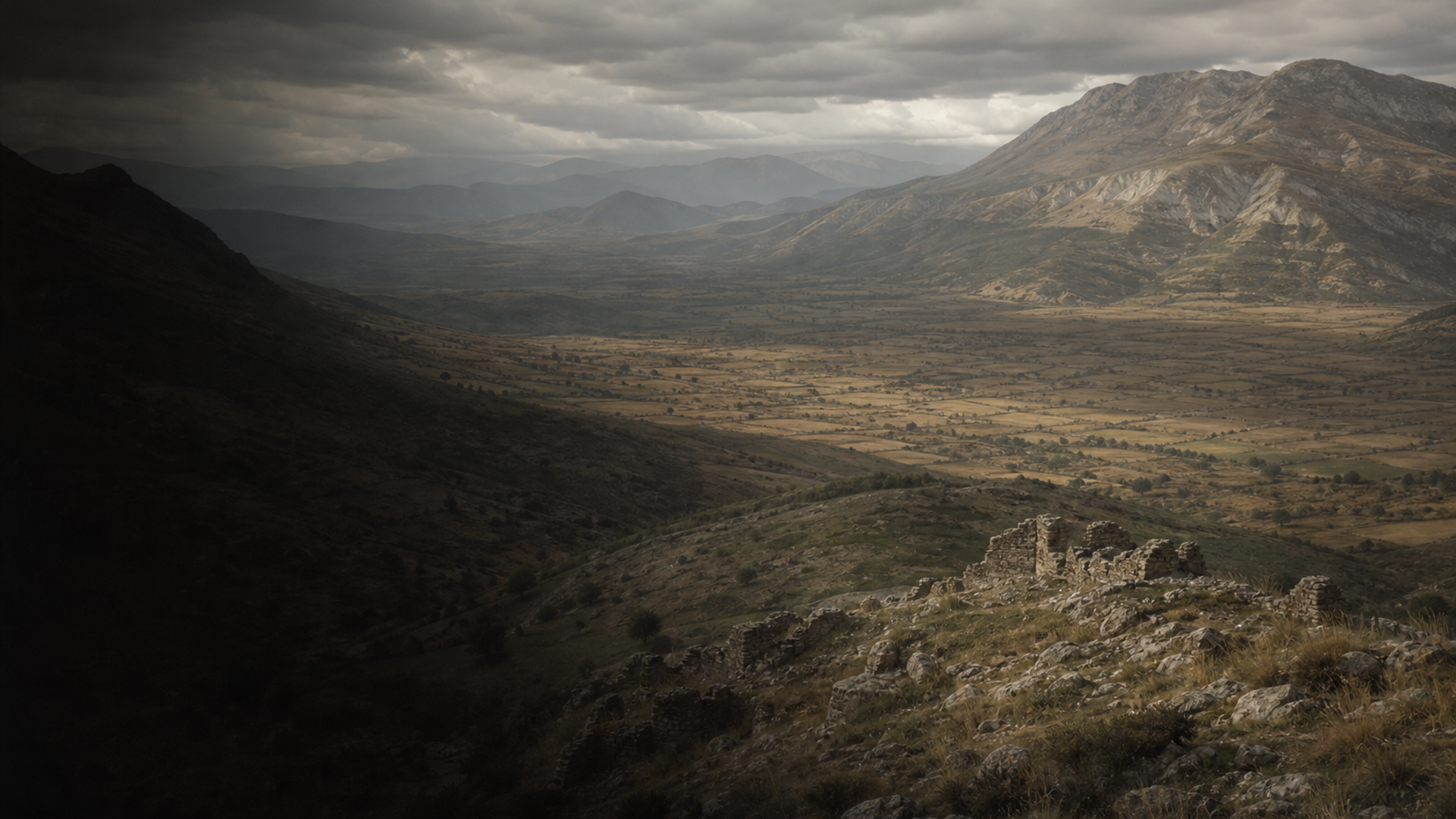
Archaeological contexts from Barç evoke a landscape of steep fields, stone terraces, and compact settlements where daily life was shaped by agriculture, pastoralism, and regional trade routes. Excavated features and artifact assemblages typical of southeastern Albanian rural sites — household ceramics, simple metalwork, and domestic architecture — point to subsistence economies oriented around cereal cultivation, livestock, and local craft.
Social life would have been anchored in kin networks and seasonal rhythms. Ethnographic analogies and historical records from the broader Korça Basin suggest a blend of village-level autonomy and integration into Ottoman administrative structures: tax registers, itinerant merchants, and movement along mountain passes connected Barç to markets and neighboring communities. Funerary practices observed in the cemetery contexts, while limited in number, indicate burial traditions that align with regional patterns of the period.
The two genetic samples are human-sized reminders of individual lives: each mitochondrial genome belonged to a person who experienced the textures of everyday Early Modern Albania — the smell of hearth smoke, the echo of footsteps on cobbles, the movement of flocks. Archaeology supplies the material setting; DNA provides personal biological identity. Combined, they allow us to imagine the interplay of daily routines, family ties, and broader historical forces.