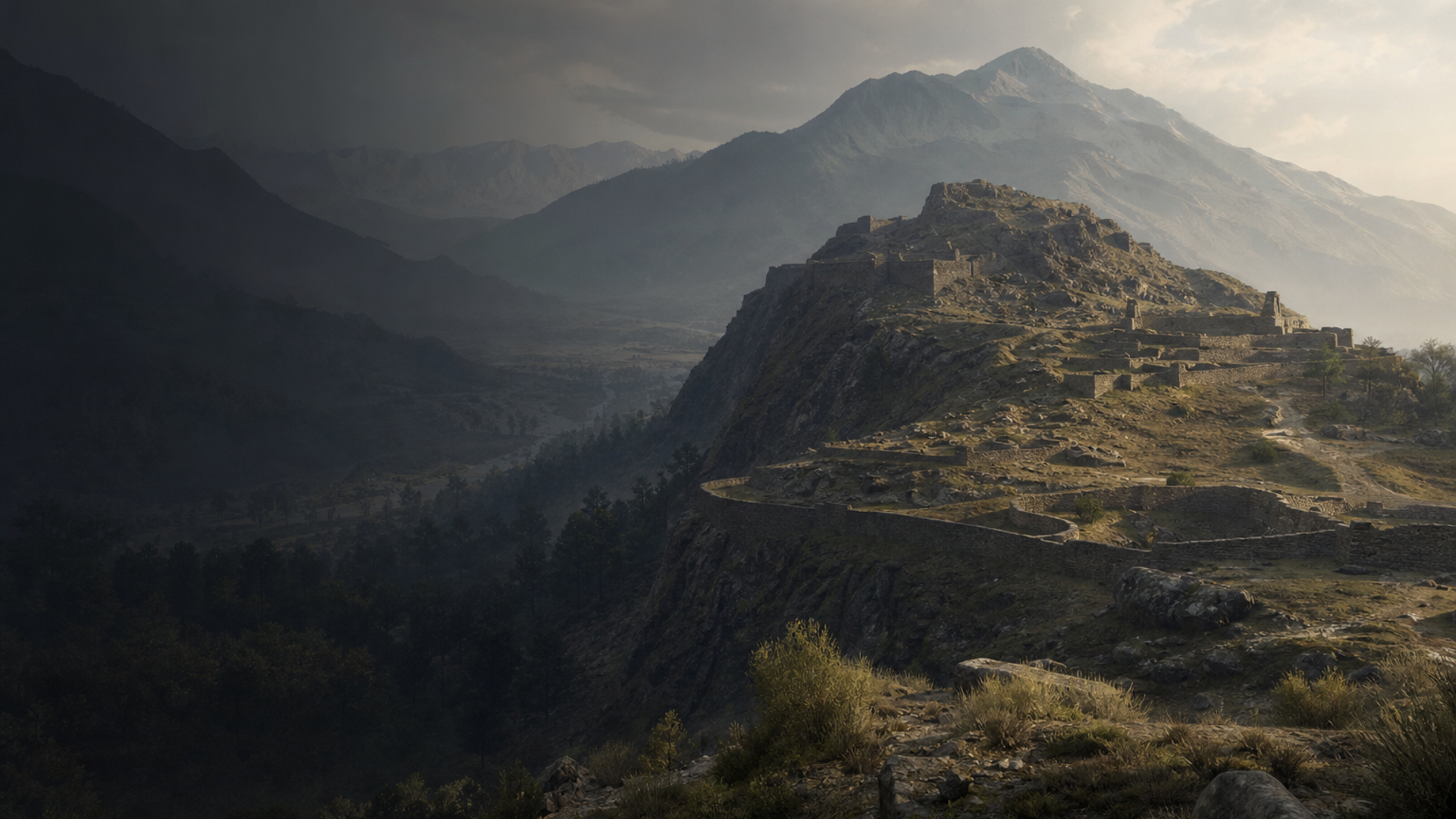
The streets and workshops of Barikot can be imagined from pottery sherds, hearths, and the fragmentary remains of buildings: artisans working copper and iron, agricultural surpluses sustaining craft specialization, and domestic assemblages reflecting household economies. Religious and funerary features — small shrines, burial pits, and reused ritual spaces — suggest changing belief systems over time, consistent with the wider shifts in the Swat Valley from Buddhist presence into medieval Islamic contexts.
Archaeological indicators point to a mixed economy: cultivation of cereals and pastoral activities supported by riverine resources, with craft production concentrated in particular neighborhoods. Social organization likely combined extended kin-based households with emerging urban forms: fortifications and public architecture imply organized community planning or elite patronage. Yet, the human stories remain partial; osteological data and small-sample genetics offer only fleeting glimpses into health, mobility, and kinship. Where DNA is present, it can illuminate individual life histories — migrants, locals, or mixed-ancestry individuals — but with only three genomes the picture of everyday society is still fragmentary.