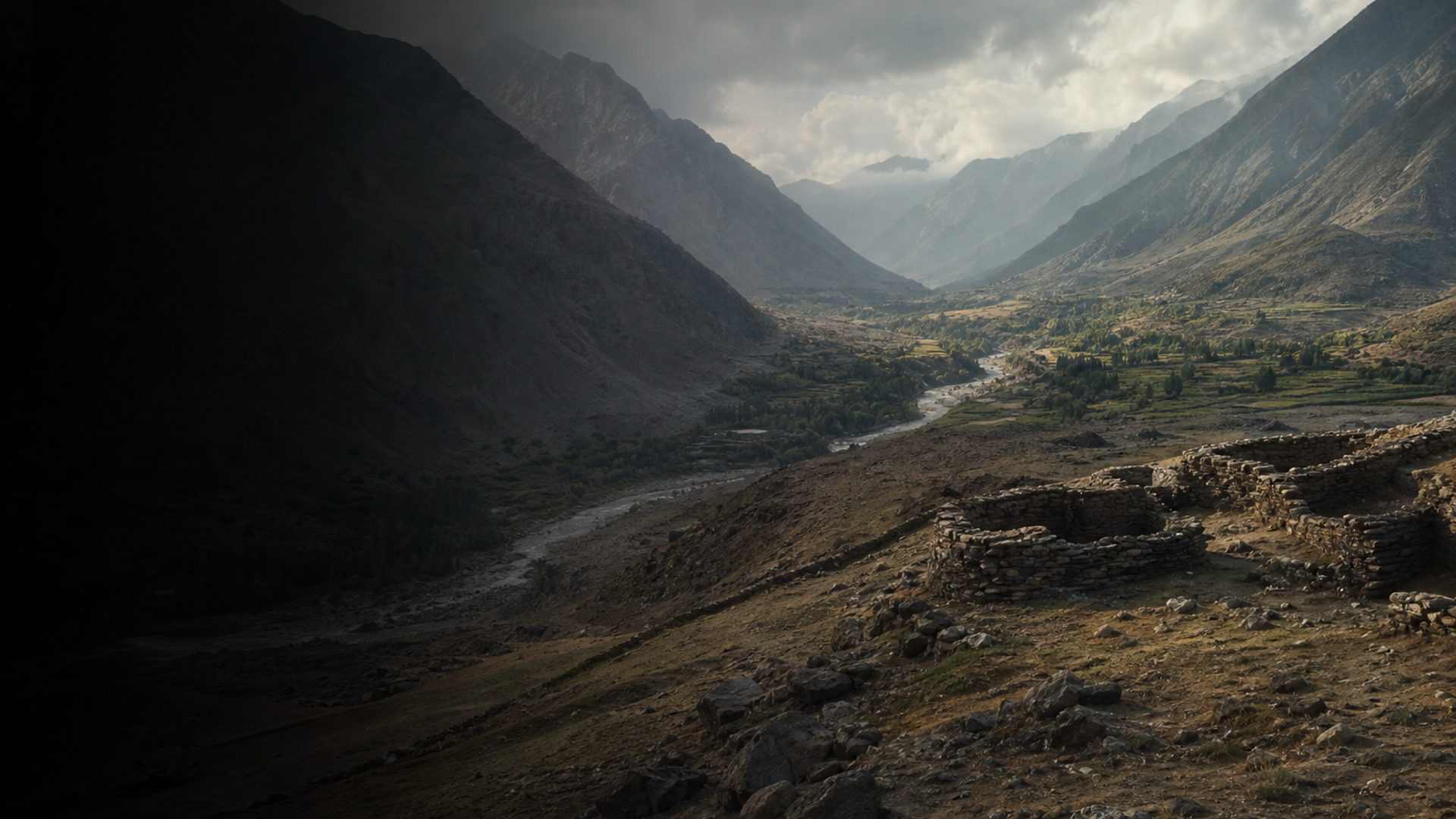
Genetic data from Barikot are exceptionally limited—only four individuals—so conclusions must remain provisional. Uniparental markers recovered show one Y-chromosome haplogroup H and mitochondrial haplogroups H, J, M, and U across the four samples. This mix suggests both local South Asian maternal lineages (notably haplogroup M, a legacy of deeply rooted South Asian ancestry) and lineages that have broader West Eurasian distributions (H, J, U), indicating possible episodes of gene flow or long-standing regional admixture.
Haplogroup H on the Y chromosome is relatively uncommon as a paternal lineage descriptor in South Asia and may reflect either local sublineages or transient inputs from neighboring populations; with n=1 this signal is far from definitive. Importantly, uniparental markers capture only single ancestral lines; autosomal genome-wide data would be needed to resolve proportions of ancestry, timing of admixture, and continuity with modern populations. Given the sample size (<10), archaeological context and larger comparative datasets remain essential to interpreting these preliminary genetic clues. The combined picture—archaeology plus DNA—points to a community shaped by local endurance and regional connectivity, but further sampling is required to move from suggestion to robust inference.