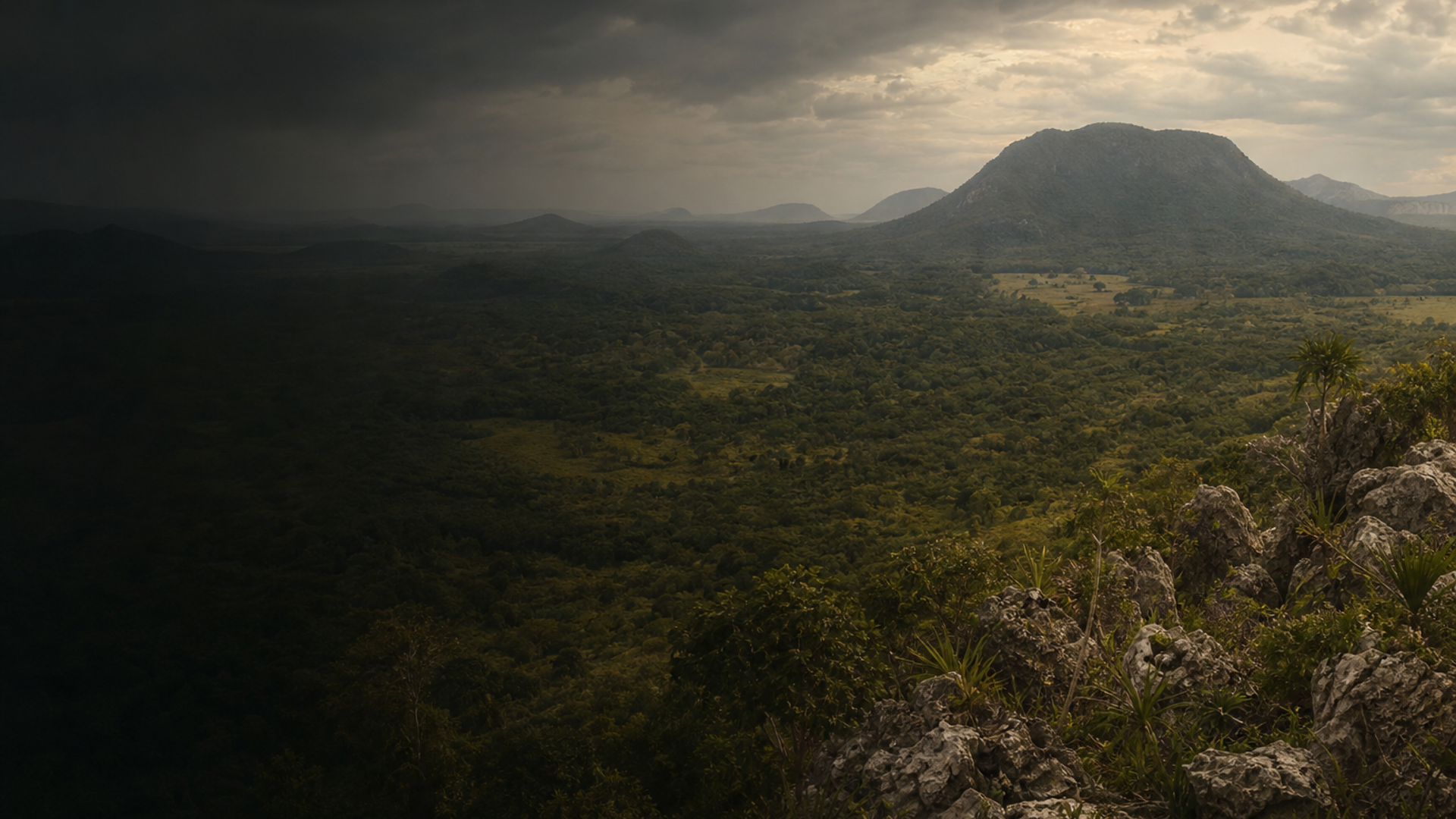
Imagine a shoreline lit by torches, children playing near lagoons, and adults tending gardens or harvesting shellfish — a cinematic but scientifically grounded image of daily life in coastal Belize during the Middle Holocene. Archaeological remains recovered in the region (lithic scatters, shell concentrations, and occasional pottery in later contexts) point to subsistence strategies that blended riverine, marine, and terrestrial resources. Settlement patterns likely ranged from seasonal camps to semi‑sedentary hamlets depending on resource abundance.
Social organization at this time is difficult to reconstruct in detail. Small group sizes, flexible mobility, and kin-based social networks are plausible, supported indirectly by settlement and resource-use patterns across nearby sites. Craft production was probably on a household scale; exchange of exotic materials (shell, obsidian) appears intermittently in the archaeological record of Belize, implying routes of interaction that could have connected communities over substantial distances.
Preservation biases in tropical environments mean that organic materials and ephemeral structures rarely survive; our picture of daily life is therefore partial. Contextualizing these two genetic samples within broader archaeological landscapes helps bridge bodily biography and community practice, but many questions about social roles, ritual, and long-term settlement remain open.