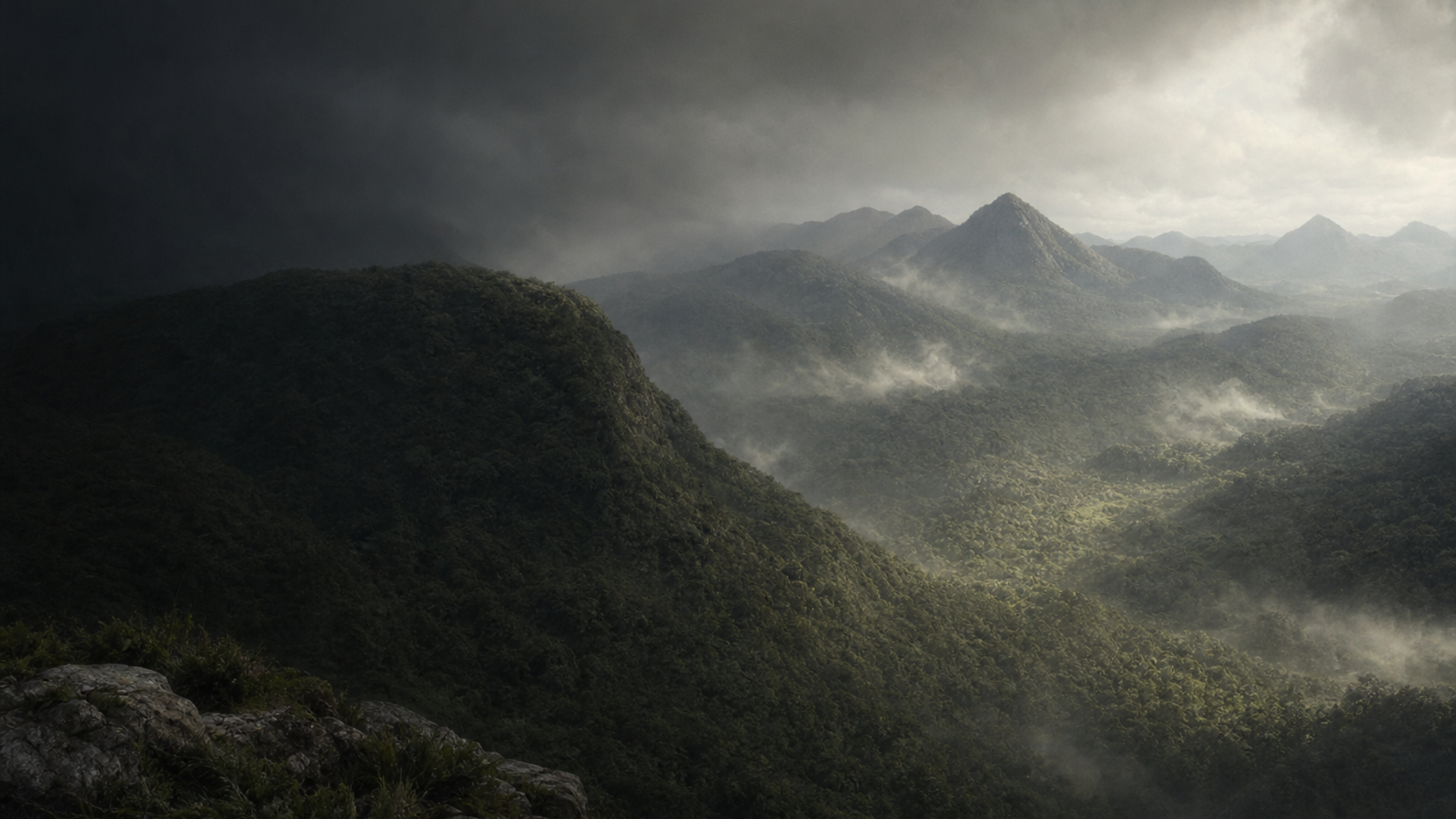
Archaeological indicators from the Maya Mountains during the mid-Holocene evoke a life shaped by forests, rivers, and seasonal abundance. Hearth remains, flaked stone tools, and faunal remains found regionally suggest people practiced a mixed subsistence strategy: spear and trap fishing in rivers and wetlands; hunting of peccary, deer, and small mammals in the forest; and gathering of palms, fruits, and tubers. In some localities, early signs of plant management—such as three-stone hearths and macro-botanical residues—hint at the beginnings of cultivation rhythms that would intensify in later millennia.
Settlement patterns likely featured semi-sedentary camps that shifted with seasonal resource peaks. Material culture was pragmatic: multifunctional stone tools, organic implements, and ephemeral structures now vanished into the tropical soil. Social groups were probably small, kin-based bands whose knowledge of the landscape — hunting trails, fruiting cycles, and riverine pathways — governed movement and ritual. While no richly furnished burials are recorded from Mayahak Cab Pek, mortuary treatment elsewhere in the region shows variability, implying flexible social identities.
These lifeways—intimate, adaptive, and deeply local—provide the cultural stage onto which the single DNA sample was cast. The genetic data cannot specify social rank, diet, or personal biography, but combined with the archaeological picture it helps humanize a distant life lived in a wild, green world.