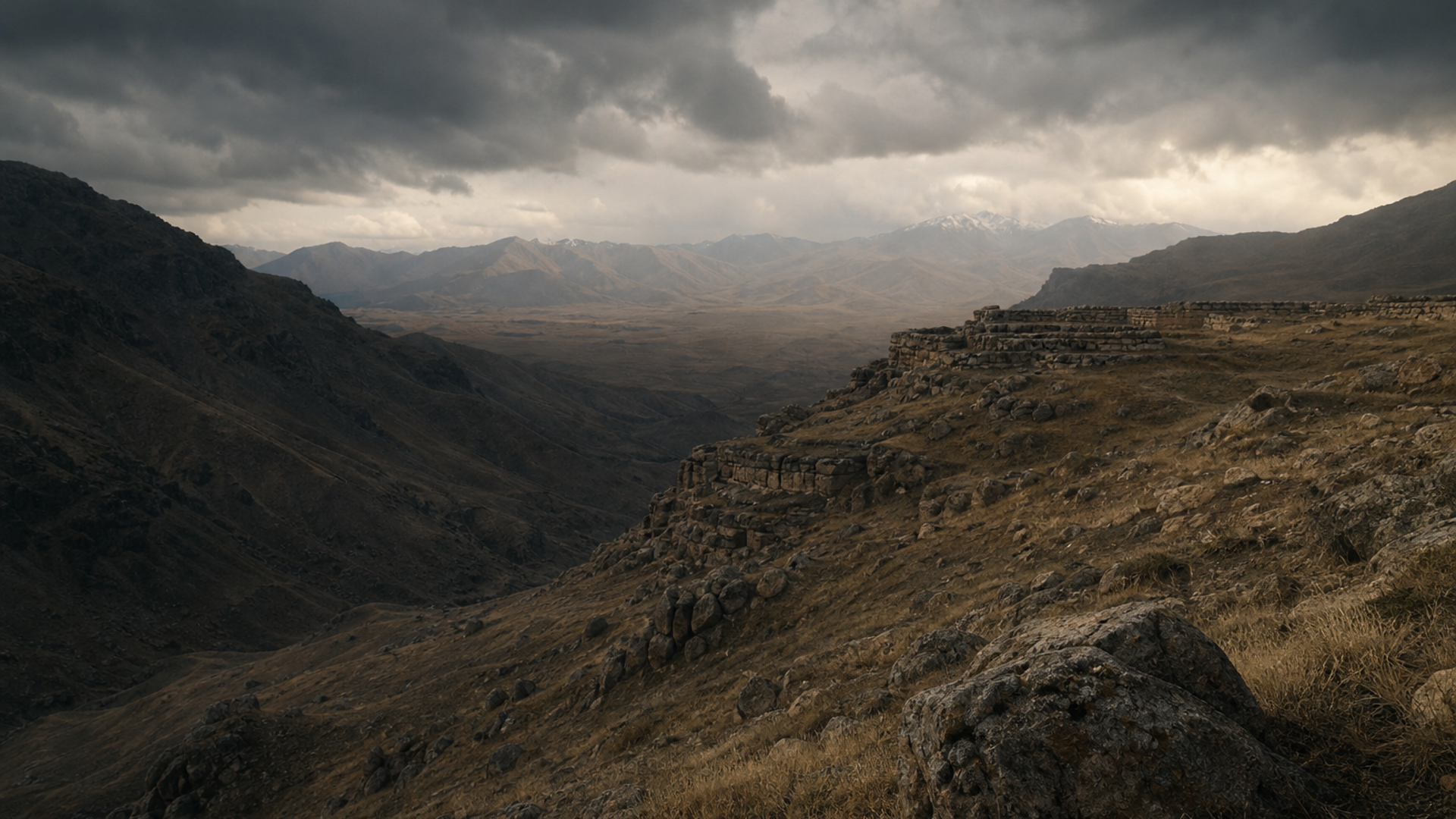
The genetic evidence from Beniamin is best read as a careful, provisional statement. Only one individual has produced ancient DNA data from the site, and no Y-DNA or mtDNA haplogroups have been reported in the provided dataset. This scarcity means that population-level claims — about ancestry proportions, migration events, or shifts in paternal or maternal lineages — are not currently supportable.
Nevertheless, the genomic method offers the kinds of answers we seek when more samples become available. In the wider Armenian Highlands, published ancient DNA studies (from other localities) commonly reveal layered ancestry: deep local Caucasus/Near Eastern components, influences traceable to Anatolian and Iranian Neolithic populations, and variable inputs related to Bronze Age steppe movements. Archaeological data indicates that the late Hellenistic period was one of interaction; genetic data from multiple individuals in this region would allow testing whether those interactions produced detectable admixture signals.
Given the single sample, the responsible interpretation is limited: this individual provides a time-stamped genetic snapshot but not a demographic profile. Any links to modern Armenian genetic continuity must be described as tentative until larger sample sizes (ideally dozens of well-dated individuals) corroborate patterns. In short: promising potential, but preliminary results.