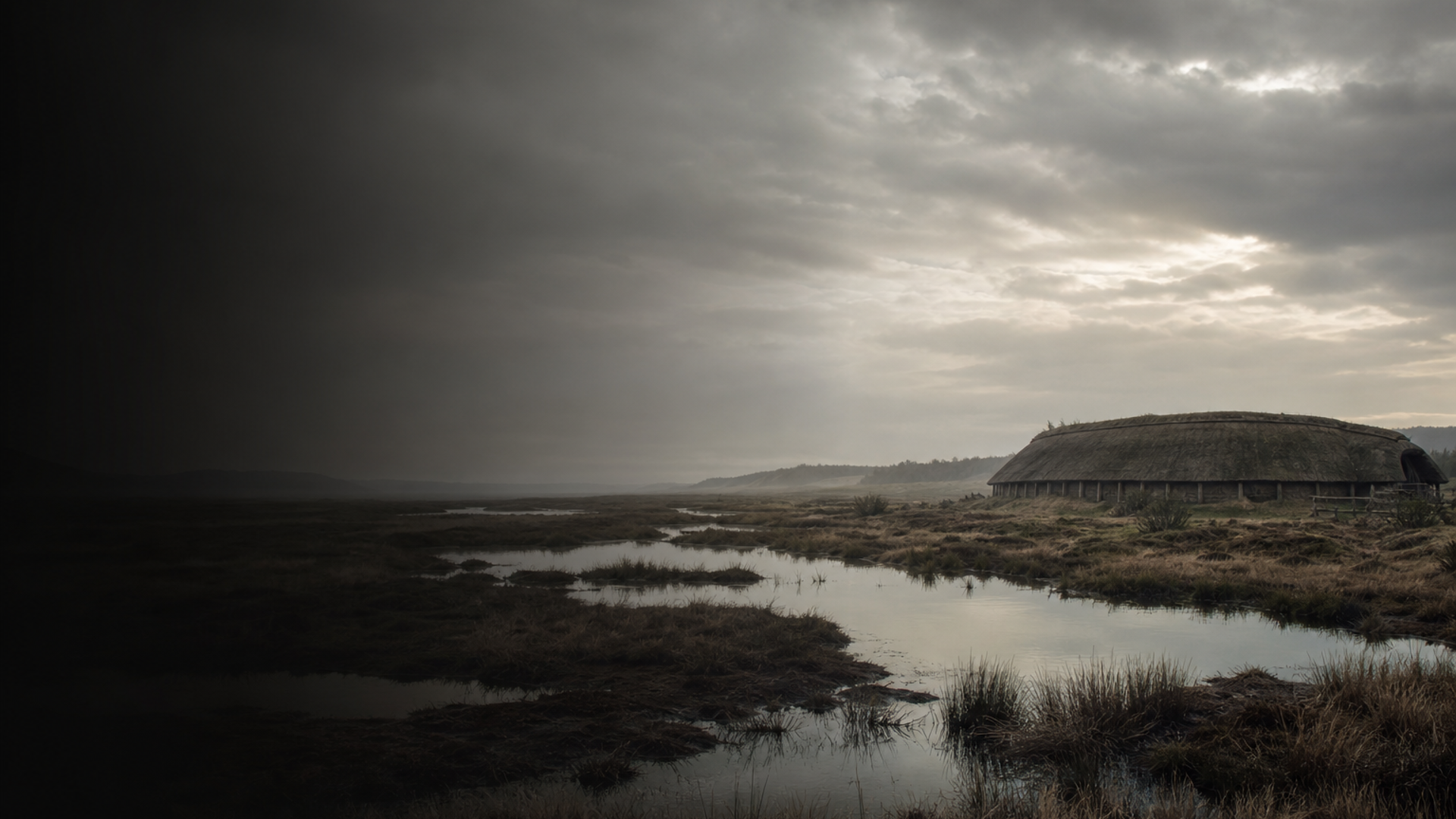
Life in Early Neolithic Denmark combined the rhythms of cultivated fields, herds, and the sea. Archaeological remains — pottery, polished stone tools, animal bones, and structural traces — indicate households managing cereals and domesticated animals alongside hunting and fishing. Longhouses and farmsteads provided the skeleton for village life; timber framing, hearths and storage pits organized daily tasks.
Coastal and wetland environments were integral: boats and watercraft enabled transport and resource exploitation, and several sample localities are associated with boat finds or wetland contexts (for example, the Øgarde boat III at Storelyng and peat contexts at Viksø Mose). Wetlands also functioned as curated places of deposition where tools, weapons or organic offerings were placed; archaeological interpretation treats such deposits as both practical and symbolic acts.
Burial practices show variety — inhumations, collective tombs and isolated burials — pointing to differentiated social identities. Artefacts and spatial organization hint at emerging kin groups and community networks. Archaeobotanical and zooarchaeological data from Denmark indicate cultivation of cereals and management of cattle, sheep and pigs, but the proportion of wild resources could remain locally significant. Overall, the archaeological picture is of resilient, adaptive communities negotiating new subsistence strategies in a northern maritime landscape.