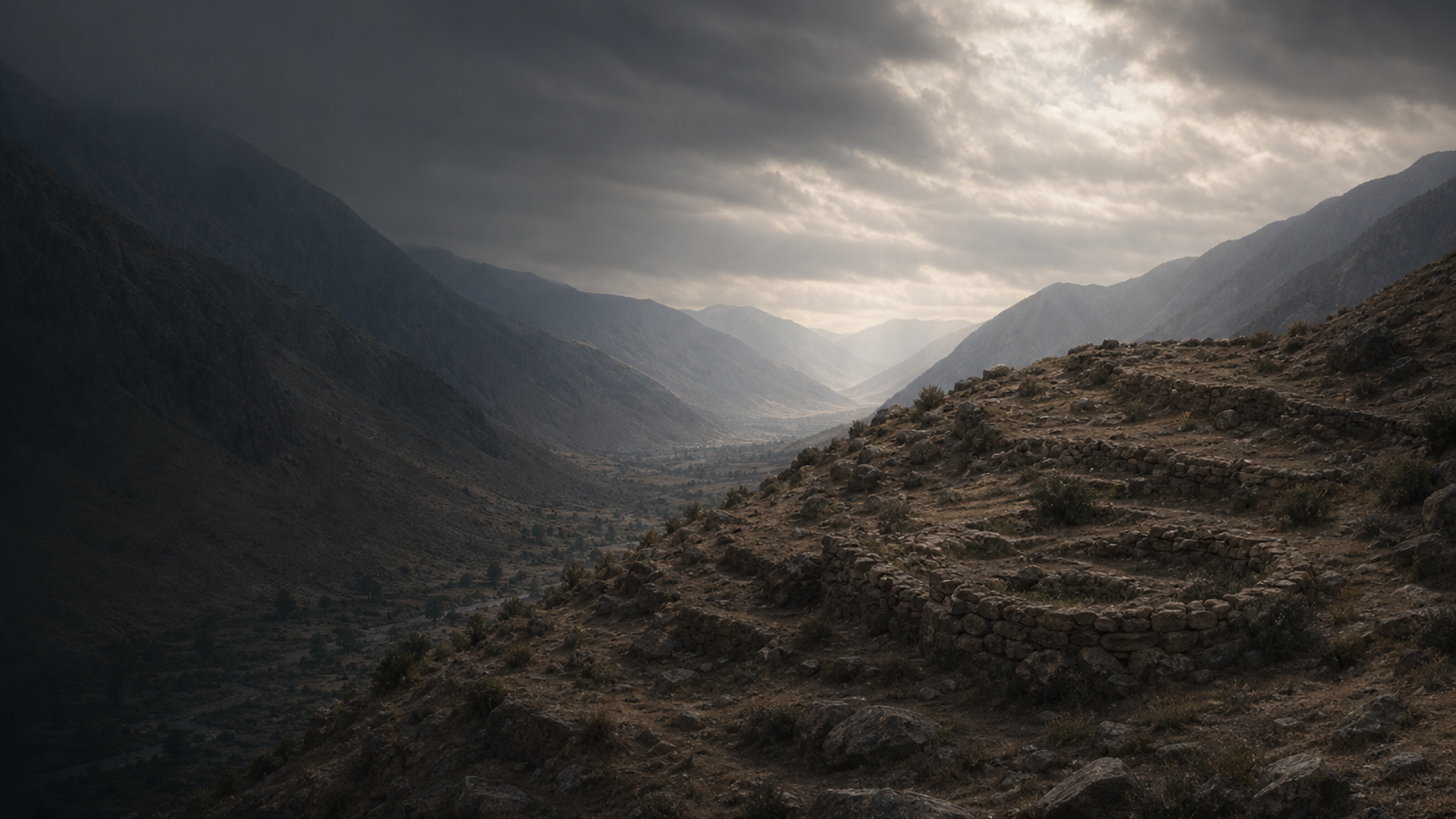
Archaeological traces from the Swat Valley reveal a landscape of fields, lanes, and ritual precincts where everyday labor met formal performance. At Butkara II, pottery sherds, small stone tools, and fragments of worked metal recovered from surface and stratigraphic contexts point to agriculture, craft production, and exchange. Archaeological data indicates spaces used for communal rites—shrines, curated deposits, and assemblages that would have structured seasonal and life-cycle ceremonies.
The social life of the valley likely blended household production with regional networks of movement. The presence of diverse maternal haplogroups (U, HV, M, W) in the genetic sample aligns with an expectation of incoming and local female lineages, which may reflect exogamous marriage patterns or the mobility of women through trade and pilgrimage routes. Material culture suggests small-scale metallurgy and craft specialization, while landscape evidence implies irrigation and mixed farming. Limited excavation coverage and the small genetic sample size mean these reconstructions are provisional: each artifact, hearth, or burial context still has the power to change our view of daily practice at Butkara II.