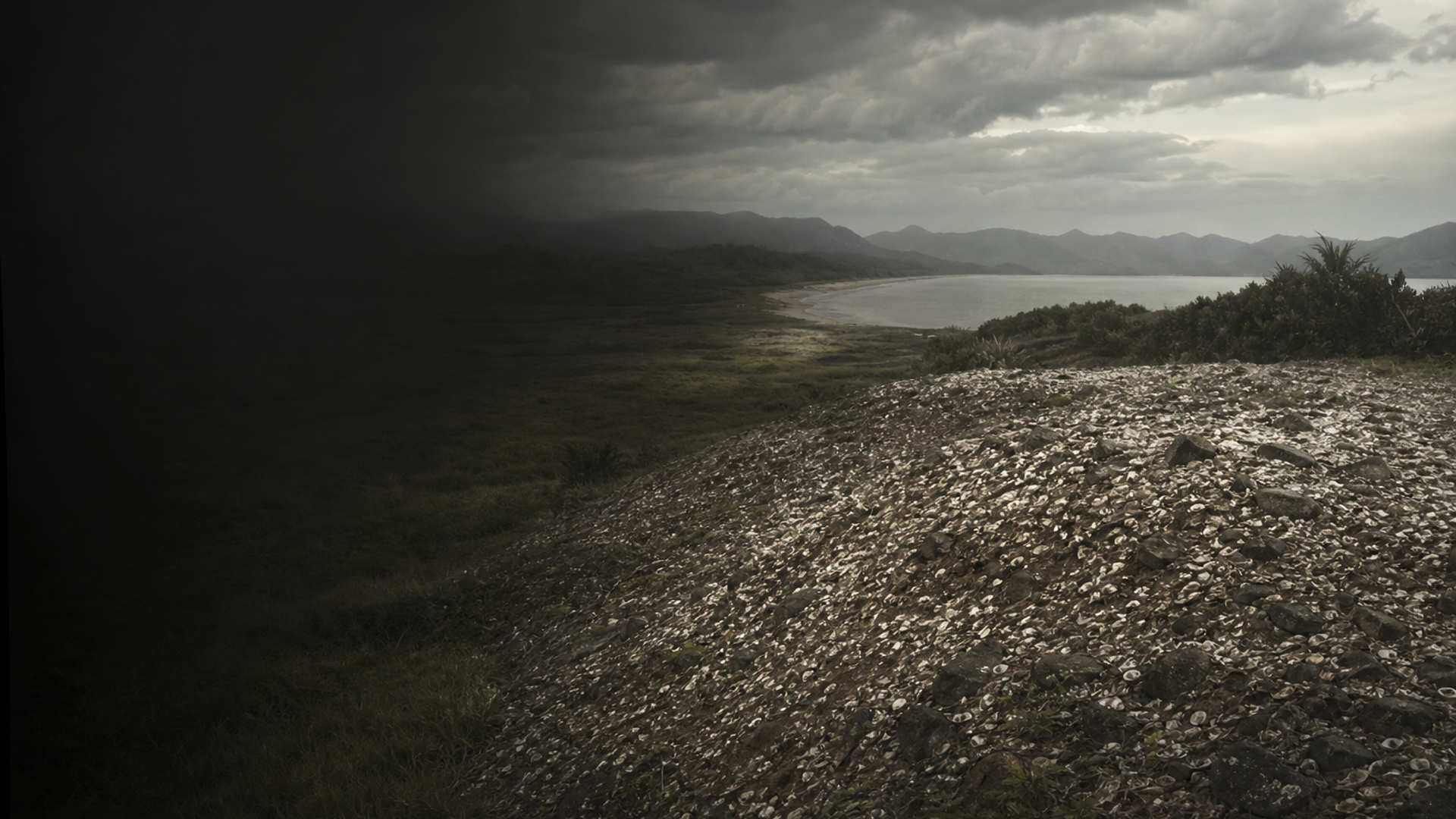
Life at Cabeçuda would have been shaped by the rhythm of tides and seasons. Archaeological assemblages from sambaquis typically include abundant shellfish refuse, fish bone, marine mammal fragments, and stone tools — a palette that implies a diet rich in coastal proteins and a technical repertoire tuned for shoreline foraging and small-scale craft production. Hearth features and lensing within middens indicate repeated occupation and episodic intensification, perhaps tied to seasonal resource peaks.
Burial evidence from sambaqui contexts often reveals human interments within or alongside the mound deposits. These mortuary placements transform refuse heaps into sacred topography, weaving memory into the very architecture of the coast. Material traces such as personal ornaments, ochre staining, and variation in burial positioning hint at social differentiation, ritual practice, and long-term claims to place.
Archaeological data indicates that sambaquis functioned as communal hubs: food processing, craftworking, and mortuary activity coalesced into persistent landscape features. However, at Cabeçuda the archaeological record is incompletely sampled; many behavioral inferences remain provisional pending broader excavation and multi-proxy analyses (faunal, isotopic, microbotanical).