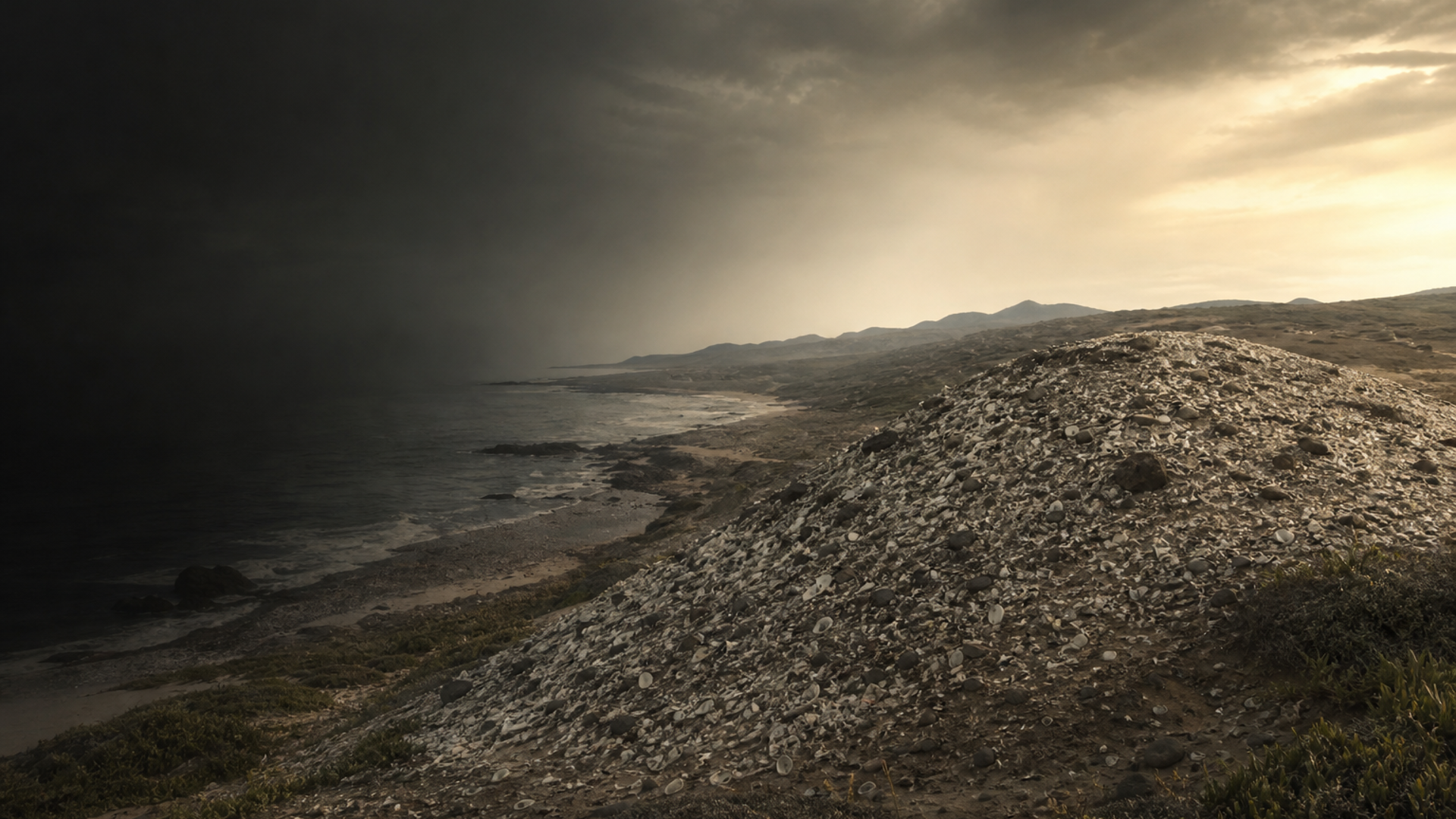
Archaeological traces from sambaqui sites like Capelinha paint an evocative portrait of coastal lifeways: tactile, salt-scented, and cyclical. Shell middens are archaeological palimpsests — accumulations of food remains, hearths, and discarded tools that mark repeated human presence. At Capelinha, material contrasts between organic midden layers and interspersed occupation horizons indicate seasonal intensity and possibly long-term use of the same coastal vantage points.
Diet was likely dominated by marine and estuarine resources: mollusks, fish, and crustaceans would have formed reliable caloric bases, complemented by opportunistic terrestrial hunting and plant gathering from nearby coastal forests and dunes. Stone and shell tools, though not richly described for this specific sample, commonly found at sambaqui sites include scrapers, points, and modified shells used as implements. Social organization can be inferred indirectly: sustained midden-building implies cooperative labor and knowledge transmission across generations, while burial practices at some sambaqui sites suggest place-based identity and ritualized engagement with the dead.
Because Capelinha’s genomic dataset currently derives from a single individual, linking specific social practices to genetic kin groups is premature. Archaeological context, however, consistently highlights the centrality of coastal resources and repeated, generational occupation of favorable shoreline loci.