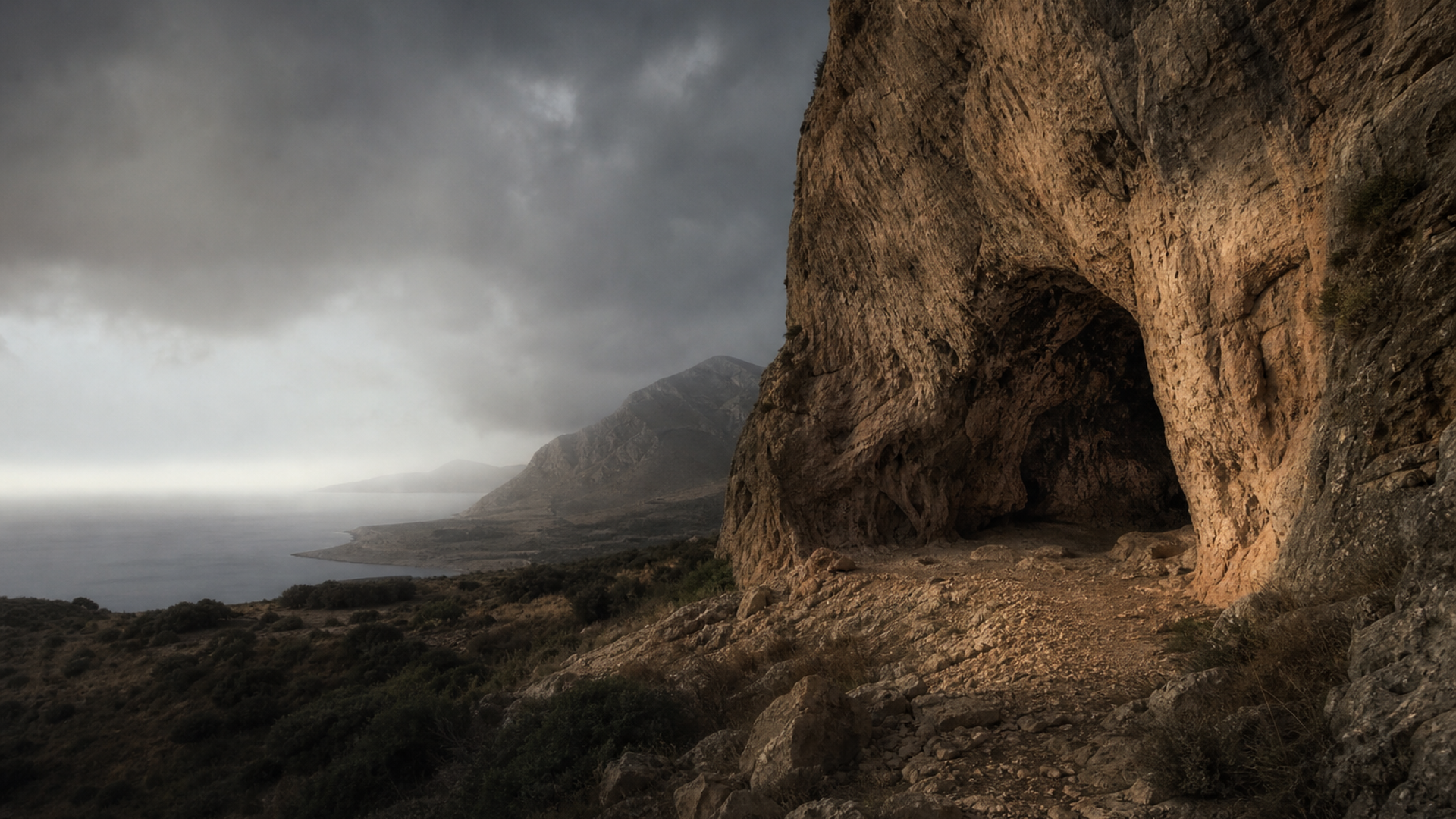
Archaeological traces from the Castelnovian world at Grotta dell'Uzzo paint a life shaped by the sea and the light of limestone cliffs. Shell middens, fish remains, and specialized tools indicate a diet that blended marine resources with hunted mammals and gathered plants. Hearth features and clustered refuse point to repeatedly used base locations where families or extended kin groups prepared food, repaired gear, and shared labor.
Socially, Late Mesolithic groups in Sicily likely organized in small, mobile bands with extensive seasonal mobility along coastlines and river valleys. Ornamentation and curated tool types suggest social signaling and long-distance exchange: raw materials or stylistic traits linking Uzzo to other Mediterranean foraging communities. Burial practices at coastal caves sometimes record personal items and deliberate placement, implying social identities and memory. Still, the archaeological record remains fragmentary: preservation biases in caves and the challenges of coastal taphonomy mean many aspects of daily life are reconstructed from scattered, often ephemeral remains.
For visitors imagining the scene: groups waking at dawn to mend nets, the metallic glint of small flint points being retouched, smoke drifting from low hearths while children learn to read tides. These practices created the material residues that archaeologists and geneticists now read as traces of lifeways and passage.