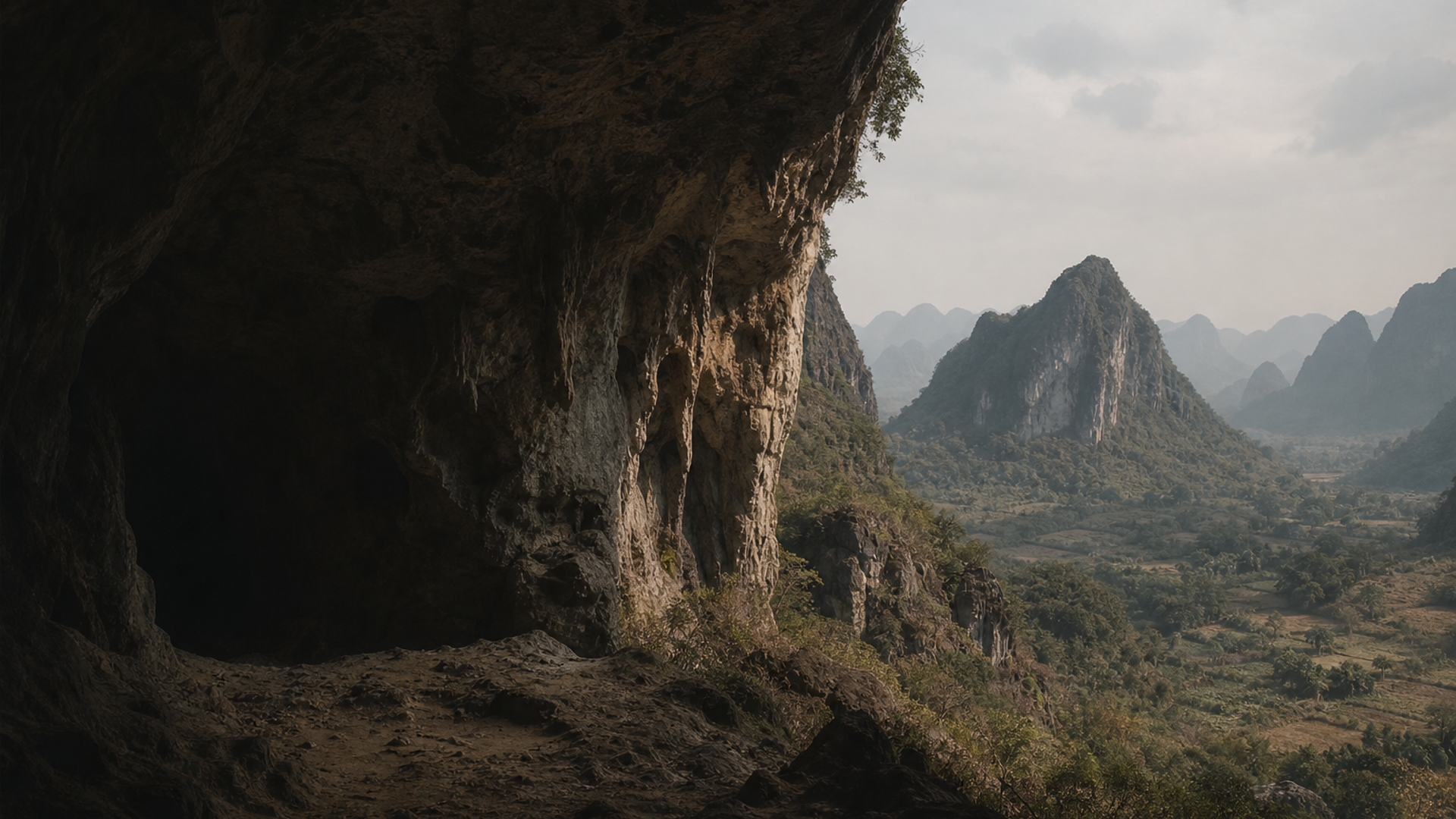
Archaeological traces in Guangxi from the mid-5th to 7th centuries portray communities practicing mixed subsistence strategies: wet-rice cultivation in lowlands and dryland farming or foraging in uplands. Cenxun Cave’s occupants likely lived within a mosaic of rice terraces, riverine corridors, and karst hills that structured daily movement and resource use. Household assemblages in the broader region include utilitarian ceramics, iron tools, and occasional prestige items—evidence that social differentiation existed but varied locally.
Textual records from the early Tang illuminate increased administrative integration of southern prefectures and intensified trade along inland waterways and coastal routes, factors that could have affected material culture in Guangxi. At Cenxun itself, the preservation of skeletal remains allows bioarchaeological study of diet, health, and workload markers; however, few published osteological details are available for these three individuals. Without robust contextual artifacts directly tied to each burial, reconstructions of social status, occupational specializations, and belief practices remain cautious. Still, the evocative setting of Cenxun Cave — carved into karst cliffs and overlooking fertile valleys — helps us imagine lives shaped by seasonal rhythms, riverine exchange, and the slow pulse of Sui–Tang transformation.