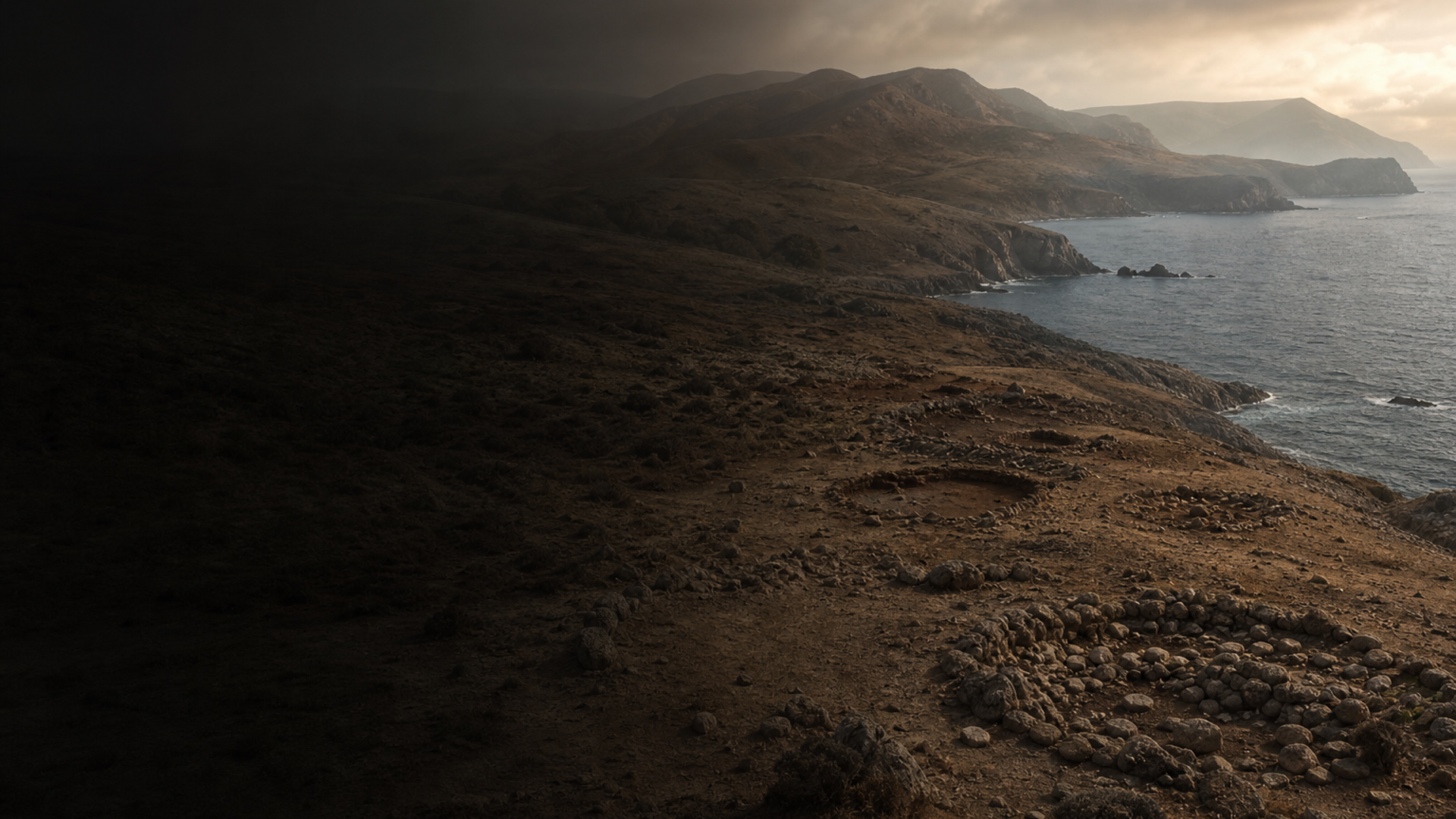
The daily rhythm of island life was orchestrated by tide and season. Archaeological deposits on San Clemente and San Catalina reveal shell middens, fish remains, and worked bone that together sketch a society deeply attuned to the sea. People harvested abalone, fish, seabirds, and intertidal resources; hearth features and plant remains indicate on-island processing and food storage strategies.
Material culture reflects this maritime focus: bone and shell tools, small stone implements suitable for boat-based foraging, and localized tool-styles that differ subtly from mainland assemblages. Architecture, where preserved, consists of ephemeral shelters and hearth-centered living floors rather than large permanent structures, consistent with the logistical demands of island resource scheduling.
Social life likely balanced small, tightly knit residential groups with broader seasonal interactions—exchanges of goods, people, and ideas across islands and the nearby coast. Burials and mortuary treatment, when present, offer glimpses of social identity and continuity, but preservation is uneven and interpretations remain cautious.
Reconstruction of everyday life combines this patchwork archaeological record with emerging genetic signals to illuminate who these islanders were, how they lived, and how they moved through a maritime landscape.