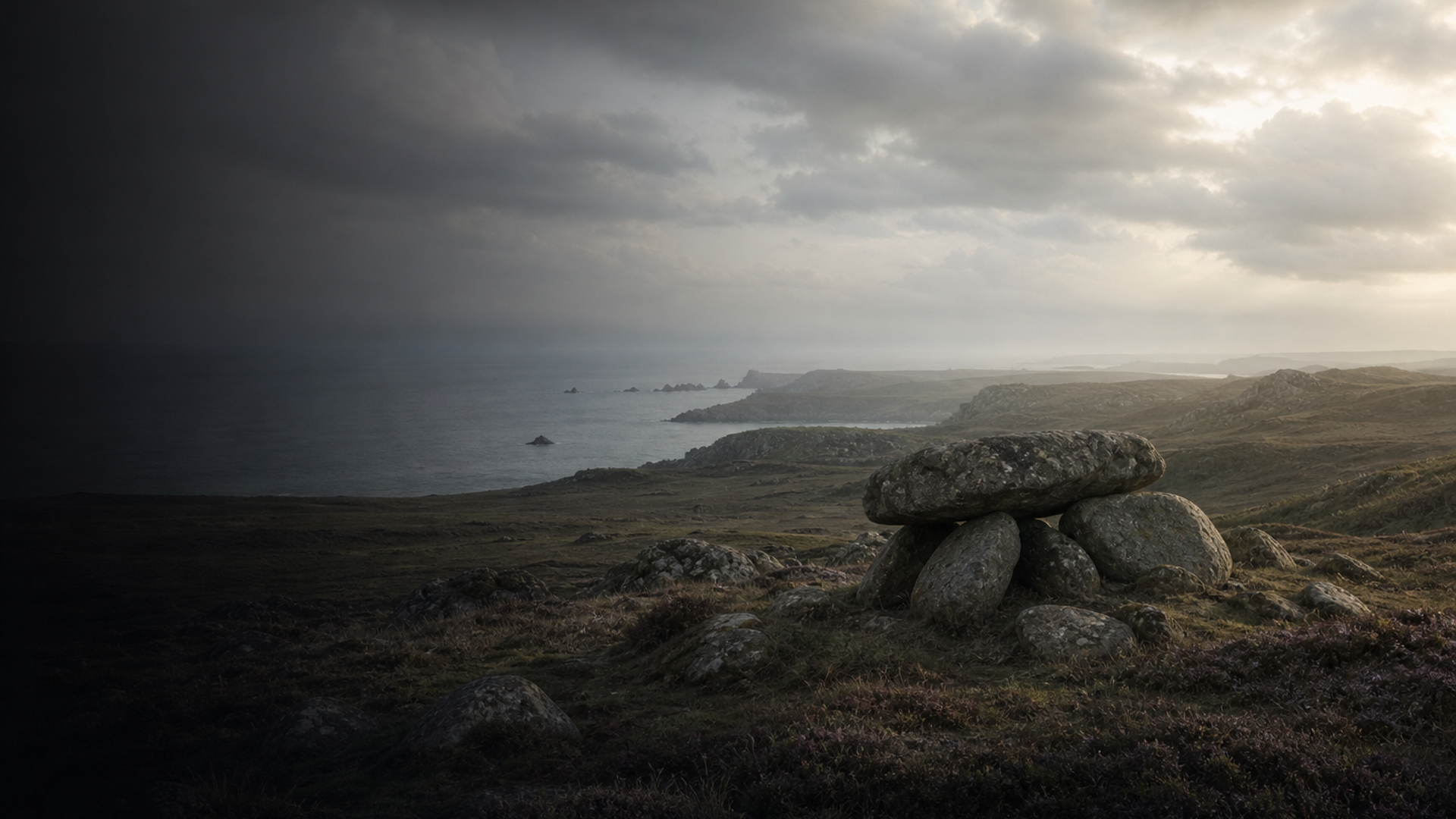
Daily life for Late Neolithic islanders would have been shaped by tides, storms and rich coastal resources. Archaeological traces—discarded pottery, worked flint, animal bone and the architecture of tombs—paint a picture of small communities living in tightly knit households and engaging in seasonal rounds that mixed cereal cultivation, sheep and cattle herding, shellfish and fish gathering, and limited woodland use.
Le Déhus and similar chambered tombs functioned as focal points for ancestor veneration and social memory; their carved stones and assemblages suggest ritualized deposition of human remains and grave goods. The scale of monumental effort indicates cooperative labor and shared rituals that bound families or groups across generations. Craft activities, including stone working and pottery manufacture, reflect a material culture adapted for island life—robust containers, tools for processing marine and terrestrial foods, and items likely exchanged by boat.
Social organization likely combined kin-based households with inter-island exchange networks. However, the archaeological footprint is patchy: preservation biases and restricted excavation areas limit our view. Where organic materials do not survive, inferences depend on stone architecture and funerary deposits, so reconstructions of daily routines must be couched as informed hypotheses rather than certainties.