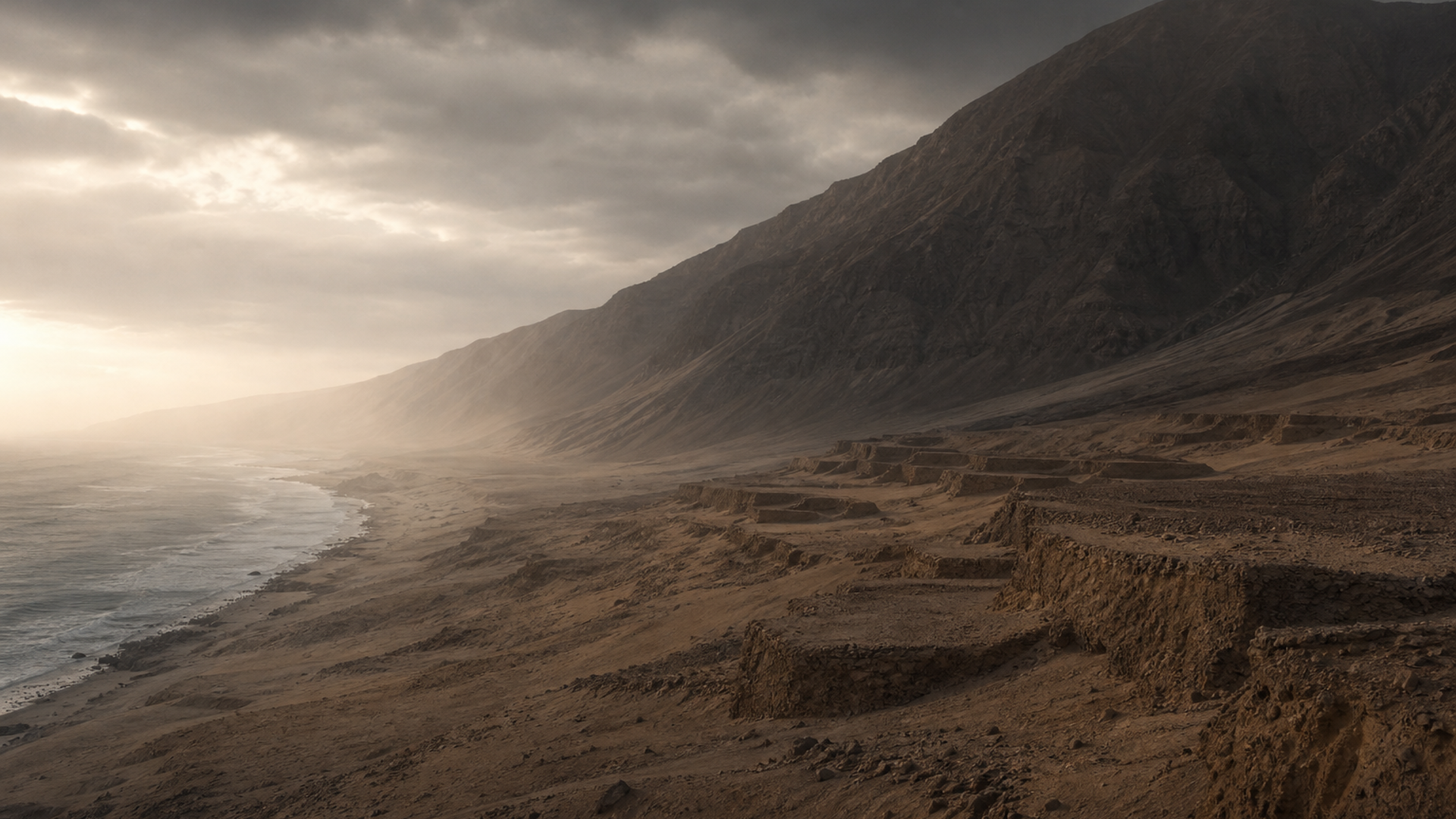
Twelve sequenced individuals from Chincha (1250–1613 CE) provide a modest but informative genetic window into this coastal population. On the paternal side, Y-DNA haplogroup Q appears in two samples; Q is a hallmark Native American paternal lineage found widely across the Americas. Maternal lineages are diverse: B2b (observed in two individuals) alongside A and multiple C subclades (C, C1b, C1c). These mitochondrial haplogroups are common among Indigenous peoples of western South America and are consistent with deep regional ancestry.
Genomic affinity analyses (when available) typically place Chincha individuals within the broader Andean genetic continuum, reflecting long-term regional continuity. Because the dataset is small (12 samples) and spans both pre- and post-contact centuries, interpretations should be cautious: the period after 1532 CE saw demographic disruption and potential genetic input from introduced populations. In this Chincha assemblage there is no blanket signal of large-scale non-Indigenous ancestry reported here, but low-level admixture in later contexts cannot be excluded without more targeted sampling.
Taken together, the genetic data support archaeological impressions of an Indigenous coastal population with maternal diversity and paternal lineages typical of Native American groups. Larger sample sizes, broader geographic sampling along the south coast, and fine-grained temporal resolution would strengthen inferences about migration, kinship, and post-contact change.