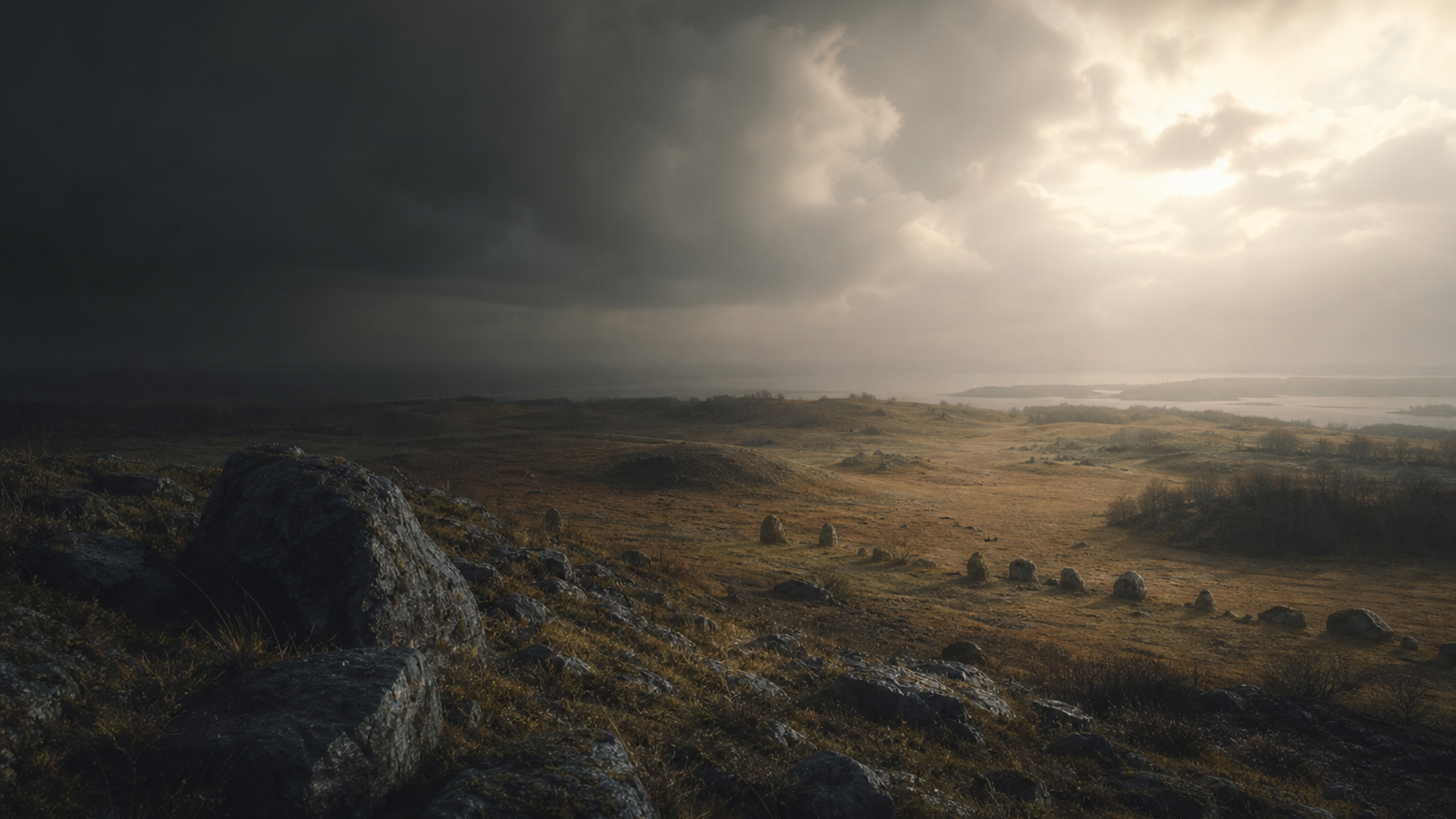
Daily life for people who used stone-cist burials in Bronze-Age Estonia was shaped by seasonality, coastal resources and small-scale farming. Archaeobotanical and zooarchaeological indicators from comparable Baltic sites imply mixed economies: cereal cultivation, animal husbandry (cattle, sheep/goat), hunting, and extensive use of fish and seal resources in coastal zones. Stone cists, often reused or clustered in cairn fields, mark kin groups or ritual landscapes more than urban settlement.
Grave assemblages—simple bronze tools, pins and occasional personal ornaments—suggest communities where metal objects were valued but not ubiquitous, reflecting hierarchical differences that remained modest compared with later societies. Communal work on field systems, craft specialization in bronze-working or bone and antler, and long-distance exchange (amber, metal) likely structured social relations.
Archaeological data indicates a rhythm of life tethered to both land and sea: seasonal ferries, shoreline dwellings and inland fields. Stone cist graves provide a cinematic, intimate archive—bones, teeth and artifacts—allowing modern science to reconstruct lifeways, diets and social choices from a fragmentary but evocative record. Interpretations remain cautious: preservation bias toward burials and coastal sites can overrepresent certain activities and social segments.