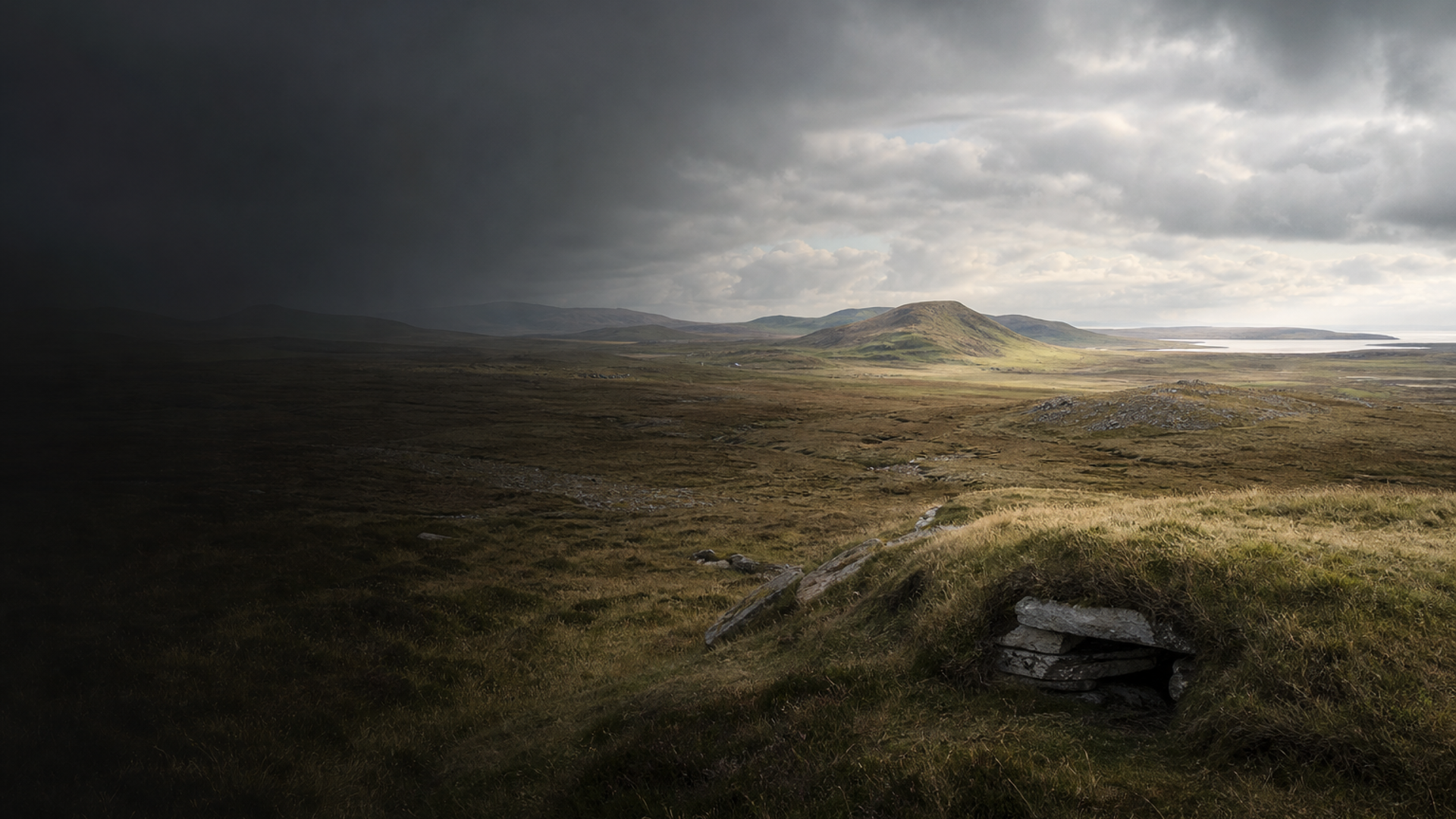
Thirteen individuals dated to 2400–1447 BCE provide a focused but still preliminary genetic window into Early Bronze Age Scotland. Eight of the male samples carry Y‑chromosome haplogroup R, making it the dominant paternal lineage in this set. This predominance is consistent with broader Bronze Age Britain where R lineages—often associated with Steppe‑derived ancestry—became widespread. However, assigning deeper subclade identities or precise migration paths requires larger sample sizes and higher-resolution sequencing.
Mitochondrial DNA shows diversity: H (4), including H1a (1), T (3), U (2), and K (2). The mixture of maternal haplogroups indicates that female lineages were heterogeneous, which may reflect local continuity of maternal ancestry, marriage networks, or incorporation of women from different regions. Autosomal studies from contemporary British contexts reveal substantial Steppe-related ancestry fused with local Neolithic components; the Scotland_C_EBA Y and mtDNA pattern aligns with that broad picture but cannot alone determine proportions of ancestry or exact source populations.
Because samples are geographically clustered (Orkney, Fife, Lothians, South Lanarkshire), observed patterns could reflect regional demographics rather than island‑wide trends. Further sampling across Scotland and genome-wide analyses will clarify kinship within cists, sex-biased mobility, and links to continental networks.