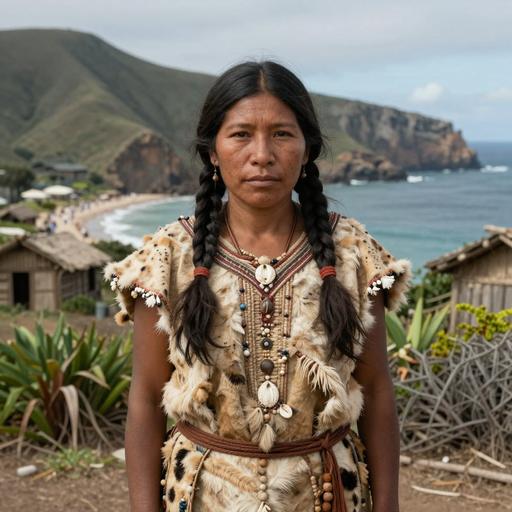
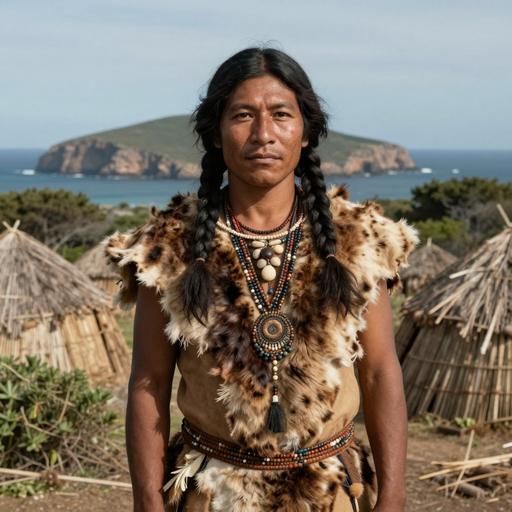
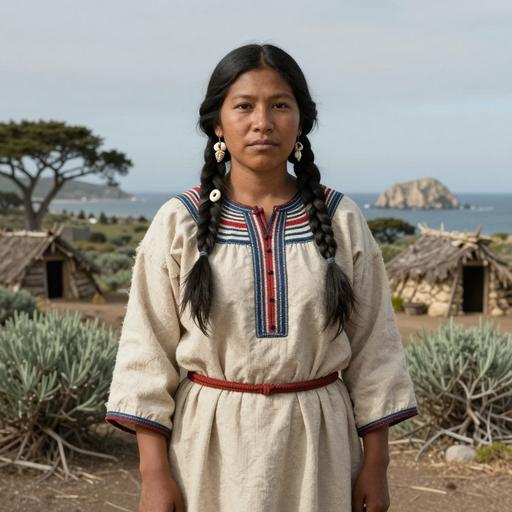
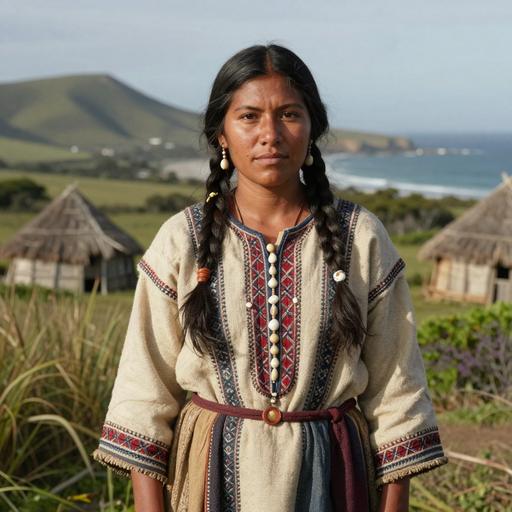
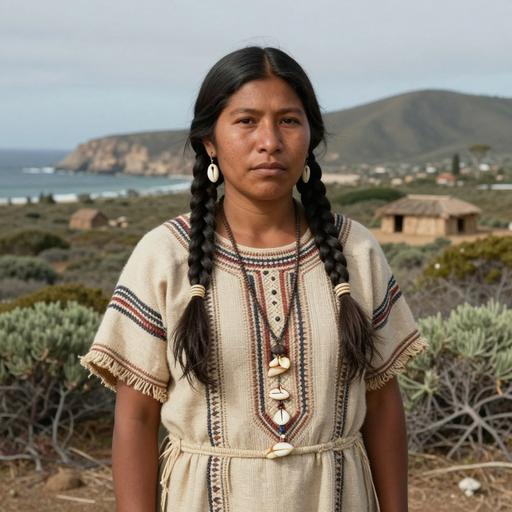
The genetic dataset of 114 ancient individuals from California coastal and island sites provides a rare, multi-millennial window into population history. Maternal lineages are dominated by A2c (36 samples) and haplogroups C (28), D1t (14), B (14), and A2 (12), a distribution broadly consistent with North American indigenous maternal diversity but with notable enrichment of A2c on island contexts. Paternal markers are led by haplogroup Q (44), the expected predominant Native American Y lineage, with smaller counts of P (6), CT (2), and C (2).
These patterns paint a picture of long-term maternal continuity punctuated by local and regional interactions. The high frequency of A2c—particularly in Channel Islands contexts like San Nicolas, San Cruz, and San Clemente—may reflect enduring maternal lineages in insular communities, though causation (founder effects, drift, or social practices) is not resolvable without larger comparative datasets. Low counts of rarer Y haplogroups (CT, C) should be treated as preliminary signals due to small sample sizes.
Genome-wide analyses, where available, support genetic affinity between island and mainland individuals, consistent with archaeological evidence for maritime mobility and exchange. Importantly, 114 samples constitute a substantial dataset for regional ancient DNA, but spatial and temporal gaps remain; inferring fine-scale demography or social rules (e.g., matrilocality or patrilocality) requires denser time-series and collaborative research with descendant communities. Overall, the genetic data corroborates a scenario of deep local persistence coupled with episodic gene flow across coastal California.