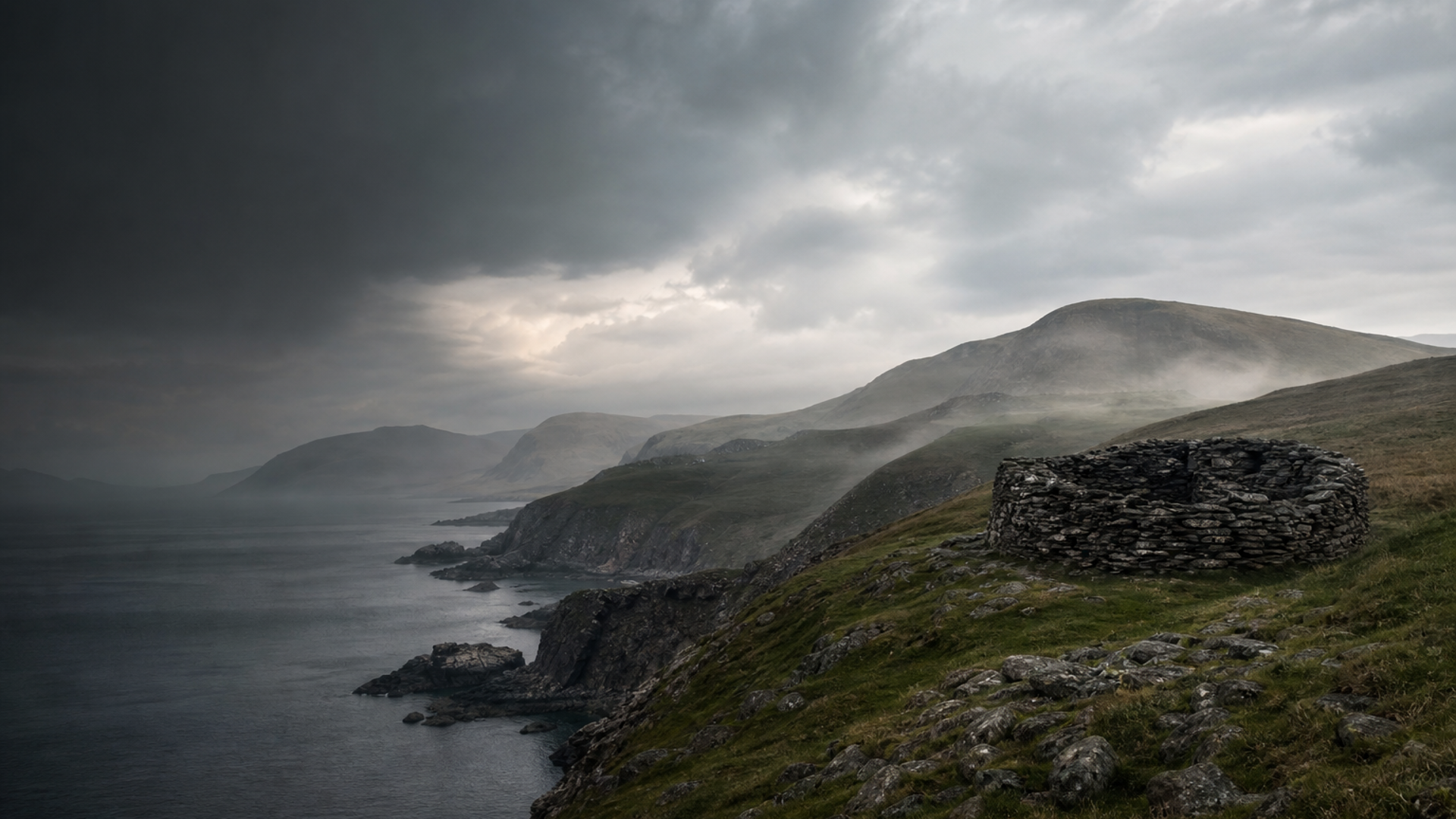
Life in Late Iron Age Scottish communities would have been shaped by the rhythm of sea and season. Excavations at coastal and island sites such as Hornish Point and Northton reveal diets rich in marine protein alongside domesticated cereals and livestock. Archaeobotanical and faunal remains from comparable Late Iron Age sites in Scotland indicate mixed farming, sea fishing, and specialized craft production—bone, antler, and ironworking appear intermittently in the record.
Settlement evidence is often fragmentary: huts, middens, and enclosures hint at small kin-based hamlets rather than dense urban centers. Social life likely revolved around kinship groups, control of local resources, and seasonal exchange. Broxmouth and the House of Binns yielded funerary deposits that suggest differential burial treatments, which might reflect status, age, or kin identity.
Burial contexts provide the human faces to genetic data: skeletal remains sampled for DNA were recovered from varied contexts across mainland and island sites, giving a cross-section of coastal society. However, archaeological preservation biases—coastal erosion, later ploughing, and selective excavation—mean that our view is partial. Archaeological data indicates resilient communities adapted to both terrestrial and marine economies, embedded in long-distance coastal networks.