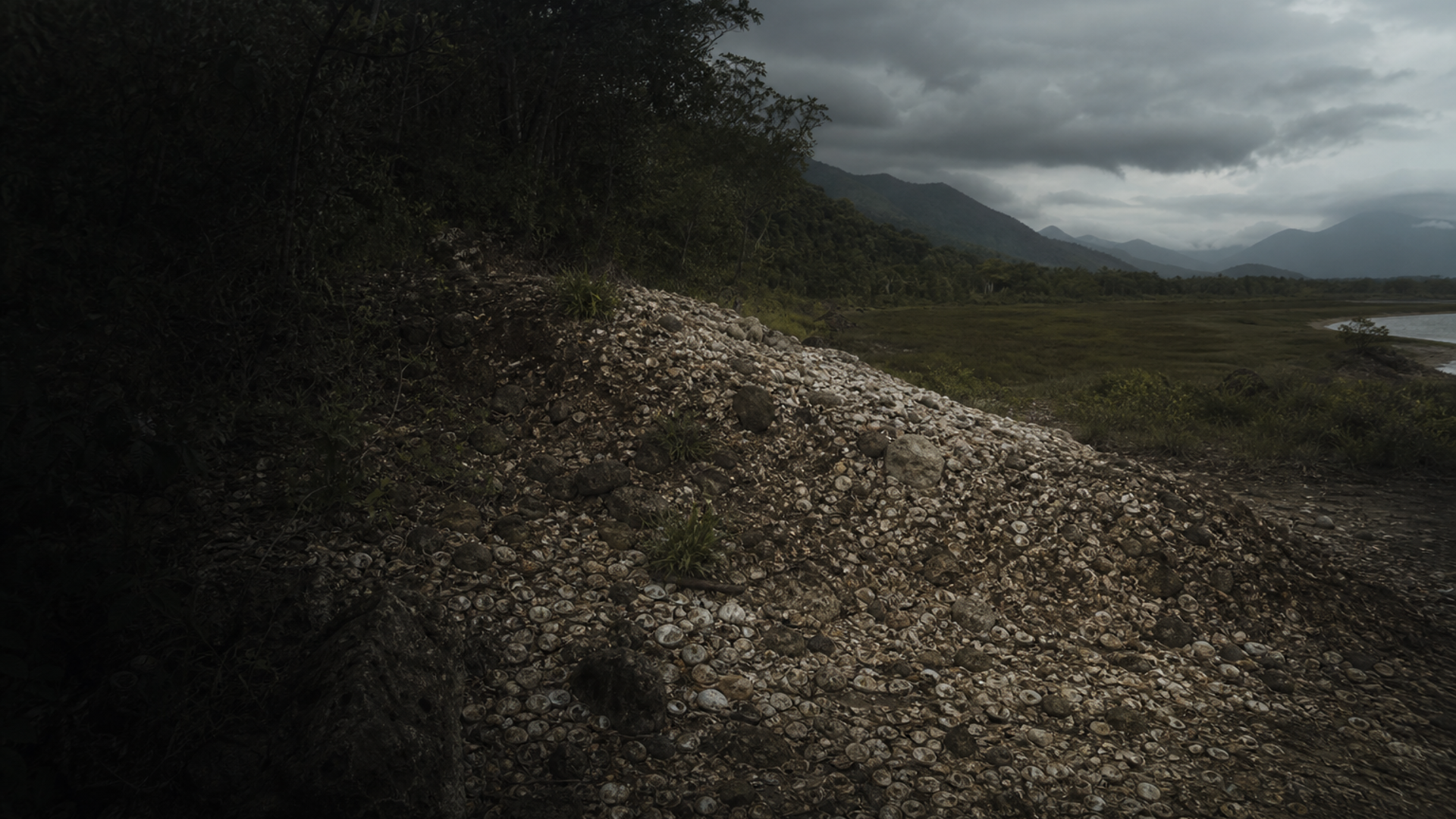
Genetic data from Cubatão I is limited but informative. Two individuals yielded mitochondrial haplogroups D1 and A2 — lineages widely recognized in Native American populations and consistent with a deep, pre-Columbian maternal ancestry along South America’s Atlantic margin. These mtDNA results align with archaeological expectations of long-term regional continuity among coastal hunter-gatherers.
No consistent Y‑chromosome pattern is reported for these samples (either due to preservation, coverage, or absence of male-specific data), so paternal-line inferences cannot be made from the current dataset. Given the sample count is only two, genetic conclusions are highly preliminary: while the presence of D1 and A2 supports Native American maternal ancestry at Cubatão I, they do not reveal population structure, gene flow, or affinity to specific inland or transcontinental groups.
Future higher-coverage genomes and increased sample numbers would allow testing of questions such as: continuity versus replacement, degrees of relatedness to other sambaqui sites, and connections to wider South American population histories. For now, the genetic signal complements the archaeological portrait of coastal Sambaqui lifeways without yet resolving broader demographic dynamics.