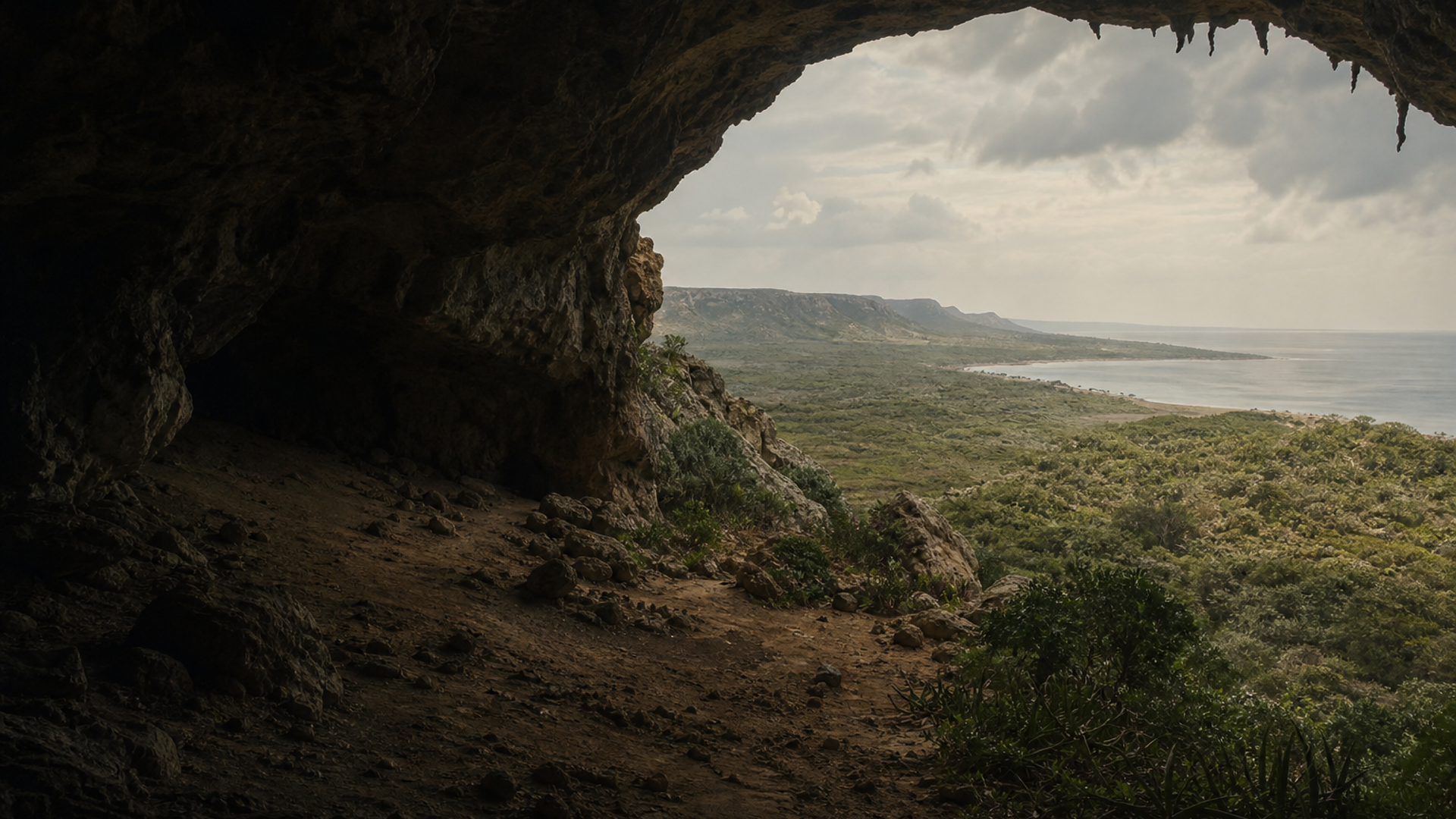
Ancient DNA from Cueva Calero comprises four low-coverage individuals recovered from stratified Archaic contexts dated between 1400 BCE and 1300 CE. Although sample size is small, patterns mirror broader New World signals. Two male-line Y haplogroups are assigned to Q (2 samples), a lineage widely recognized as a major founding paternal clade in the Americas. One sample is assigned to haplogroup P; this designation may reflect a basal or unresolved placement related to early Pan-American lineages or to analytical uncertainty, and it demands further sequencing and comparative study.
Maternally, two mitochondrial genomes belong to haplogroup A2, one of the principal founding Native American maternal lineages found from North to South America. The presence of A2 and Q aligns Cueva Calero individuals with ancestral populations that dispersed into the Caribbean following continental entry from Beringia, though the precise timing and routes remain debated.
Crucially, with only four samples conclusions are preliminary. Limited evidence suggests continuity with broader Native American founder lineages, but the diversity captured is incomplete. Future higher-coverage genomes and increased sample numbers will be essential to resolve population structure, admixture with later Ceramic-associated groups, and potential genetic continuity with historic and modern Caribbean peoples.