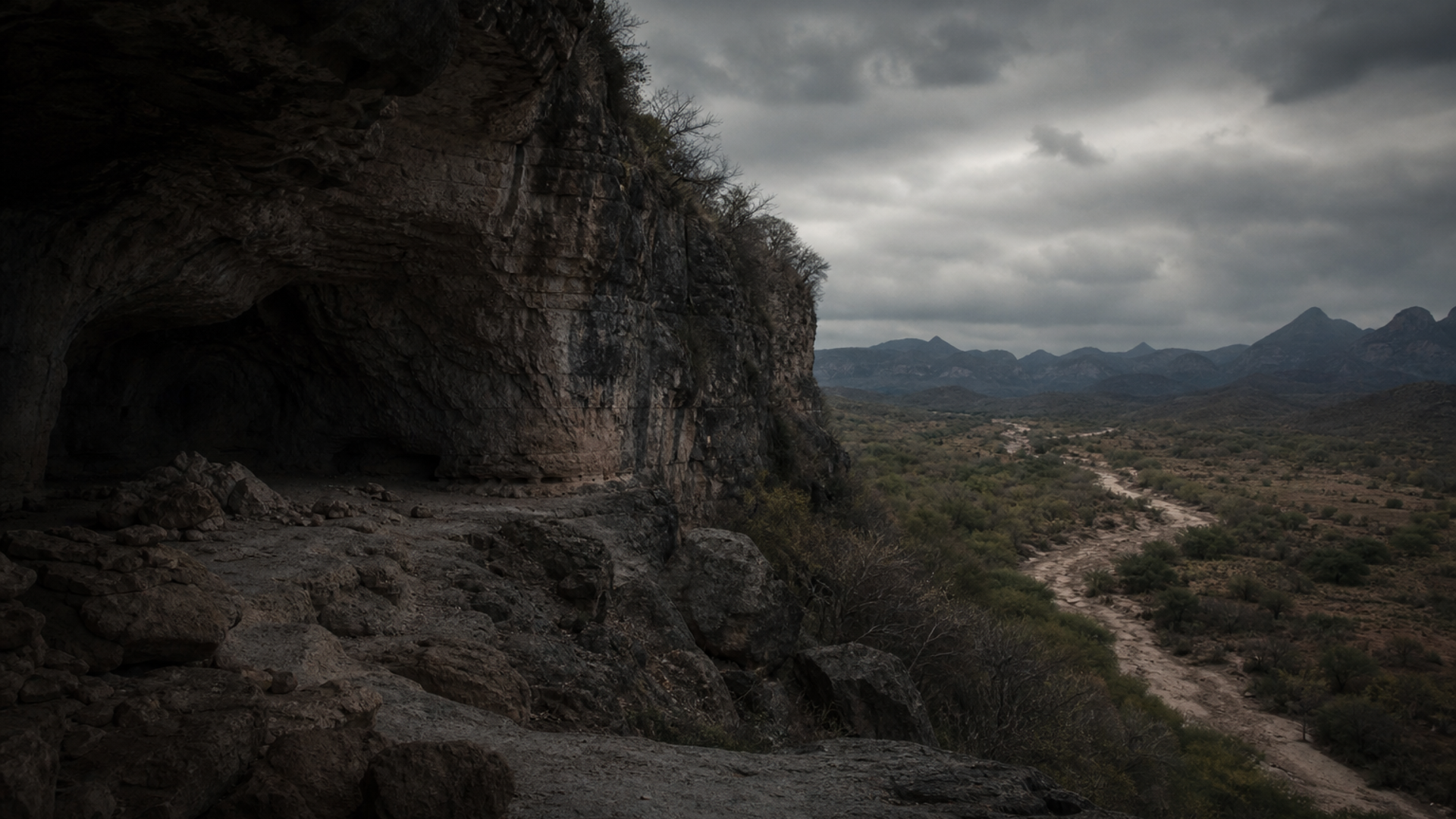
Direct evidence for everyday domestic life at Cueva DeLos Muertos Chiquitos is limited because the site is primarily mortuary. Archaeological data indicates that the cave was a focal point for burial practices rather than a long-term habitation site, so inferences about diet, craft, and household organization derive from associated surface sites in the wider Rio Zape valley and regional comparisons.
Limited faunal and floral remains from nearby contexts suggest a mixed subsistence strategy in northern Mexico during the Late Holocene, combining local plant use with hunting and small-scale cultivation where conditions allowed. The persistence of cave interment across generations implies continuity in social memory and lineage identity — families or small kin groups returning to the same place to commemorate the dead. Material traces point to trade and interaction at a modest scale: exotic objects are scarce but present, hinting at occasional exchange with neighboring populations.
Because the archaeological footprint outside the cave remains incompletely published, reconstructions of community size, social hierarchy, and seasonal mobility patterns are necessarily cautious. Future integrated analyses—linking archaeology, isotopes, and ancient DNA—will refine our picture of daily life for the communities connected to the Rio Zape mortuary tradition.