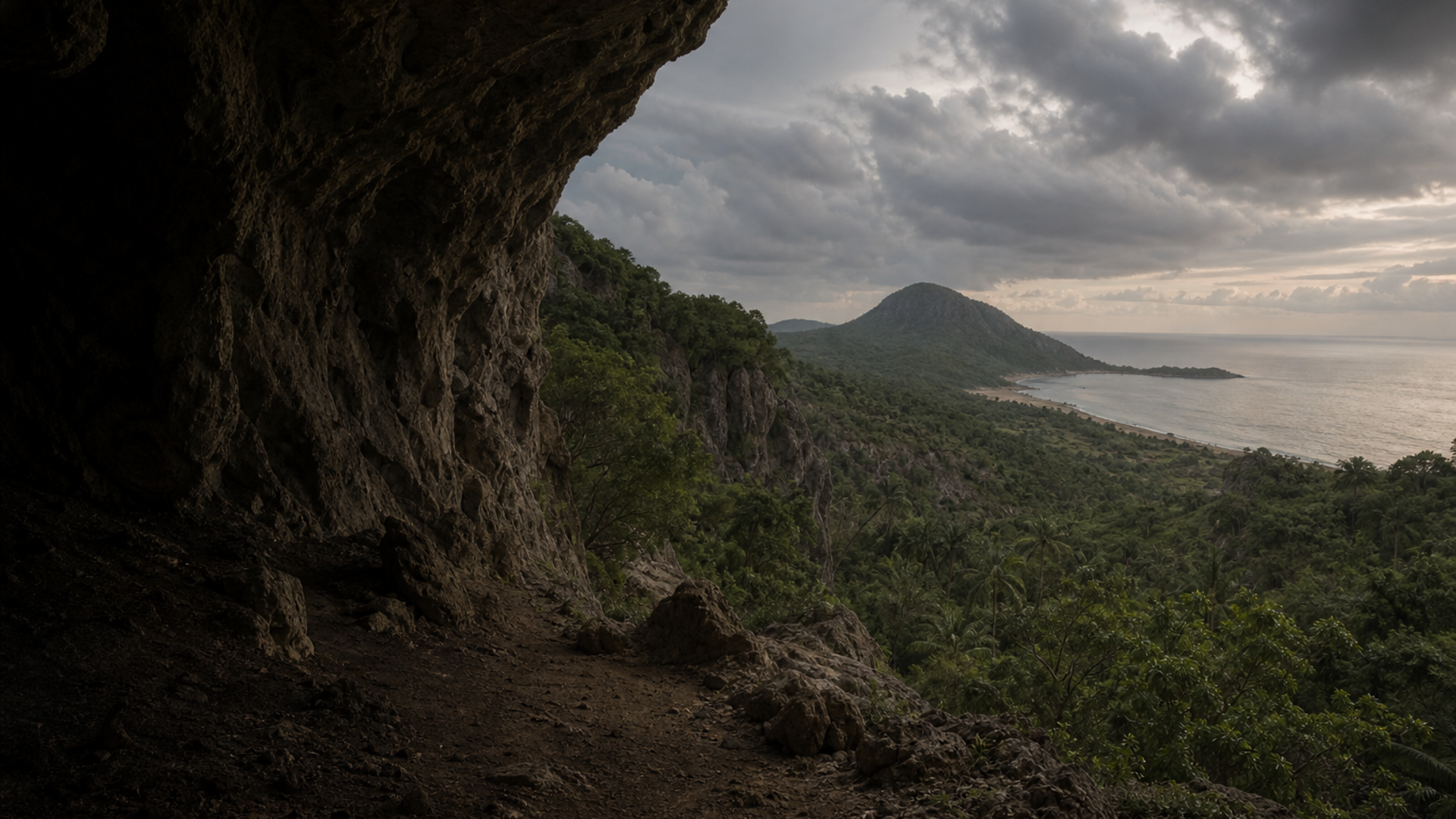
Four individuals from Cueva Juana, dated between 652 and 994 CE, provide a narrow but informative genetic snapshot. Maternal lineages consist of D1 (two samples), A (one), and C (one) — haplogroups that are well-documented among Indigenous peoples of the Americas. The single observed paternal lineage is Q, a Y-chromosome haplogroup commonly associated with Native American populations. Collectively, these markers are consistent with longstanding Indigenous ancestry in the pre-contact Caribbean.
These genetic signals resonate with archaeological expectations: maternal haplogroups D1, A and C trace deep continental origins associated with the initial peopling of the Americas via Beringia and subsequent southward population movements. Their presence at Cueva Juana supports a narrative of ancestral continuity in the Greater Antilles during the Ceramic Period and suggests that at least some island communities retained predominantly Indigenous genetic lineages into the later first millennium CE.
Crucially, the sample count is small (n=4). Limited evidence suggests patterns but cannot resolve finer questions — for example, the degree of genetic continuity with earlier Archaic inhabitants, the presence of substructure across Hispaniola, or low-level admixture events. Future, larger-scale sampling and contextualized radiocarbon dating are required to move from preliminary inference to robust population history.