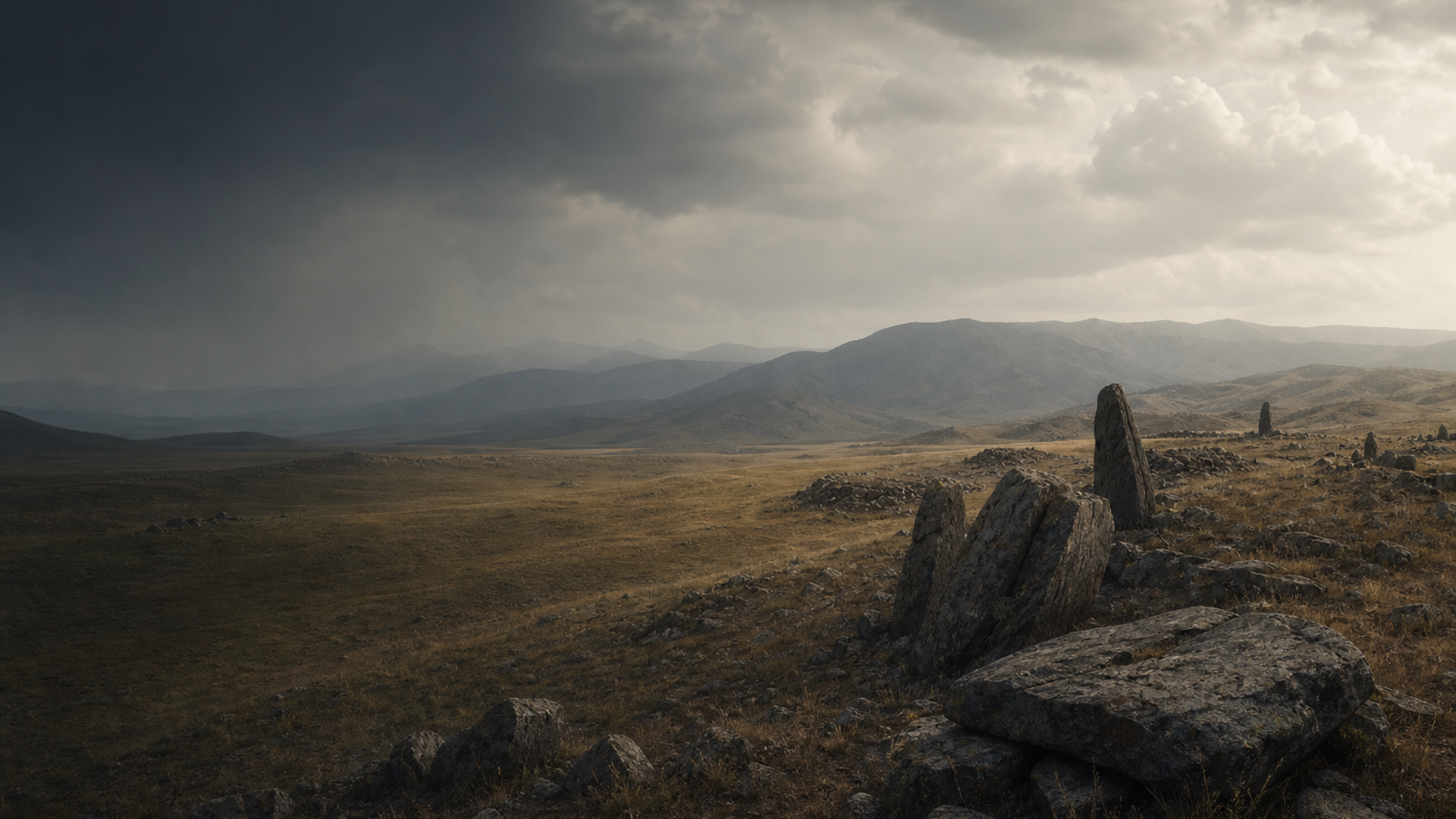
Archaeological interpretation paints a picture of resilient, mobile lifeways tuned to the steppe’s rhythms. Herds of sheep, goats, and horses likely formed the economic heart of communities; seasonal movement between winter and summer pastures would have structured social calendars. Material remains in Mid–Late Bronze Age Dali contexts often include tools for animal husbandry, simple portable dwellings inferred from ephemeral post-holes, and personal ornaments—objects that traveled with people as much as they signaled identity.
Burial practice at Byan Zherek suggests social differentiation: grave goods and body positioning vary, implying roles or statuses within small kin groups. The landscape’s openness encouraged long-distance contacts—exchange of metal, crafted goods, and possibly marriage ties that stitched together families across hundreds of kilometers. That said, archaeological data from Dali remains limited; many reconstructions rely on regional analogies. The lived reality likely combined stoic endurance against the elements with ceremonies and social acts that reinforced group bonds, memory, and mobility.