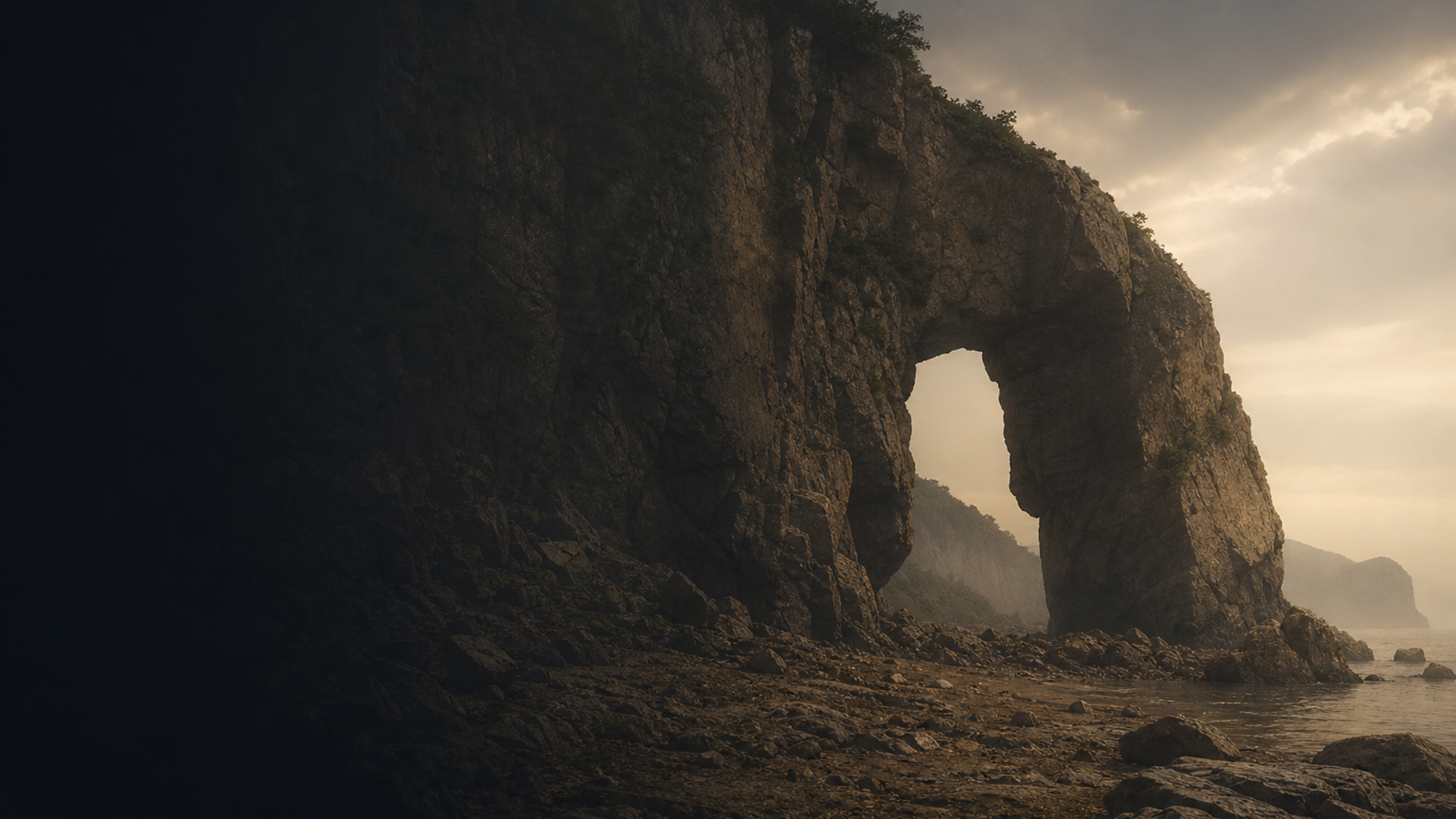
Seven genetic samples from Devil's Gate Cave offer an intimate but small window into early Neolithic ancestry in the Russian Far East. Maternal lineages are dominated by mtDNA D4 (4 individuals) and D4m (3 individuals), a cluster of haplotypes widely observed in ancient and modern populations of Northeast Asia and the adjacent islands. Y-chromosome data are sparse: one individual carries haplogroup C, a lineage present in multiple ancient East Asian and Siberian contexts and among several modern groups.
The mtDNA signal suggests strong maternal continuity in this coastal region through the Holocene, consistent with archaeological impressions of long-term exploitation of regional marine resources. However, with only seven samples (<10), patterns of genetic diversity, sex-biased mobility or gene flow from inland or island populations remain preliminary. Archaeogenomic comparisons hint at affinities between these individuals and other Northeast Asian hunter-fisher groups, but the limited sample count precludes firm claims about demographic processes such as migration, admixture, or population continuity.
Future, larger datasets are needed to resolve whether the Devil's Gate profile reflects a local enduring population, seasonal aggregation of related groups, or broader regional networks across the North Pacific edge.