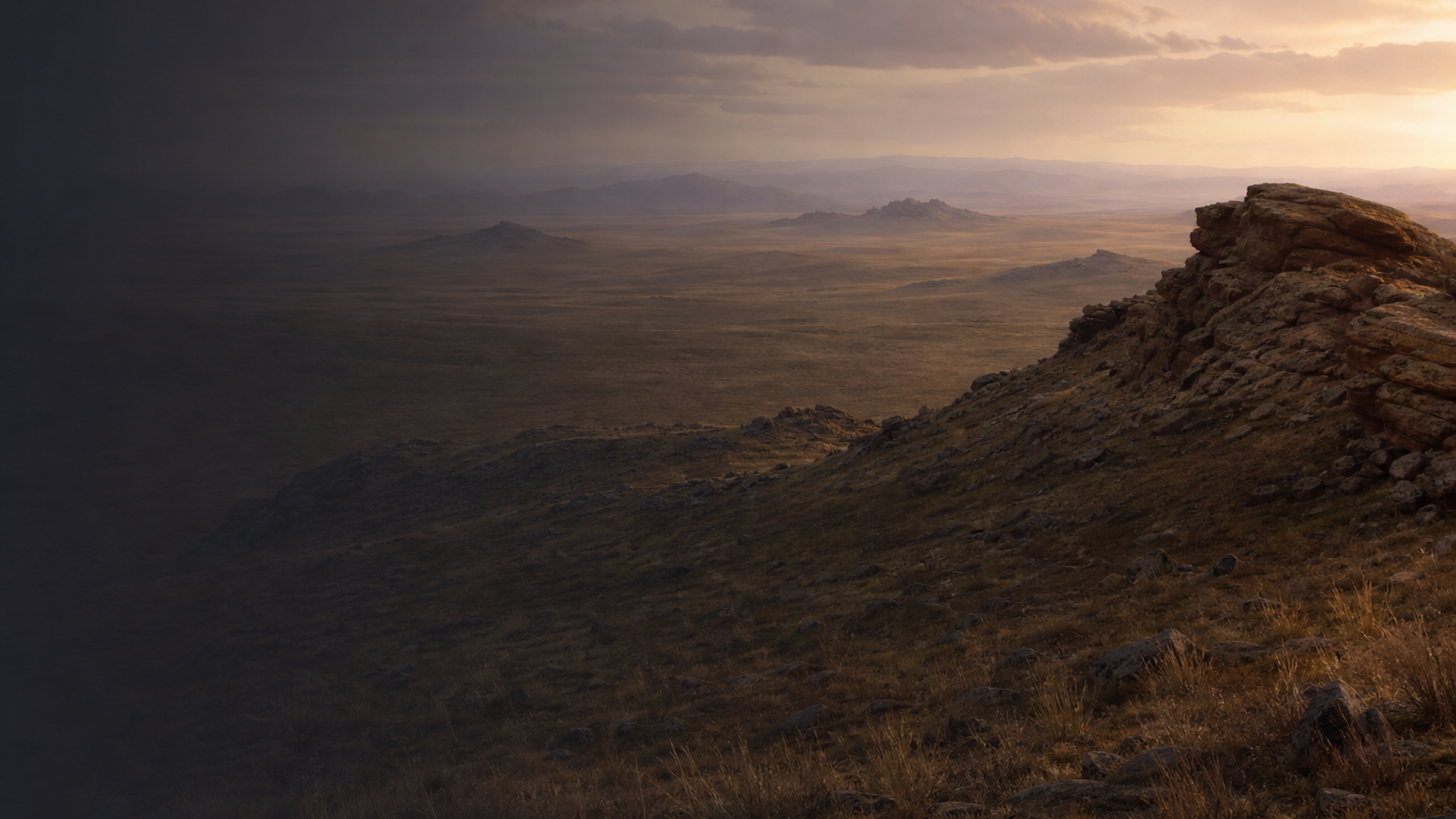
Life in the Dornod steppe unfolded in wide, wind-swept panoramas where seasonal movement governed survival. Households likely centered on herd animals — horses, sheep, goats, and cattle — and archaeological traces from similar Late Medieval Mongolian contexts point to felt dwellings, mounted pastoralism, and material cultures adapted for mobility: lightweight metalwork, tools suited to herding economies, and small trade items carried along long-distance routes. Rivers and floodplain pockets created productive grazing corridors and focal points for winter camps.
Burial practices at Tsagaan Chuluut and Ugoomor, while variable, convey social differentiation: some graves contain personal items that imply status or specialized roles, others are modest, reflecting common pastoral households. The cinematic rhythm of the steppe — dawn rides across grass seas, sudden storms, long-distance caravans threading between tribes — is supported by both the material record and genetic indications of movement. Ancient DNA hints at networks of kinship that stretched beyond local valleys; mitochondrial diversity suggests women entered local communities from multiple regional pools, which would shape household composition and cultural blending.
Archaeological data indicates resilience amid climatic shifts and political change. However, many aspects of daily life remain obscure at these two sites: preservation bias and limited excavation mean that reconstructions rely on analogy and cautious inference.