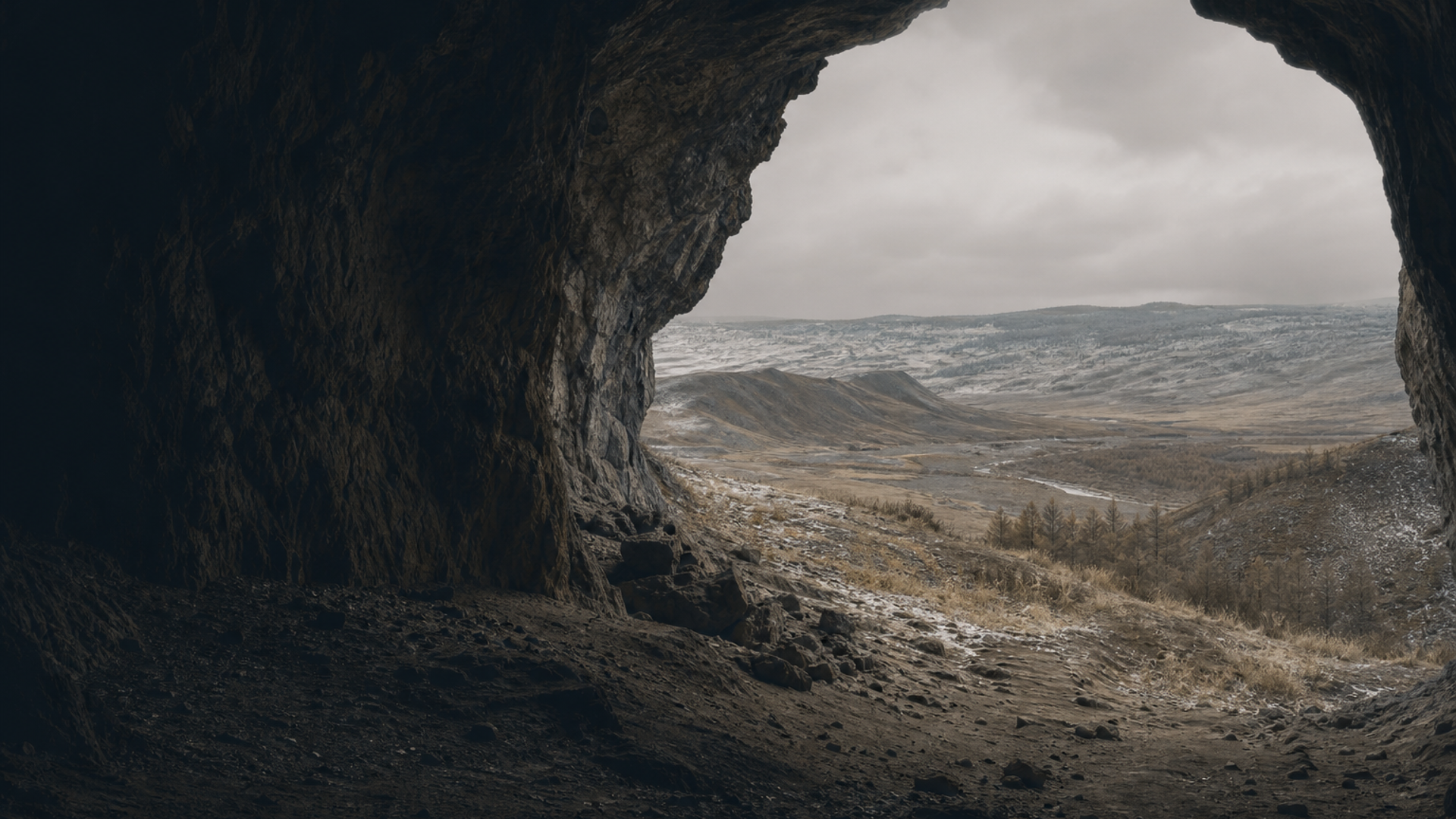
The cinematic traces of daily life at Chagyrskaya are subtle but telling. Stone tools, fractured long bones, and hearth residues form a patchwork of behaviors: hunting and carcass processing, tool maintenance, and use of localized shelters. Faunal remains indicate exploitation of cold-steppe and montane species consistent with Pleistocene Altai environments. Cut marks and percussion scars reveal skilled but pragmatic subsistence strategies tailored to episodic resource abundance.
Spatial patterns in the cave — concentrations of lithics and burned bone near inferred hearths — suggest small, socially organized groups cooperating in hunting, butchery, and tool production. The archaeological record does not preserve fine-grained evidence of symbolic systems comparable to some contemporaneous sites, yet curated tools and the selective transport of raw materials imply planning and social knowledge transmission across seasons.
Archaeological data indicate mobility strategies adapted to harsh landscapes: seasonal movements between valleys, tactical hunting of ungulates, and reuse of sheltered sites for aggregation. Given the small sample size and incomplete preservation, reconstructions of social structure remain provisional, but the material imprint is consistent with mobile, resilient Neanderthal lifeways in the Altai.