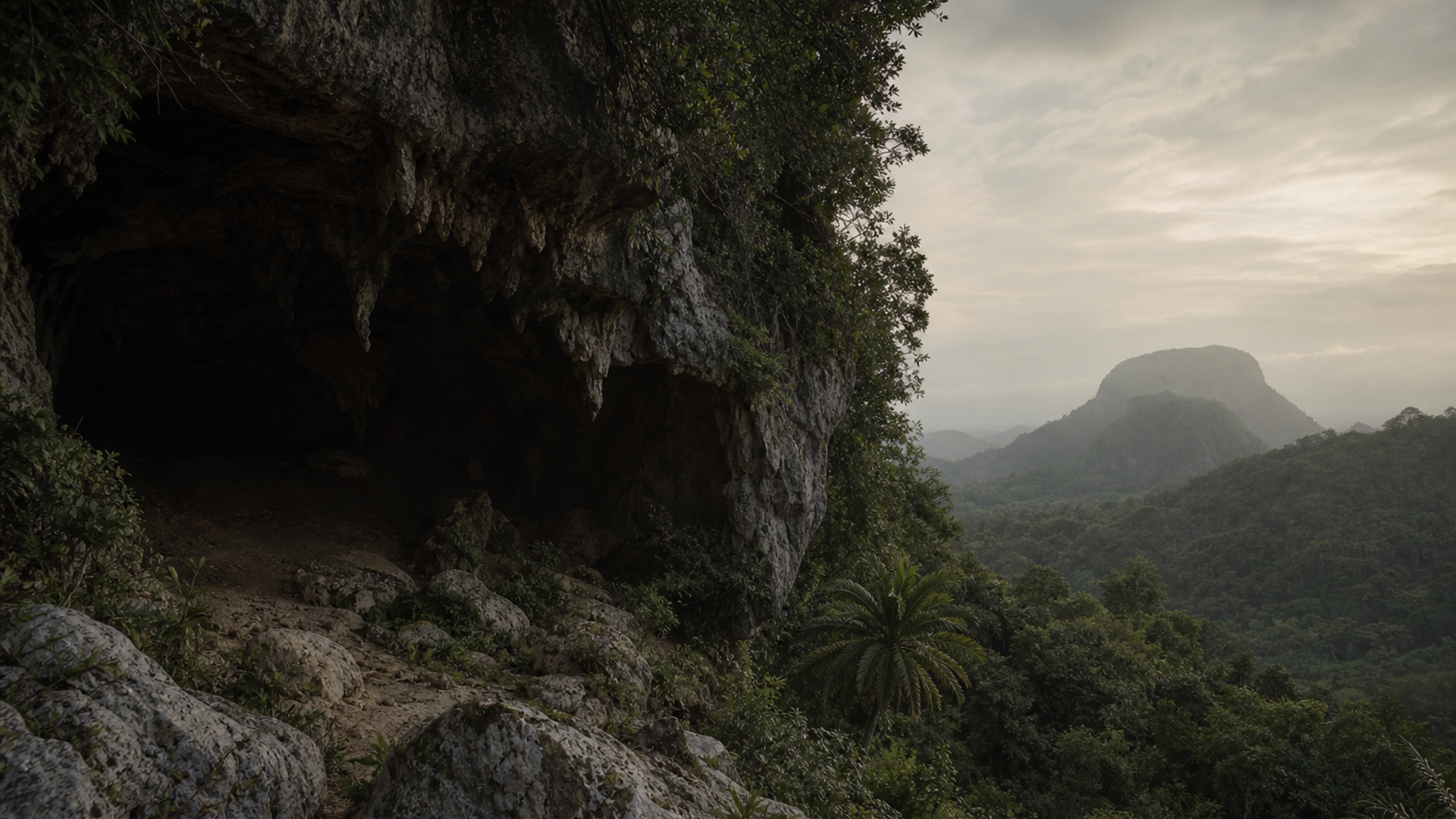
Ancient DNA from eight individuals at Cueva del Perico I offers a rare genetic window into Archaic Cuba, but the sample size requires careful restraint. Maternal lineages are dominated by mtDNA haplogroup D1 (5 individuals), with two C lineages and one A2 — all matrilineal haplogroups widely recognized as founding Native American branches. On the paternal side, Y-chromosome data are represented primarily by haplogroup Q (three samples) and a single Q1b — again consistent with Indigenous American paternal ancestry.
These haplogroups align broadly with expectations from mainland and Caribbean ancient DNA: founding maternal lineages (A, B, C, D, X in the Americas) and Q-series patrilineages reflect early waves of peopling and subsequent regional diversification. At Perico, the dominance of D1 and presence of C and A2 may reflect local founder effects or drift in a small island population. The presence of Q and Q1b in the Y-chromosome record supports continuity with broader Native American paternal ancestry, though resolution beyond broad haplogroup assignment is limited by current data.
Genetic affinities implied by these markers suggest connection to pan-American founding ancestries rather than recent external inputs. However, with only eight individuals, population-level inferences — about migration routes, admixture events, or continuity into later Caribbean populations — remain preliminary. Additional sampling across sites and dense genome-wide data would be required to resolve finer-scale demographic history.