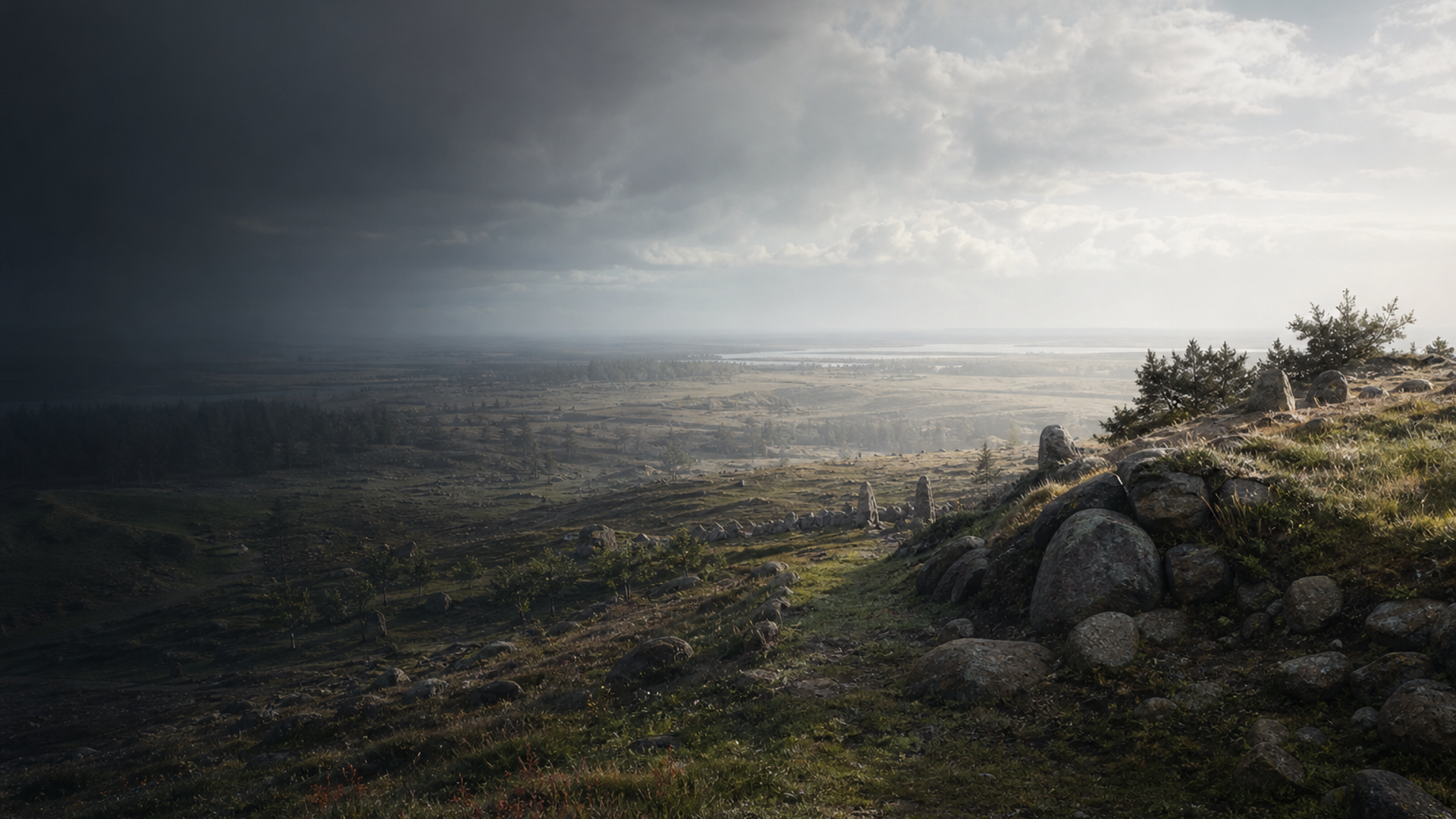
Excavations at tarand burials and associated settlement traces imply communities organized around mixed economies: small-scale agriculture, stock-keeping, hunting and rich exploitation of coastal fisheries and wetlands. The landscape—estuarine shores, islands like Saaremaa, and fertile river valleys—shaped seasonal mobility, boat use, and trade along the Baltic littoral.
Tarand graves themselves are social statements: rectangular stone enclosures often contain multiple inhumations (for example tarand XI burial 24 at Hiiemägi and tarand 2 at Tandemägi), suggesting family or lineage-based burial plots. The absence of rich grave goods in many burials may reflect organic perishable economies or social choices rather than impoverishment. Stone circles at Kurevere point to communal ritual spaces, visible in the landscape and reused over generations. Craft traditions—bronze and iron tools, textiles, and woodwork—are inferred from tool finds and wear patterns, while house plans and refuse pits indicate tightly structured domestic life.
Archaeological preservation is variable; acidic soils and coastal erosion bias what reaches us. Therefore, reconstructions of daily life combine direct evidence from graves with inference from regional analogies and environmental data.