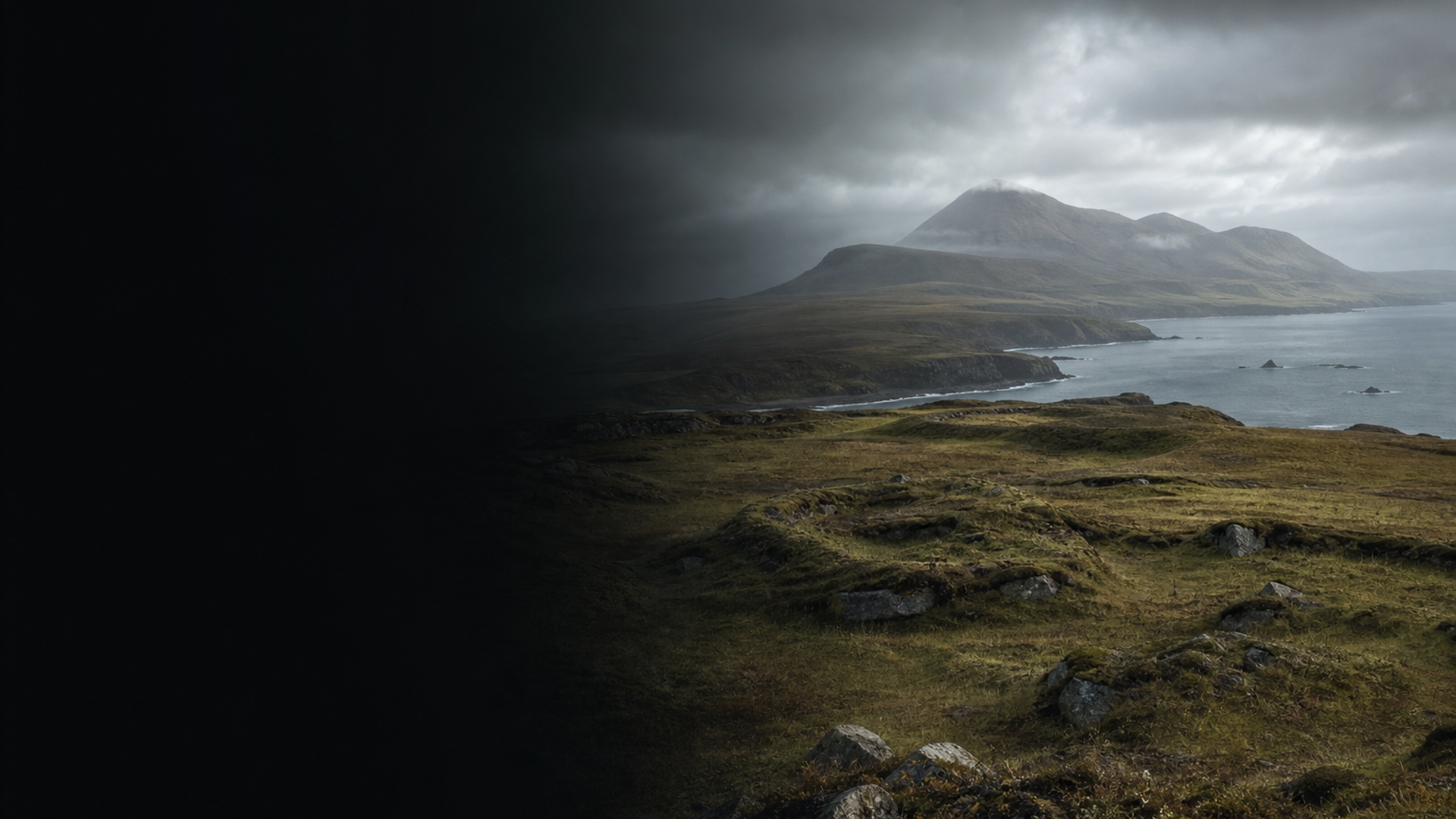
Life on Umnak was organized around the sea. Archaeological assemblages from Chaluka include dense shell layers, fish bone, and marine mammal remains that imply repeated harvesting of seals, sea lions, fish, and seabirds. Tasks of processing, drying, and storage likely took place in sheltered areas; bone and stone tools testify to a craft economy tuned to skin-working, netting, and hafted points for harpooning.
Shelter traces and ethnographic analogy to historic Aleut (Unangan) architecture suggest semi-subterranean winter houses and temporary seasonal structures. Material culture — beads, bone toggling harpoons, and expertly flaked points (where preserved) — implies social knowledge transmission across generations. Oral traditions of later Aleut communities record complex seasonal rounds, kin networks, and seafaring expertise; archaeology provides the slow-motion film of those practices.
Yet caution is essential: the human story reconstructed from middens and tools is partial. Taphonomic loss, coastal erosion, and uneven recovery mean many daily activities leave faint traces. Combined archaeological and genetic approaches offer complementary lenses: artifacts show how people lived; DNA begins to reveal who they were biologically and how they related to other populations.