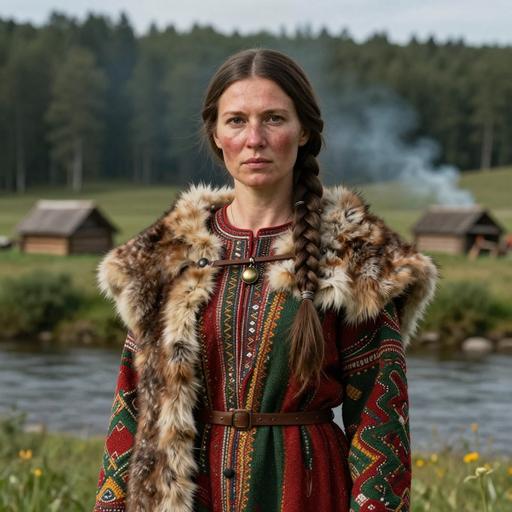
The everyday and the ceremonial in these northern societies were interwoven with the seasonal rhythm of lakes, rivers and forests. Archaeological contexts in Ingria (Kerstovo I, Malli) preserve stone tarand enclosures — rectangular stone outlines used for burials — while Levanluhta in Finland is famous for Iron Age water burials where human remains were deposited in a wetland setting. Such funerary choices reflect social identities expressed through landscape and material practice.
Subsistence strategies were diverse and adapted to northern ecologies: archaeological assemblages indicate fishing, freshwater shellfish exploitation, hunting of forest ungulates and a growing engagement with pastoral or agricultural items in later horizons. Settlement traces cluster near waterways, suggesting boats and riverine routes as the highways of exchange. Craft specializations — flint and bone tools, and later metal artifacts — appear intermittently across sites, indicating both local production and long‑distance contacts.
Archaeological interpretation must be careful: preservation bias in wetlands and the variable visibility of ephemeral wooden structures can skew our picture. Still, combined osteological and contextual evidence paints a portrait of mobile, adaptable communities with layered ritual practices and social networks that connected the central Russian forest zone, the eastern Baltic coast, and the Trans‑Ural frontier across millennia.