Echoes of the Ancient Mediterranean

Download PDF creates a visual, rasterized copy. Use Print for selectable text and better assistive-technology support.

Skip to main content
Civilization Spotlight

Echoes of the Ancient Mediterranean

Sardinia and Sicily, 2877–900 BCE: archaeology and DNA in conversation

2877 CE - 900 BCE
Italy (Sardinia, Sicily); Spain
1 Ancient Samples

The Story

Archaeological and genomic evidence from 84 samples across Sardinia and Sicily (2877–900 BCE) reveals population continuity, maritime connections, and a mixed genetic profile dominated by Y haplogroup R and mtDNA K, J, H, T. Findings refine Bronze Age narratives while noting regional complexity and uncertainty.

Time Period

2877–900 BCE

Region

Italy (Sardinia, Sicily); Spain

Common Y-DNA

R, I, G, J (notably R = 27 samples)

Common mtDNA

K, J, H, T, U (K most frequent)

Sample locations

The interactive map is unavailable. Browse the sample catalog for recorded locations.

Timeline

2877 BCE

Earliest dated contexts in dataset

Radiocarbon dates mark burial and habitation layers beginning around 2877 BCE at Sardinian and Sicilian sites in the study.

1800 BCE

Early Bronze Age transformations

Material culture shifts and increased metallurgy signal changing social complexity across Sardinia and Sicily.

900 BCE

Late dataset horizon

By 900 BCE regional identities and long-distance connections set the stage for Iron Age dynamics.

Origins & Emergence

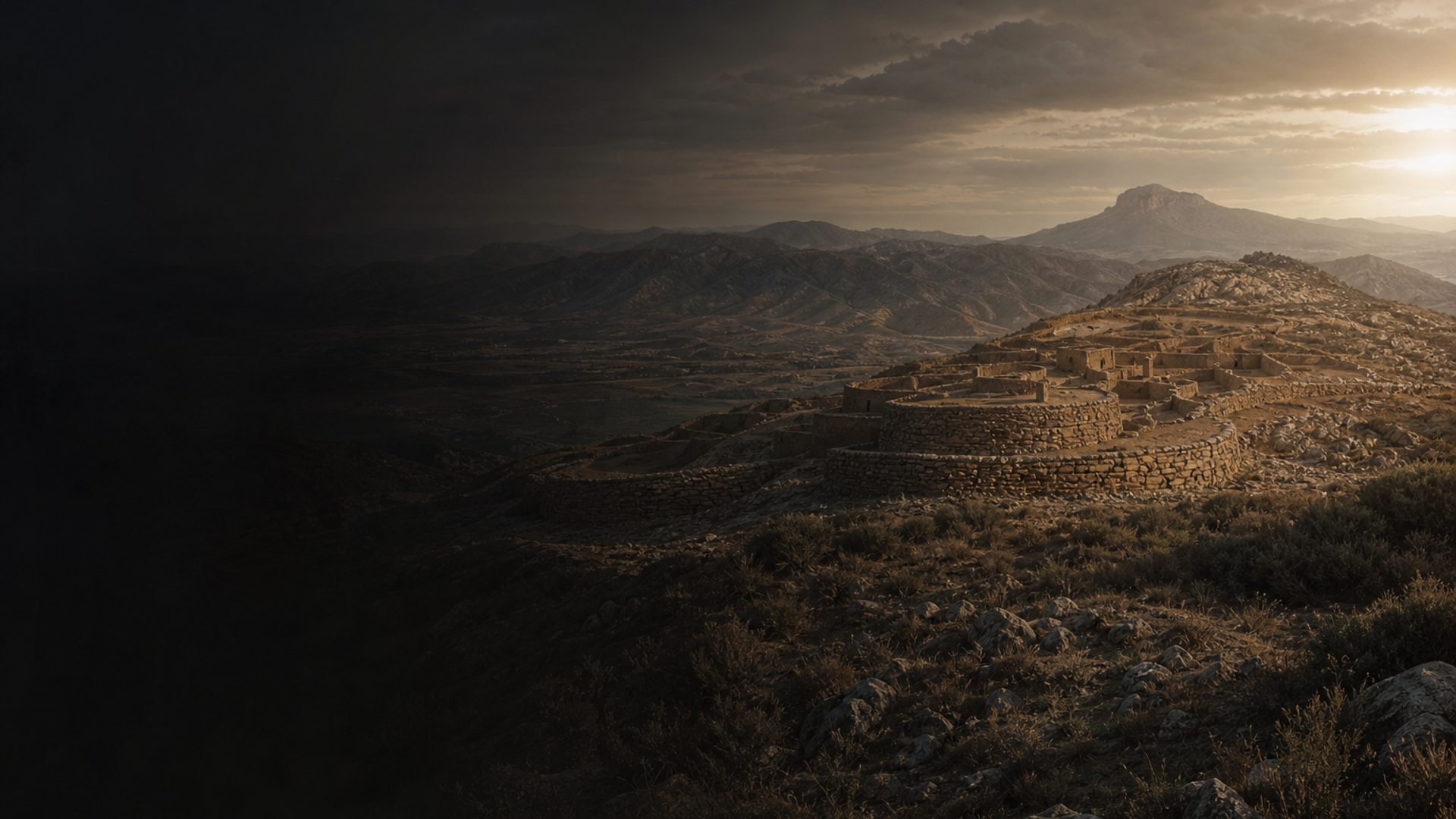
Across coastal caves and hilltop settlements from Sardinia to Sicily the archaeological record paints a slow, layered emergence of Bronze Age lifeways. Radiocarbon-dated contexts in this dataset span 2877–900 BCE and include burials and habitation horizons from sites such as Su Grutta ’e is Bittuleris (Seulo, Sardinia), Su Crucifissu Mannu (Porto Torres, Sardinia), and multiple Sicilian loci (Marcita, Buffa, Vallone Inferno). Material culture shows continuity with Chalcolithic traditions alongside new bronze metallurgy, fortified farmsteads, and maritime exchange networks.

Archaeological data indicates influences from mainland Italy and across the central Mediterranean, reflected in pottery styles and metallurgical links. Limited evidence suggests episodic demographic inputs rather than wholesale population replacement: continuity in local burial rites and settlement patterns points to enduring local communities adapting incoming ideas. Environmental evidence and site stratigraphy indicate intensified coastal and upland exploitation consistent with Early and Middle Bronze Age economies.

This picture is inherently regional. While Sardinia exhibits long-term cultural trajectories that culminate in Nuragic complexity, Sicilian contexts show more mixture tied to trade and mobility. The dataset's 84 samples provide improved resolution but sampling is uneven by site and chronology, so models of emergence remain provisional.

  • Samples from dated contexts spanning 2877–900 BCE across Sardinia and Sicily
  • Material culture shows local continuity with incoming Bronze Age technologies
  • Evidence points to episodic migration and long-term regional adaptation

Daily Life & Society

Life in Bronze Age Sardinia and Sicily combined maritime opportunity with rugged island living. Archaeological features — rock-cut tombs, stone houses, storage pits, and coastal harbors — suggest mixed economies of cereal agriculture, herding, fishing, and specialized craft production. Sites such as S’Iscia ‘e sas Piras (Usini, Sardinia) and Castellucciana (Contrada Paolina, Sicily) yield household assemblages: turned and hand-made pottery, stone tools, and bronze objects used in both domestic and ritual contexts.

Social organization likely ranged from extended family farmsteads to increasingly centralized Nuragic communities in Sardinia by the Middle Bronze Age. Funerary contexts show variability: individual inhumations and collective tombs, sometimes with rich grave goods indicating social differentiation. Coastal locations and island-to-island contacts fostered exchange of raw materials (copper, tin) and ideas; archaeological residues of seafaring suggest regular mobility. Preservation biases and uneven excavation mean daily life is best reconstructed as a mosaic of localized practices within a connected Mediterranean world.

  • Economy combined agriculture, herding, craft, and maritime exchange
  • Funerary variability points to social differentiation and regional customs

Genetic Profile

Genome-wide and uniparental data from 84 individuals reveal a heterogeneous genetic landscape consistent with archaeological complexity. Y-chromosome haplogroups most frequently observed include R (27 samples), I (11), G (6), and J (4), with one R1 designation; mitochondrial diversity is dominated by K (14), J (12), H (12), T (11), and U (7). These patterns suggest a predominant male-line presence of R-associated lineages alongside persistent local lineages (I, G) and Near Eastern-associated J.

Population-level signals indicate substantial continuity within Sardinia through the Early Bronze Age into the Nuragic period, matching archaeological continuity at sites like Su Crucifissu Mannu. At the same time, Sicily shows greater admixture consistent with its role as a crossroads: genetic inputs compatible with mainland Italian and broader Mediterranean gene flow appear in Bronze and later contexts. Formal modeling benefits from the relatively large sample set (84), improving statistical power; however site sampling is uneven and some periods or micro-regions remain underrepresented.

Interpretations remain cautious: while Y and mtDNA frequencies illuminate ancestry components, autosomal analyses are necessary to quantify admixture proportions and migration timing precisely. Where sample counts are low for particular subregions or phases, conclusions are preliminary.

  • Y-DNA dominated by R but notable presence of I, G, J; R = 27 of 84 samples
  • mtDNA shows high diversity (K, J, H, T, U), supporting mixed maternal ancestries

Legacy & Modern Connections

The genetic and archaeological threads from 2877–900 BCE help explain enduring features of the western Mediterranean. Sardinia’s relative genetic continuity underpins its modern reputation as a genetic refuge in some studies, while Sicily’s mixed record foreshadows later classical-era multiculturalism. Haplogroups observed in these ancient samples persist in diverse frequencies among contemporary Mediterranean populations, though later historical migrations further reshaped the genetic landscape.
These findings link concrete archaeological sites to long-term demographic processes: island resilience, maritime connectivity, and selective gene flow. They also remind us that ancestry is mosaic and temporally layered — archaeological continuity does not exclude episodic gene flow, and genetic signals must be read side-by-side with material culture. Continued sampling, especially from underrepresented locales and chronologies, will refine our understanding and illuminate how Bronze Age islanders contributed to the genetic foundations of later Mediterranean peoples.

  • Sardinian continuity contributes to later population distinctiveness
  • Sicily’s admixture reflects its historic role as a Mediterranean crossroads

Sample Catalog

1 / 1 samples
Portrait Sample Country Era Date Culture Sex Y-DNA mtDNA
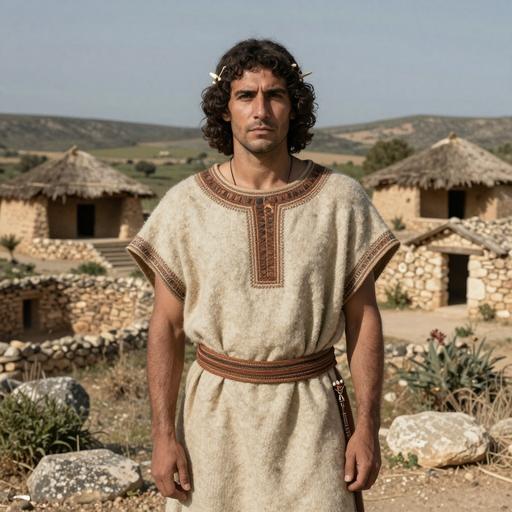
Reconstructed portrait of Zapateria EBA Argar individual, Spain
Spain Spain_Zapateria_Argar 2200-1550 BCE Ancient Mediterranean Civilizations M R1b1a1b1a1a2a1 H5a

AI Assistant

AI Assistant by DNAGENICS

Unlock this feature
Ask questions about the Echoes of the Ancient Mediterranean culture. Our AI assistant can explain genetic findings, historical context, archaeological evidence, and modern connections.
Sample AI Analysis

The Echoes of the Ancient Mediterranean culture represents a fascinating chapter in human history...

Genetic analysis reveals connections to earlier populations while showing evidence of unique adaptations and cultural innovations. The ancient DNA samples provide insights into migration patterns, social structures, and the biological relationships between ancient populations.

This is a preview of the AI analysis. Unlock the full AI Assistant to explore detailed insights about:

  • Genetic composition and ancestry
  • Migration patterns and origins
  • Daily life and cultural practices
  • Modern genetic legacy
Use code for 30% off • Expires Nov 15