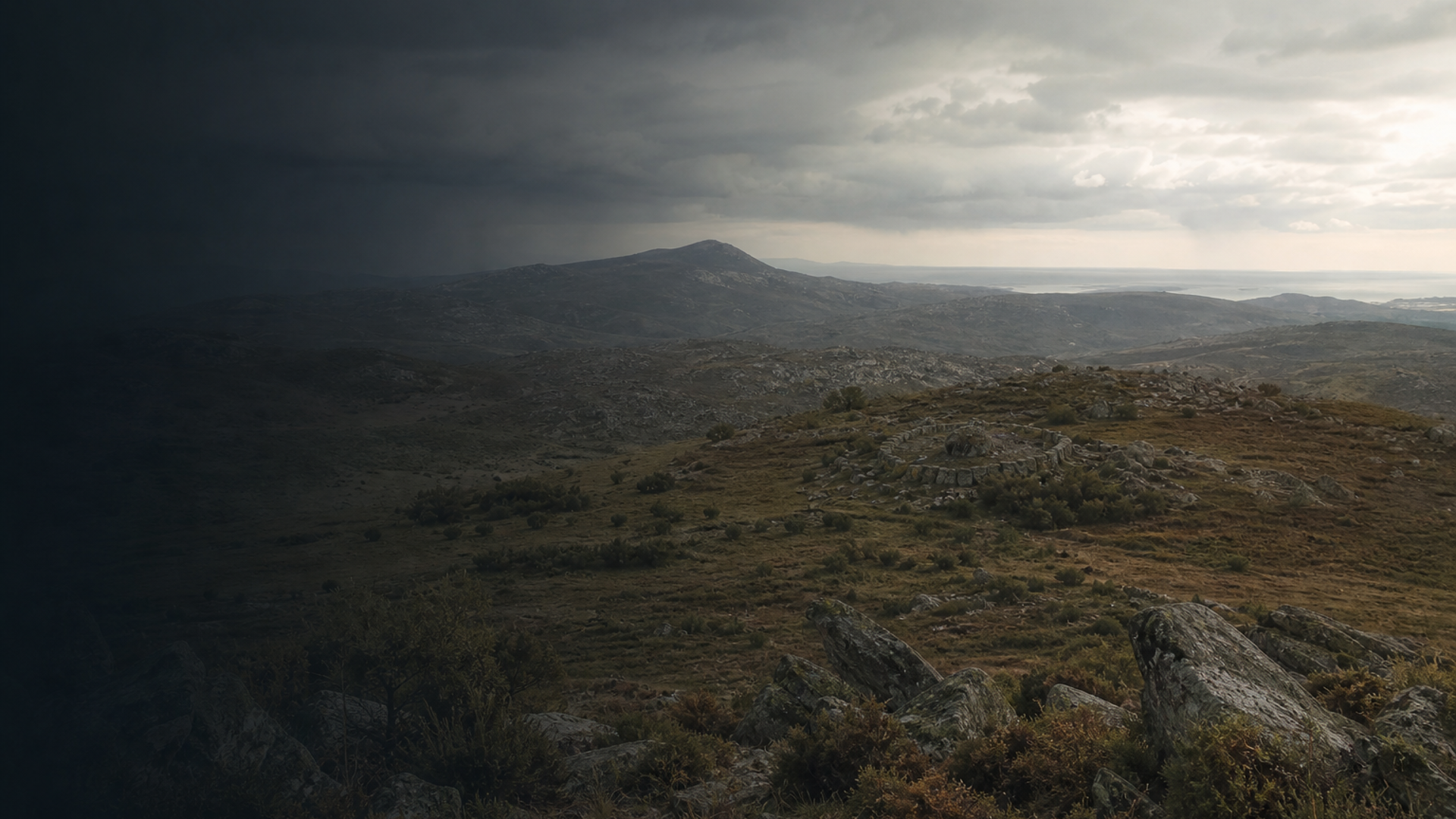
Genome-wide data from five individuals (sample count = 5) assigned to Portugal_LN_C provide a tentative genetic snapshot. Paternal lineages are dominated by haplogroup I (three individuals), with one occurrence of haplogroup H. Maternal lineages among the sampled individuals include U, J, K and H.
The predominance of Y-haplogroup I in this small set is consistent with persistence of lineages linked to long-established European hunter‑gatherer and early farmer interactions in Atlantic Iberia. The single H Y‑lineage is notable but must be treated cautiously; haplogroup H is relatively uncommon in ancient western Europe and its presence in one sample could reflect rare local diversity or low-frequency migration. Mitochondrial diversity (U, J, K, H) suggests maternal lineages typical of Neolithic and Chalcolithic Europe, indicating continuity alongside admixture.
Archaeological patterns of regional continuity and intermittent exchange align with a genetic picture of local ancestry with some influxes. Because the dataset is small (<10 samples), all genetic inferences are preliminary: additional sampling across sites and time slices is required to test hypotheses about migration, sex-biased gene flow, and the timing of external influences in Late Neolithic–Chalcolithic Portugal.