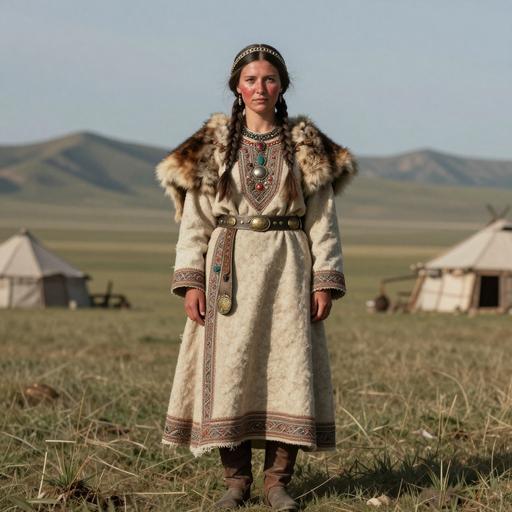
The genetic dataset for Eurasian_Nomadic is unusually large (n = 561), allowing robust inferences about population structure, admixture, and continuity. Male lineages show a diverse Y-DNA spectrum: haplogroup J (98 samples) is the most frequent, alongside R (38), N (30), Q (16) and I (12). Maternal lineages are dominated by West Eurasian haplogroups H (84), U (55), and T (46), but East Eurasian-affiliated haplogroups such as D (31) and J (30) are also present, signaling admixture.
These patterns support a model of repeated east–west gene flow: steppe-derived males (N, Q and other steppe-associated lineages) contributed ancestry that mixed with local European maternal lineages (H, U, T), while J and R lineages indicate connections that may reflect both steppe and more southerly or Balkan affinities. Genetic clustering shows geographic substructure: samples from Kazakhstan and Russia carry higher proportions of East Eurasian ancestry, whereas samples from the Danube–Tisza interfluve show substantial West Eurasian input with detectable eastern components.
With 561 samples, population-wide trends are reliable, but caution remains for site-level interpretations—some individual cemeteries have small sample sizes and may reflect family or elite pedigrees rather than whole communities. Overall, the genomes corroborate archaeological evidence for a mobile, mixed-ancestry population shaped by steppe migrations, local admixture, and centuries of cultural blending.