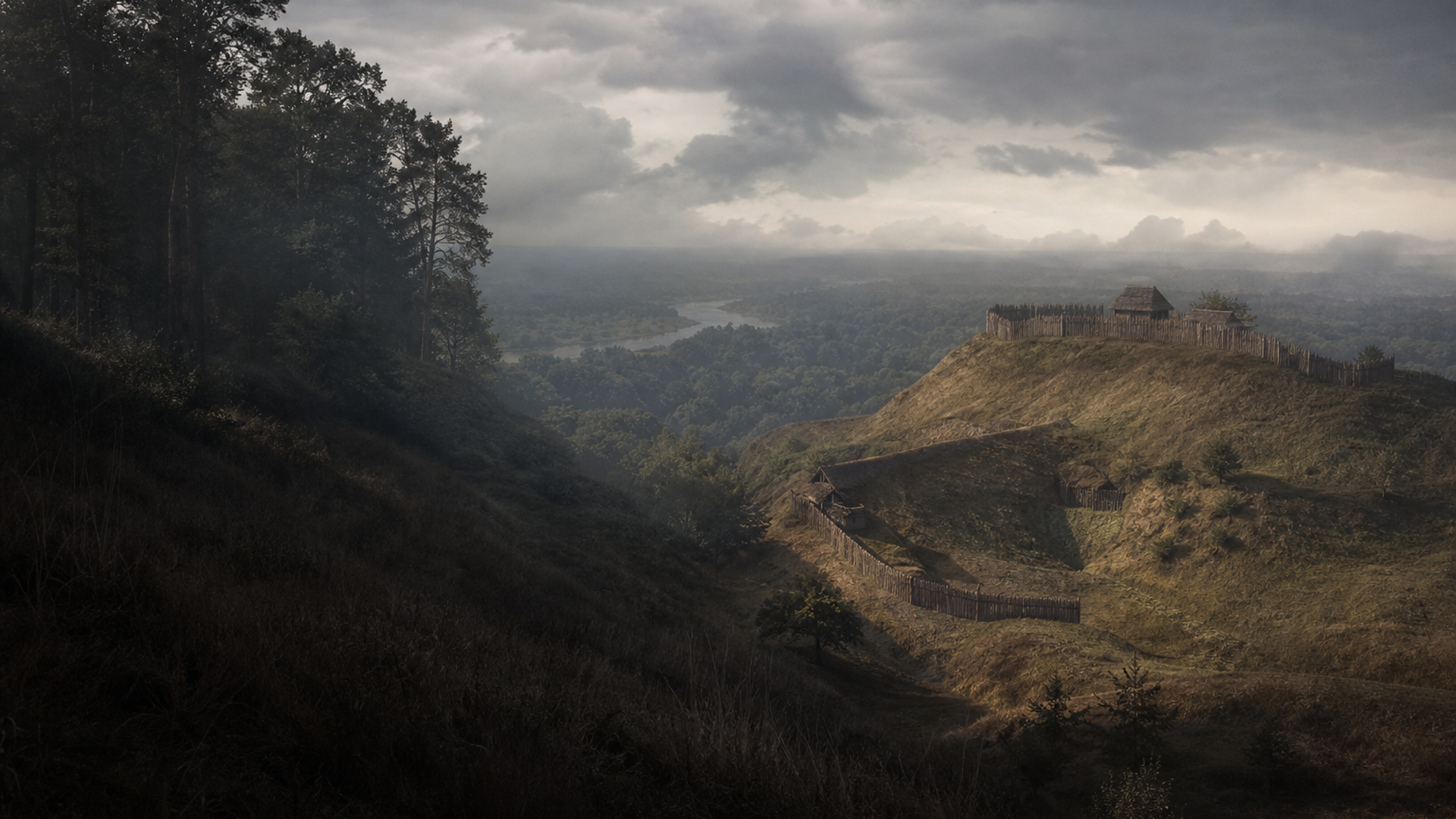
Archaeological remains from the wider Viking Age Ukraine show towns and riverine settlements where craft production, trade, and seasonal movement shaped daily experience. In Chernihiv-region sites, evidence for metalworking, imported small finds, and storage pits suggests households engaged in both local agrarian tasks and wider exchange. The cinematic image of longships threading rivers complements the more mundane reality of mixed farming, craft specialization, and market exchange that tied inland communities into pan-Baltic and Black Sea economies.
Social life in these borderlands was likely fluid: kin networks, guest-friend ties, and mercantile partnerships could bring Scandinavians, Slavs, and other groups into prolonged contact. Mortuary variability at local cemeteries—differences in grave goods, orientation, and burial architecture—reflects social diversity rather than a single ethnic identity. Again, archaeological data indicates complexity but cannot yet resolve how many newcomers settled permanently versus how many were seasonal or episodic participants in trade and warfare.