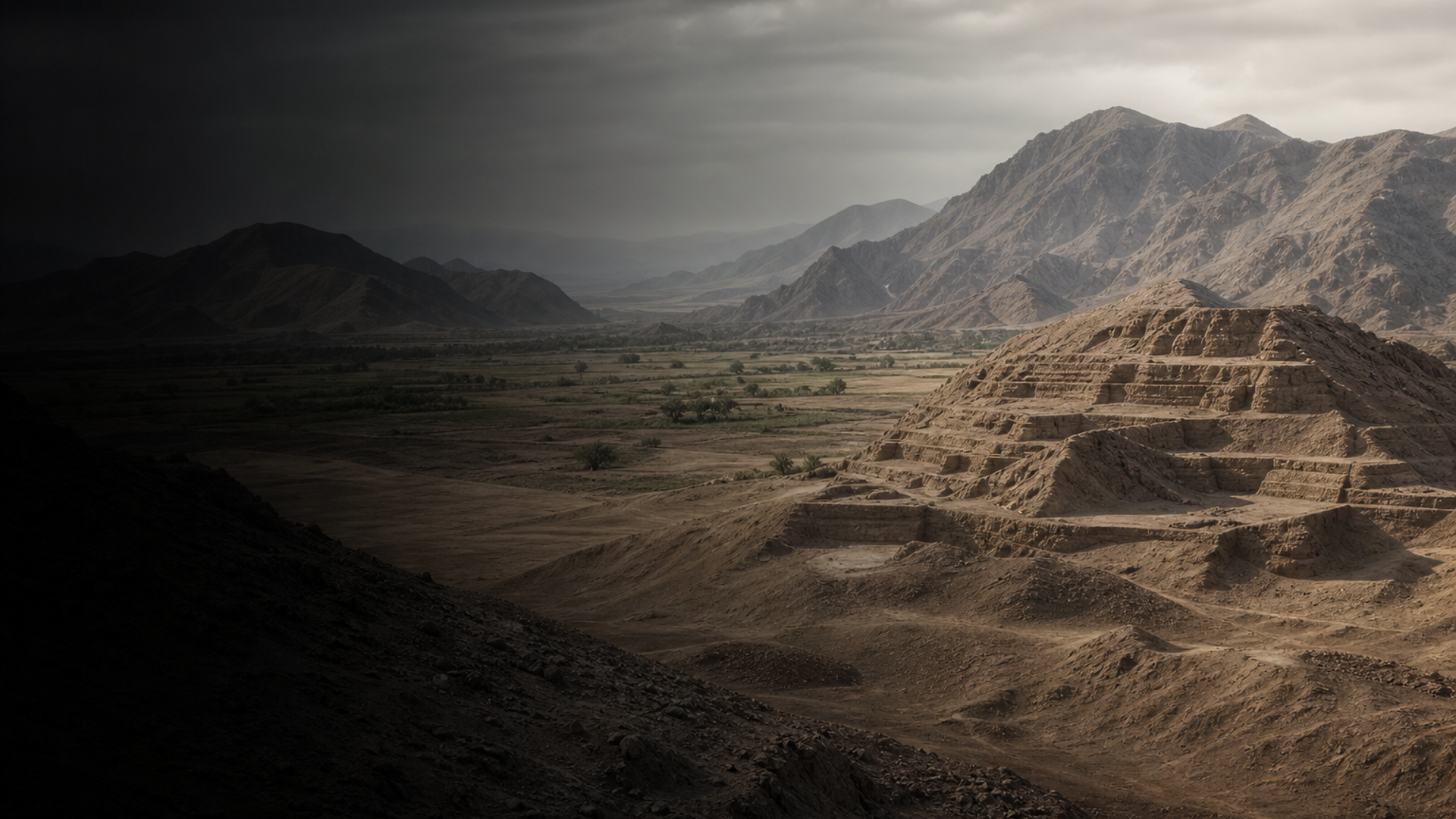
Archaeological remains at El Brujo evoke a tactile, sun-baked world: irrigated fields yielding maize and cotton, fish and shellfish pulled from nearshore waters, and workshops where fine ceramics and textiles were produced. Architectural compounds and platform mounds provided both ritual stages and storage for surplus, while painted friezes that survive on Huaca Cao Viejo portray ceremony, processions, and textile motifs that likely signaled status.
Burial assemblages—grave goods of metal, shell, and elaborately painted ceramics—indicate differentiated social roles and specialized craft knowledge. Tomb construction and the presence of high-value offerings show investment in ancestor commemoration and elite display. Archaeobotanical and zooarchaeological remains demonstrate a mixed economy of agriculture and marine exploitation, adapted to a landscape where intermittent heavy rains could reshape arable land.
Ethnographic analogy and archaeological indicators suggest households organized labor around irrigation, textile production, and fishing. Yet, the small set of genetic samples from three individuals means we should be cautious about linking specific burials to broad social categories. Archaeology provides the environmental and cultural stage; the DNA hints at the actors behind the scenes.