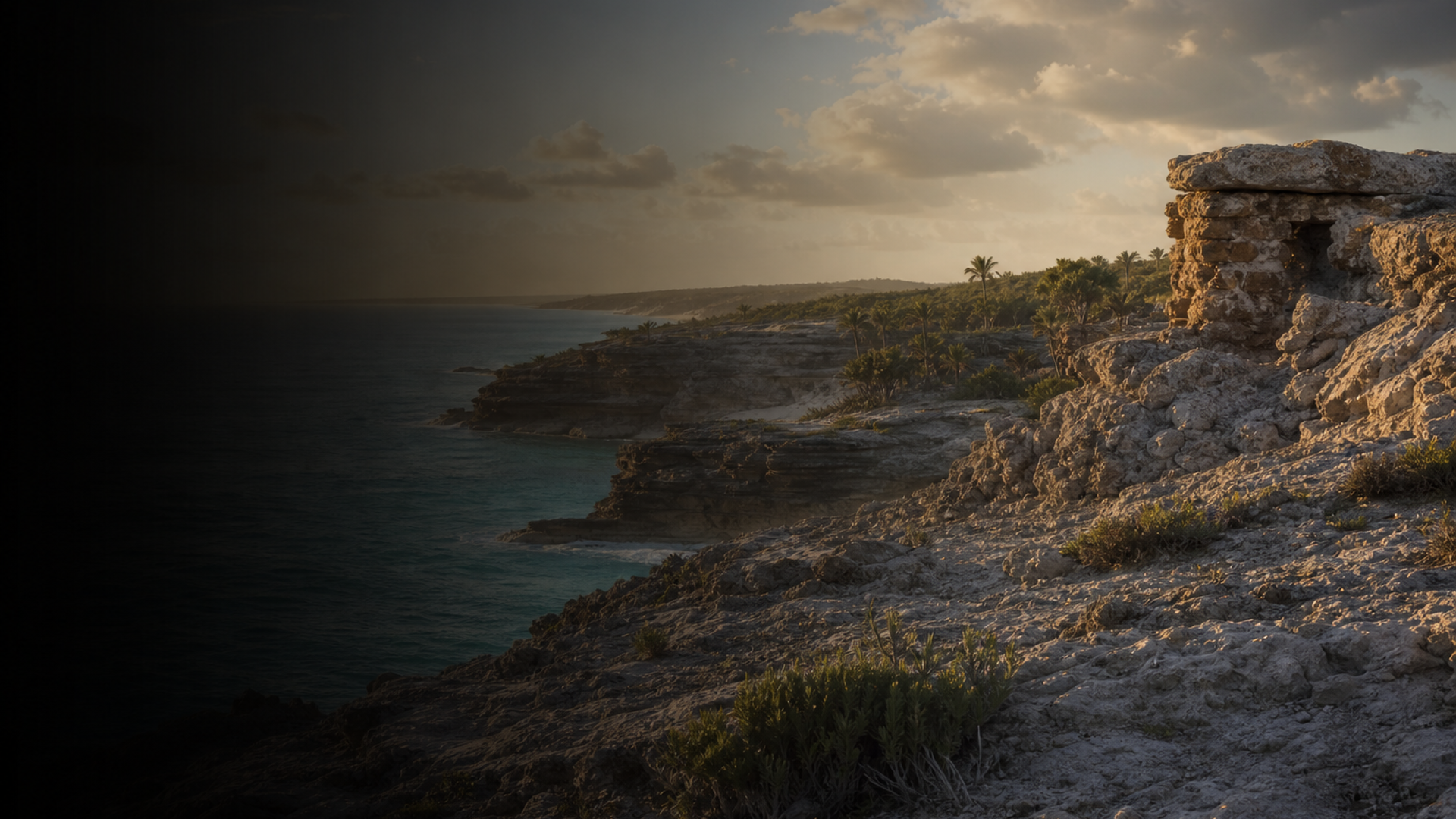
Fourteen DNA samples from Eleuthera (sites including Preacher's Cave, Garden Cave, and Blue Hole) offer a modest but informative window into population ancestry. Maternal lineages are dominated by Native American-associated mtDNA: haplogroups C (total 4), B2 (4), C1b (3), and C1d (1). These clades are consistent with post-Pleistocene Indigenous American diversity and align broadly with haplogroups documented across the northern Caribbean and mainland source regions.
On the paternal side, Y-chromosome haplogroup Q is the most observed (3 instances), a lineage commonly associated with Indigenous peoples of the Americas. The presence of Q alongside Indigenous mtDNA haplotypes supports biological continuity with pre-contact Native American populations rather than a later Eurasian paternal input.
Caveats and context: a sample count of 14 is moderate for uniparental inferences but still limited for fine-grained demographic modeling. Genome-wide (autosomal) data would be required to resolve admixture timing, proportions, and relationships to Greater Antilles groups such as the Lucayan and neighboring island communities. Archaeogenetic patterns here corroborate archaeological interpretations of Indigenous origins and maritime lifeways, but many questions—directionality of migration, relative contributions from different source islands, and micro-regional structure—remain open pending larger datasets.