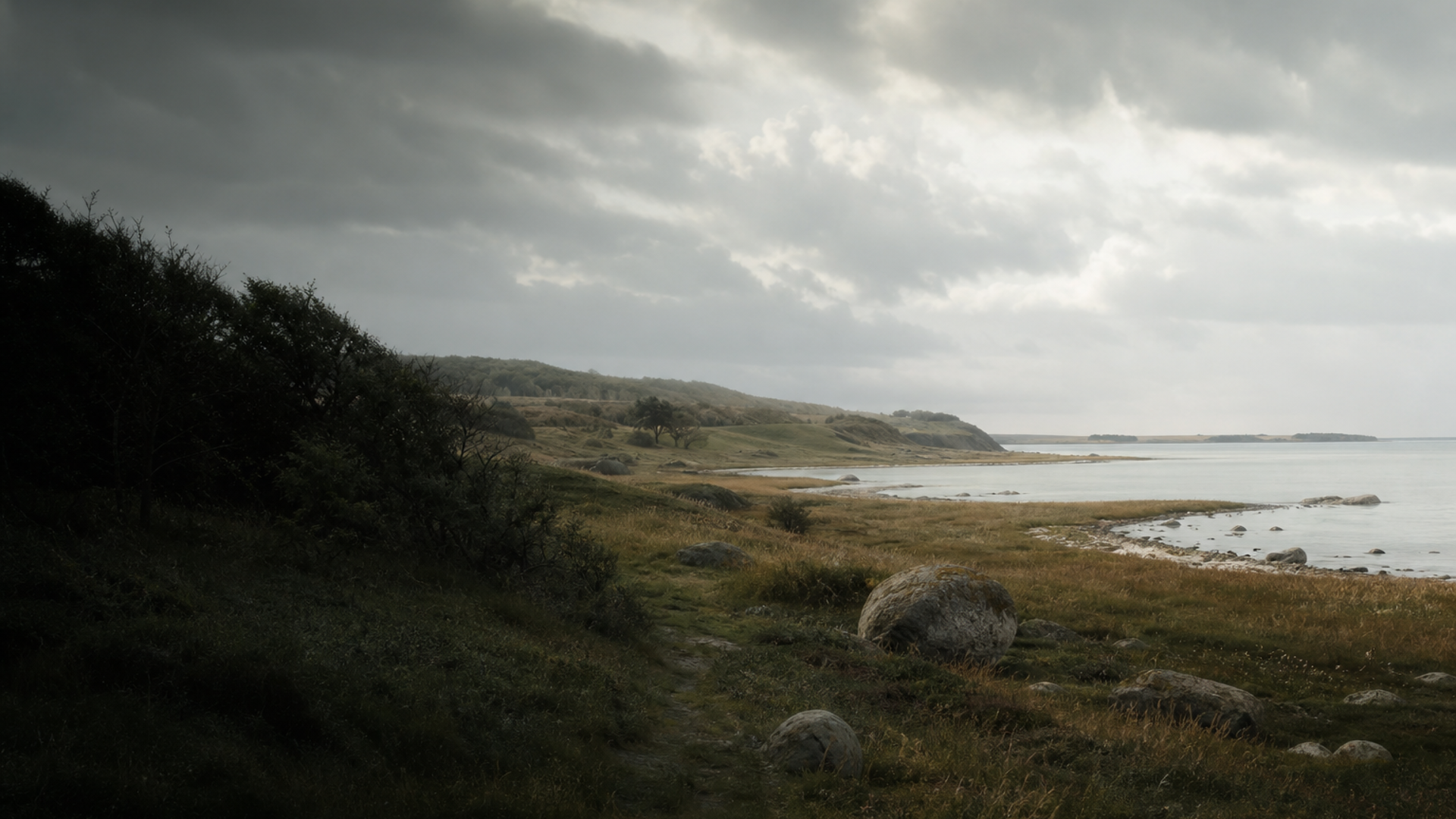
Daily life for Ertebølle communities unfolded along dynamic coastlines. Middens — heaped shells, fish bone and charcoal — are both refuse and archive: they preserve meals, tool production debris, hearths, and occasional offerings. Burial contexts, like those at Vedbæk and Dragsholm, reveal varied mortuary treatments including inhumation with personal ornaments, suggesting social differentiation and ritual practice.
Subsistence focused on rich estuarine and offshore resources: fish (cod, salmon), sea mammals, waterfowl, and molluscs, supplemented by terrestrial hunting and gathered plants. Lithic technology shows continued use of microliths and composite tools; later pottery appears in some contexts, signaling new technical choices rather than immediate dietary overhaul. Settlement patterns indicate a mix of seasonal camps and more persistent loci of activity near sheltered bays.
Social networks likely extended across the Kattegat and Baltic coasts, facilitating exchange of goods, knowledge and genes. However, preservation bias means many aspects of social organization remain inferential; organic structures and textiles rarely survive, so reconstruction depends on the material signals that do endure.