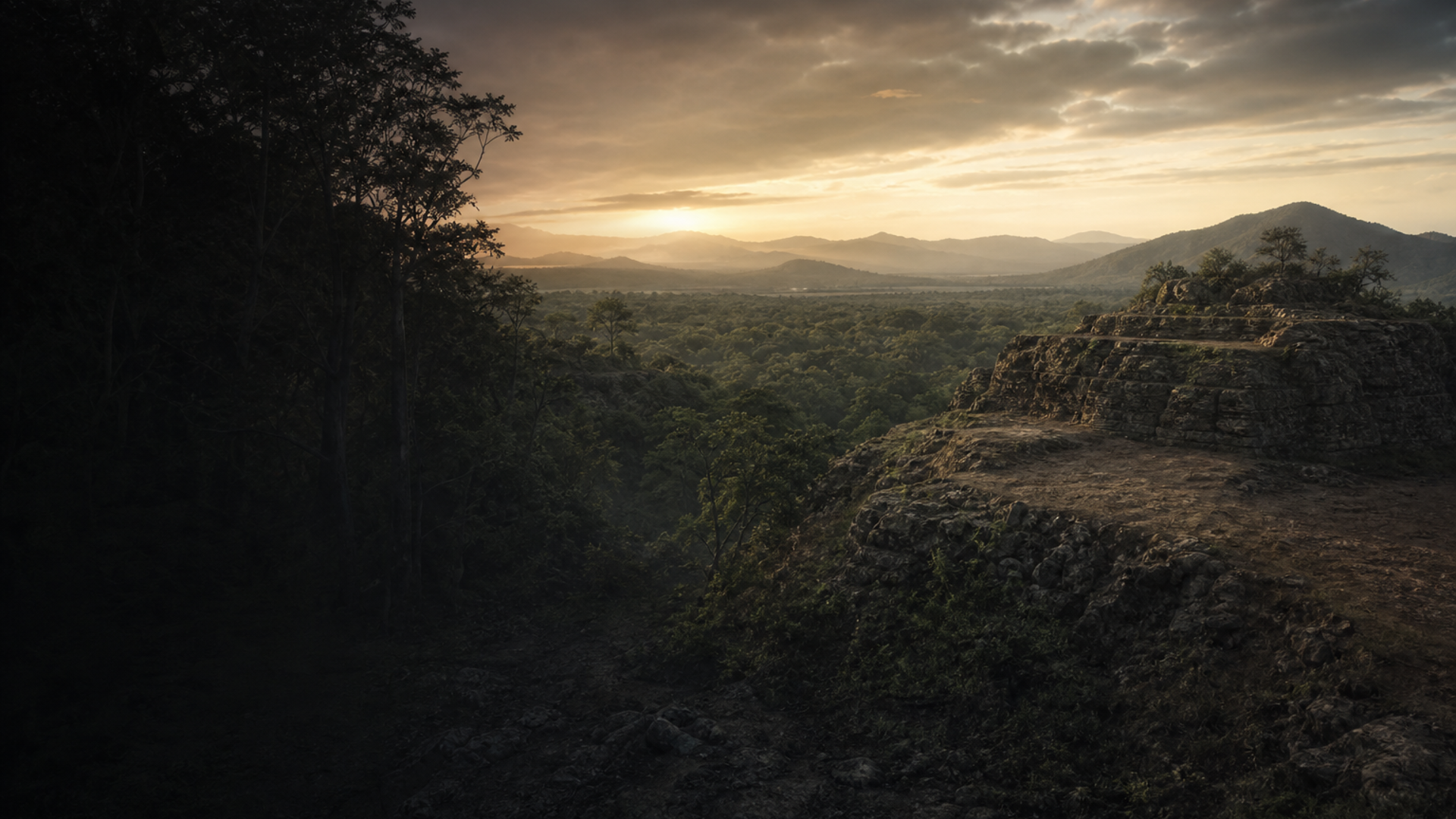
Archaeological signatures from the Belize Early Holocene hint at a life shaped by water and season. Shell middens, fragmented fauna, and lithic debris found in regional contexts indicate diets rich in fish, shellfish, and small terrestrial game. Stone tools—projectile points, cutting flakes, and ground stone fragments in nearby assemblages—suggest subsistence focused on hunting, netting, and plant processing where seasonally available resources were exploited.
Social groups were likely small and mobile, moving between coastal lagoons, riverine corridors, and inland wetlands in response to seasonal abundance. Shelter may have been ephemeral: open-air camps or rock-shelters providing temporary refuge. The material record preserves traces of tool maintenance, food processing, and perhaps early plant management, but direct evidence for horticulture is absent at this early date.
Cinematic scenes emerge from the archaeological record: dawn light on mangrove channels, the scratch of stone against stone as a cutting edge is renewed, and a group hauling a net heavy with fish. Yet every evocative detail must be balanced by scientific caution—our behavioral reconstructions rest on regional analogies and sparse site data rather than extensive excavation at Mayahak Cab Pek itself.