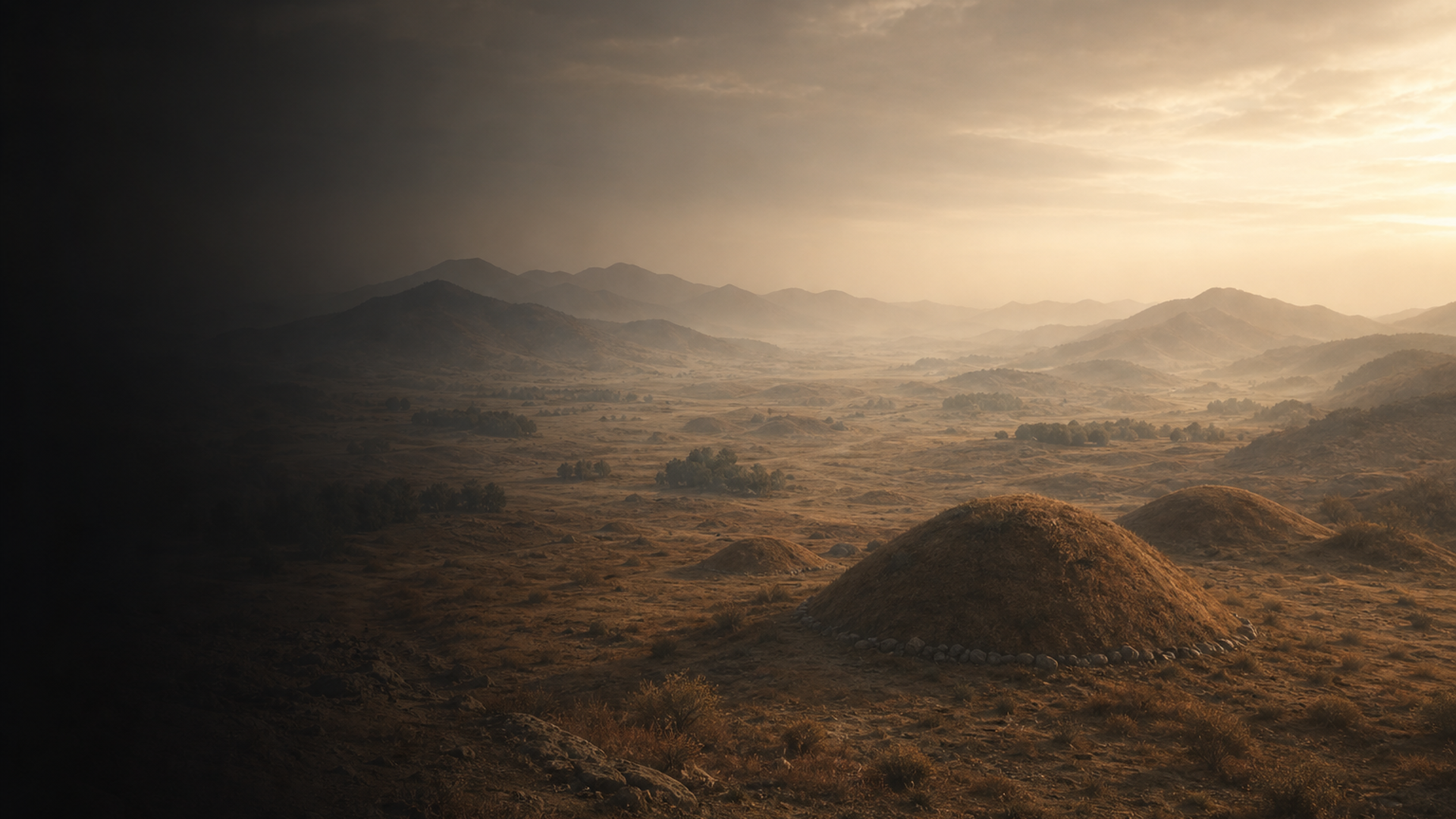
Seven individuals from Daeseong-dong were analyzed for mitochondrial DNA: four carried haplogroup D, one B, one M, and one F. Haplogroup D is widespread across Northeast Asia and occurs in many ancient and modern Korean, Japanese, and northern East Asian assemblages; its predominance here points to maternal continuity with regional populations. The presence of B, M, and F—each with broader pan-East Asian distributions—illustrates maternal diversity at the cemetery.
Importantly, Y-chromosome information is not reported for these seven samples, so paternal lineages and patterns of male-mediated mobility remain unknown. With fewer than 10 genomes, any population-level inference is provisional: the sample may underrepresent subgroups or overemphasize lineages by chance. Archaeogenetics paired with archaeological context — burial position, associated goods, and isotopic mobility studies — offers the best path forward for testing hypotheses about kinship, migration, and marriage practices in late Iron Age Korea. Future larger-sample studies and genome-wide data will be needed to confirm whether the Daeseong-dong signal reflects local maternal continuity, incoming groups, or a mixture of both.