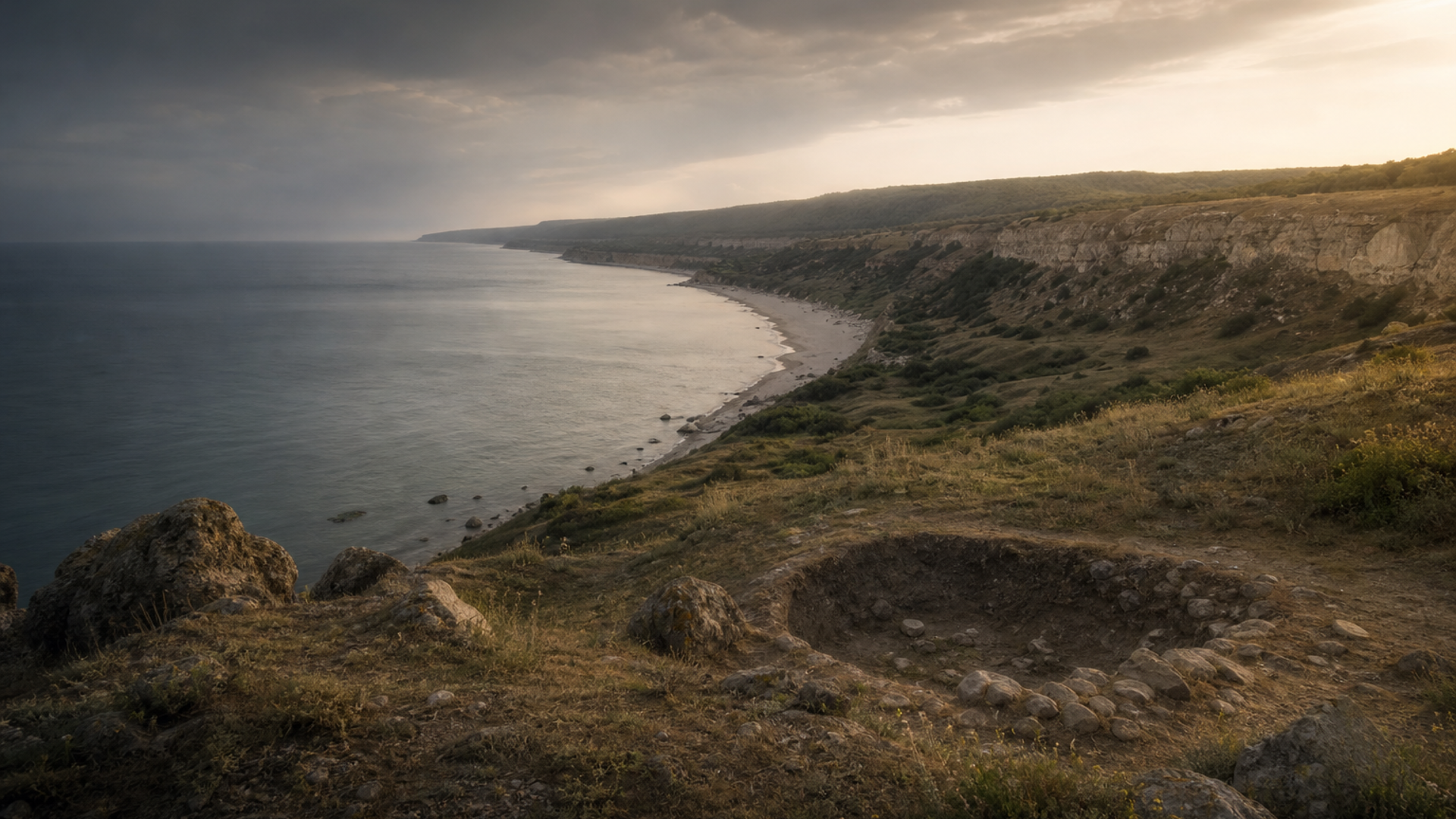
Archaeological remains allow glimpses into everyday rhythms beneath the dazzling funerary displays. Pottery, polished stone tools, and copper implements point to a mixed economy of cereal agriculture, animal husbandry, fishing, and specialized crafts. The Varna cemetery itself is a funerary landscape: body placement, grave goods, and collective vs. single interments reflect a society that used ritualized death to convey status.
Metalwork — thin beaten gold sheets, copper tools, and sophisticated ornaments — suggests skilled workshops and artisans. Textile impressions on some finds imply woven clothing; shells, Spondylus beads, and exotic raw materials signal exchange along coastal routes. Stable isotope studies elsewhere in the region indicate diets based on cereals, pulses, and varying proportions of animal protein; similar patterns are plausible at Varna but require more direct dietary sampling to confirm locally.
Social life at Varna was likely hierarchical and performative. Public displays in death (grave architecture and wealth concentration) probably mirrored living inequalities: elites controlled access to prestigious goods and the social memory preserved in monumental burials. Yet many aspects of household organization, gender roles, and daily ritual remain archaeologically subtle and are interpreted cautiously.