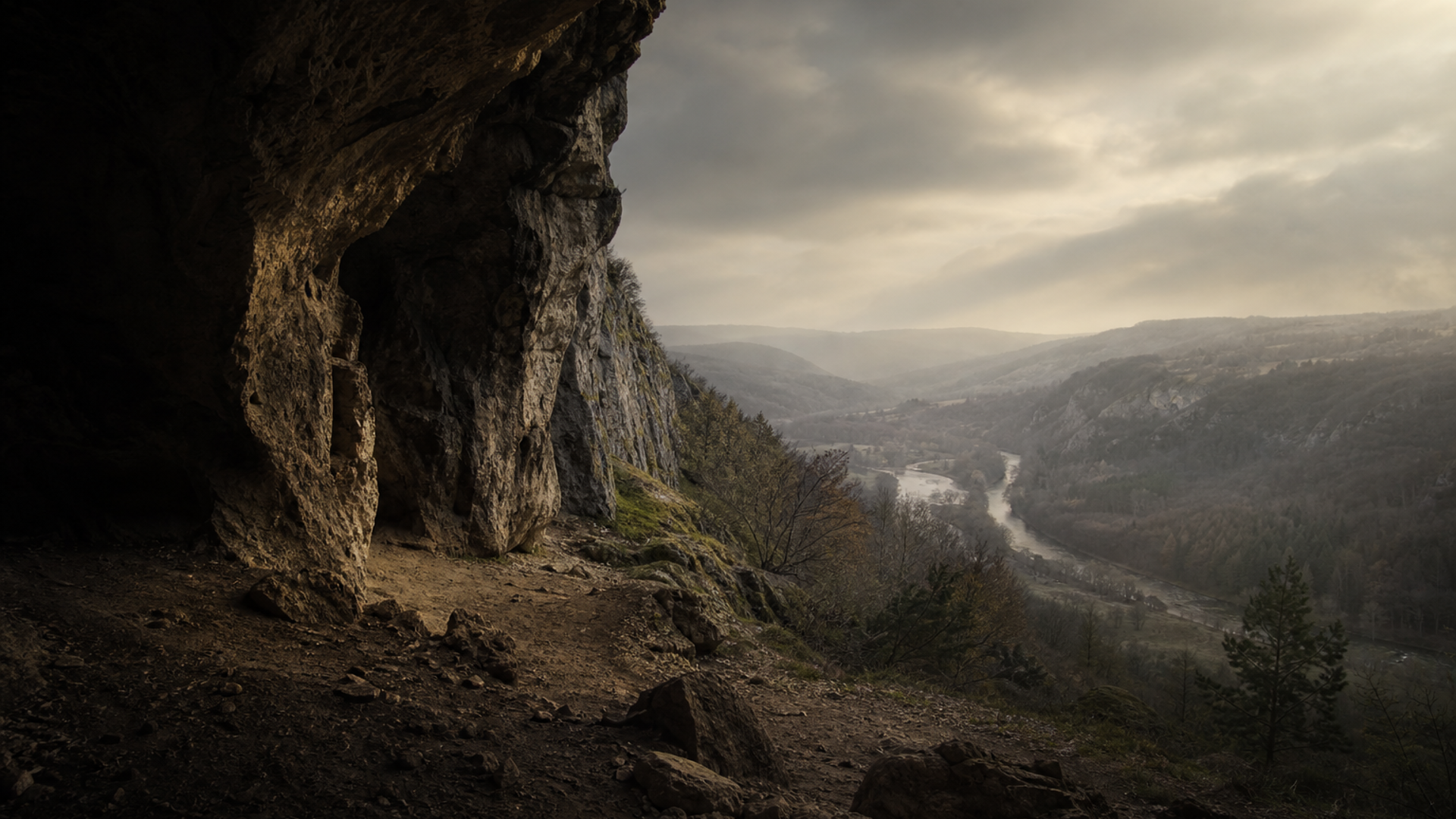
Daily life for the people who used Goyet cave would have been framed by a harsh, variable Pleistocene landscape: open plains punctuated by patches of woodland, with cold-adapted fauna such as reindeer, horse and large ungulates. Archaeological assemblages from Goyet more broadly include blade and bladelet industries, retouched tools, pierced bone, and personal ornaments in other layers — indicators of sophisticated toolkits and symbolic behavior. Hearth features and refitting studies show here and elsewhere that camps were organized around small, task-divided activities: raw material preparation, tool production, hide processing and food preparation.
Social groups were likely small and highly mobile, moving across river valleys and limestone shelves that funnelled animals and people. Articulate social networks are implied by long-distance exchange of raw materials documented in the region; such networks would help buffer environmental risk through information and mate exchange. However, at Goyet Q53-1 specifically, direct evidence of social structure is limited. The material record preserves the traces of skillful adaptation and cultural expression, but interpreting social roles or group sizes from a single burial-associated individual remains speculative.