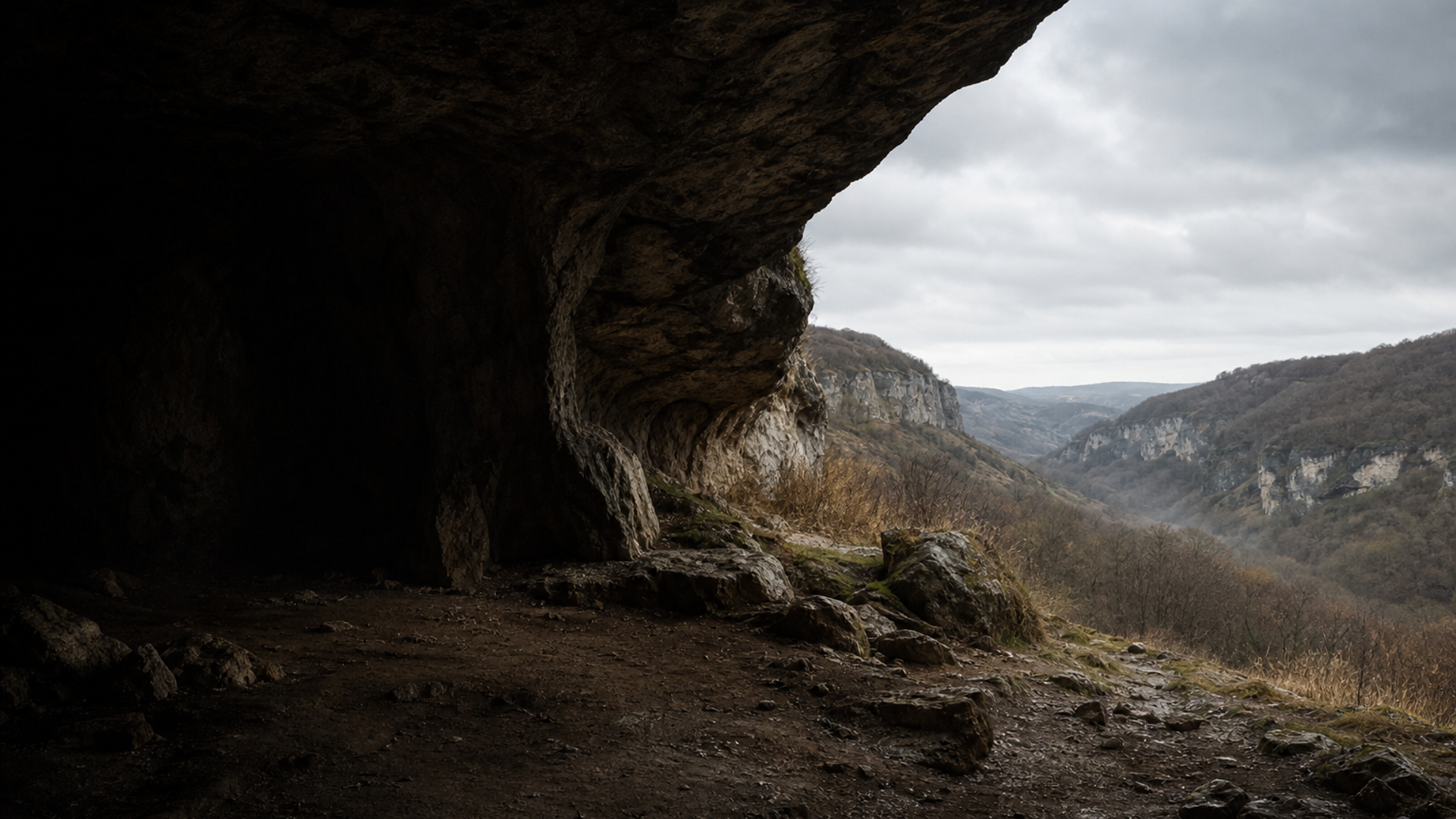
Archaeological layers at Goyet capture material traces of daily survival under a Paleolithic sky. Excavations reveal dense concentrations of stone tools, butchered faunal bones, and hearth features that suggest repeated use as a living place and processing station. These remains paint a picture of small, mobile groups exploiting seasonal resources—hunting ungulates, scavenging, and collecting raw materials for toolmaking and personal ornamentation.
Social life would have been organized around cooperative hunting, raw material exchange, and knowledge transmission: lithic technology (carefully fashioned blades and backed tools) implies skilled knappers who shared technical knowledge across camps. Ornamentation and symbolic objects recovered elsewhere at Goyet and comparable sites hint at social signaling and group identity in cold climates. The cave setting itself, with sheltered chambers and natural acoustics, could have hosted ritual acts, storytelling, and the maintenance of social bonds during long winters.
Archaeological data indicate adaptability: toolkits and subsistence remains shift with changing environments. Yet many behavioral details—kinship rules, residence patterns, and the extent of long‑distance networks—remain invisible without more genetic and isotopic samples.