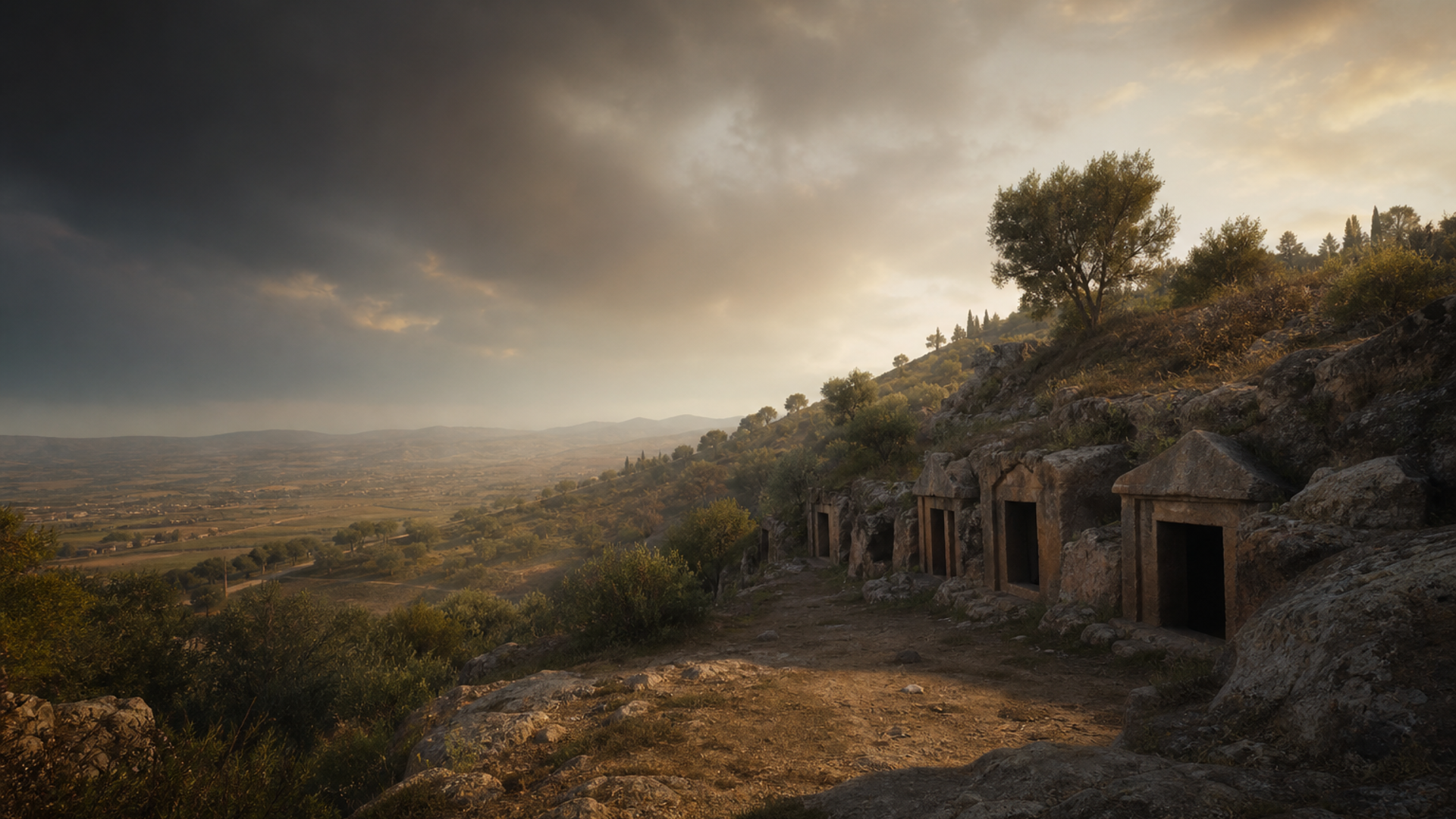
The landscape of Grosseto in the Iron Age was a tapestry of hilltop settlements, clustered farmsteads and funerary landscapes. Tomb chambers at Vetulonia and Marsiliana often contained carved stone, bronze fibulae, painted pottery and luxury imports—objects that dramatize status, craft specialization and long-distance exchange. Urban centers organized agricultural hinterlands and mediated trade in salt, metals and ceramics along coastal and riverine routes.
Everyday life would have revolved around mixed farming, metalworking and textile production, while ritual life centered on funerary display: tomb architecture and grave assemblages were public performance as much as private remembrance. Archaeological data indicates complex social differentiation—elite tombs appear alongside modest burials—yet material wealth does not map simply to genetic difference. Where ancient DNA can be integrated with burial context, it sometimes highlights kin-based tomb groups, but in Grosseto the available genetic sample set is moderate and does not yet resolve household structures.
Isotopic and osteological studies done elsewhere in Etruria point to individual mobility—for merchants, artisans and brides—so we can imagine Grosseto as a place of rooted households and arriving travelers, where identity was negotiated through objects, language, and kin networks.