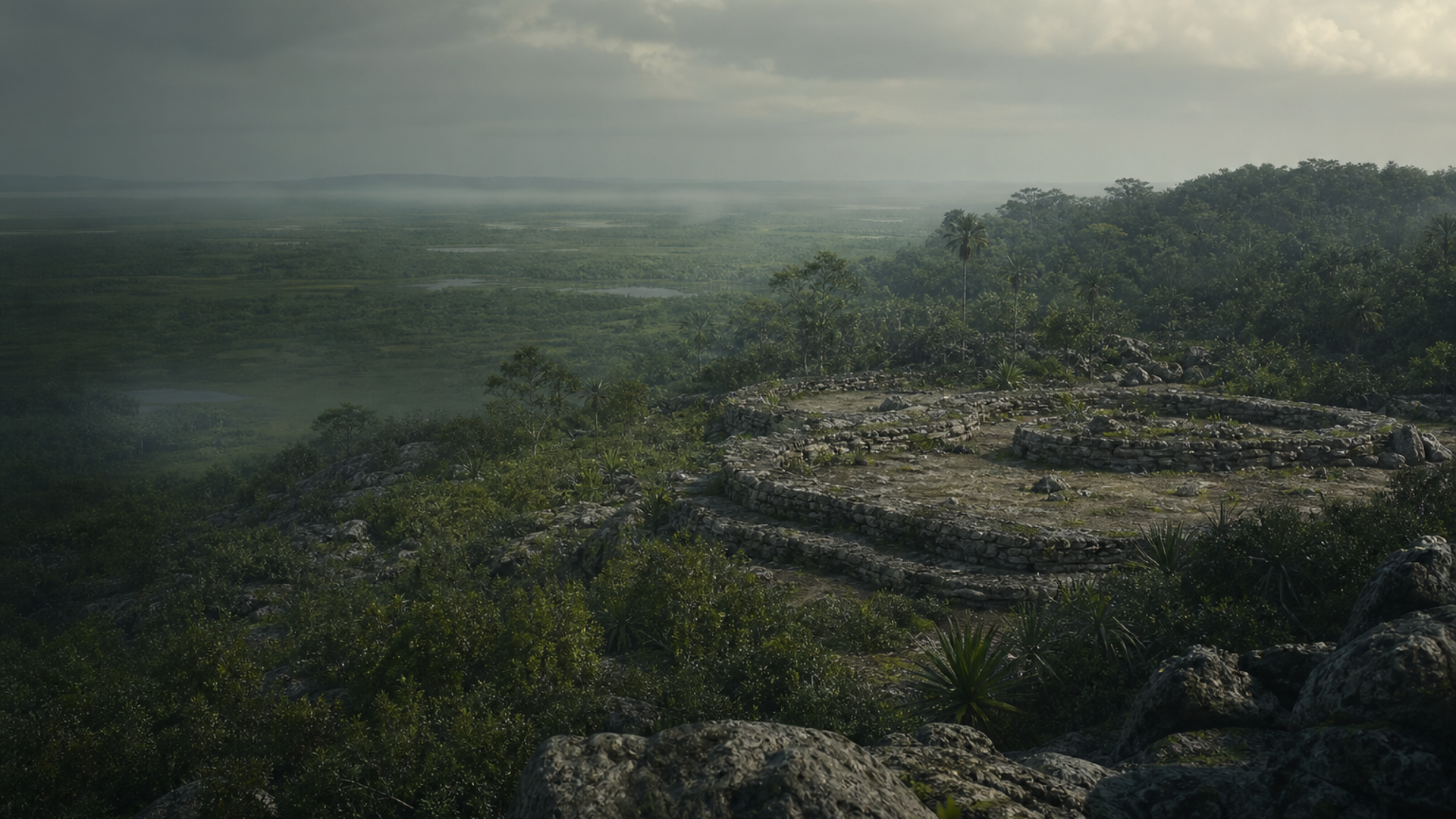
In the hush before dawn, the Guayabo Blanco shoreline would have been a theater of subsistence: fishers and shellfish gatherers working tidal flats, hunters tracking small mammals in the scrub, and craftspeople preparing simple stone tools and organic implements. Archaeological data indicates a reliance on marine protein — shells, fish bones, and turtle remains commonly anchor Archaic assemblages regionally — alongside gathered plants and opportunistic terrestrial game. Structures are ephemeral in the coastal wetlands; platforms, brush shelters, and short-term hearths are archaeologically elusive but consistent with a mobile, maritime-adapted lifeway.
Social networks likely extended along the archipelago and toward the nearby mainland. Exchange of raw materials and ideas could have occurred via canoe-borne routes that linked the Ciénaga de Zapata to other Cuban headlands and to islands beyond. Material culture at Guayabo Blanco shows functional simplicity rather than elaborate ceremonial assemblages; this does not imply cultural poverty but highlights a resilient adaptation to a watery environment.
Archaeobotanical and zooarchaeological sampling at the site remains sparse; interpretations of diet and seasonal patterns are therefore tentative. Ongoing fieldwork aimed at expanding excavation horizons and systematic sampling will refine reconstructions of household composition, mobility strategies, and social organization.