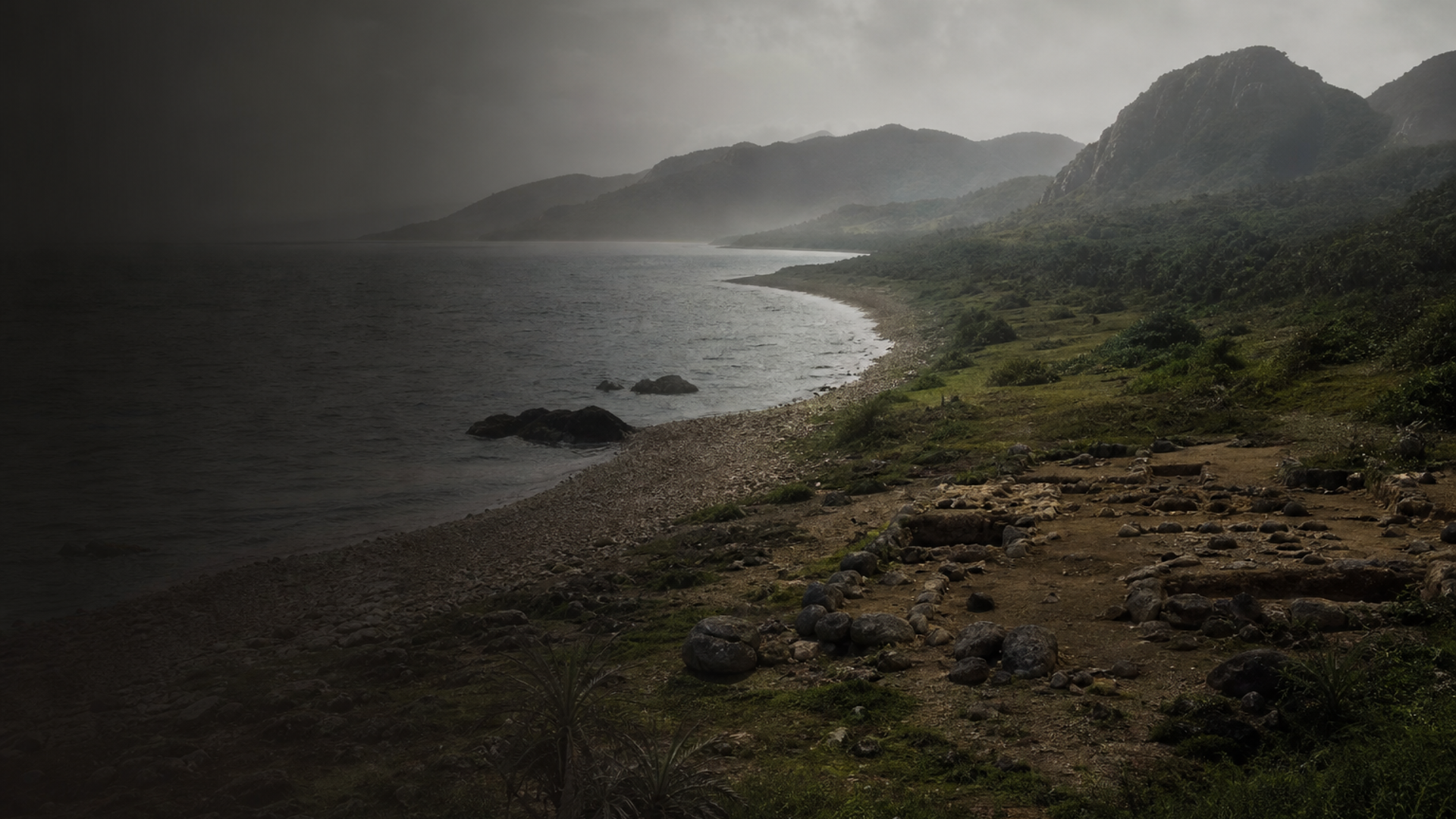
The Hanben archaeological horizon paints a cinematic scene: low stone hearths, piles of discarded shells, scattered pottery sherds, and the glint of shell beads once worn at the throat or wrist. Faunal remains and midden composition at Blihun indicate a heavy reliance on marine resources—fish, shellfish, and coastal mollusks—complemented by horticulture and foraged plant foods where soils permitted. Ground-stone tools and adzes attest to woodworking and canoe construction, essential skills for communities living on the island's exposed shorelines.
Burial practices at Hanben are variable but often include flexed inhumations with grave goods such as shell ornaments, simple pottery, and occasionally stone implements. Such mortuary variability can reflect social differentiation, age- and gender-specific roles, or shifting ritual choices through time. Houses likely stood on post pads or shallow foundations; organic architecture rarely survives, but posthole patterns and associated floor deposits suggest semi-permanent villages with seasonal intensification of coastal harvesting.
Craftsmanship centered on local materials: coarse to fine ceramics, shell-working, and polished stone. Trade items—obsidian flakes or non-local shell types—point to mobility and exchange beyond the immediate coastline. Archaeological data indicates resilient lifeways adapted to Taiwan's dynamic coastal environment, though the details of social organization, leadership, and belief systems remain only partially visible in the material record.