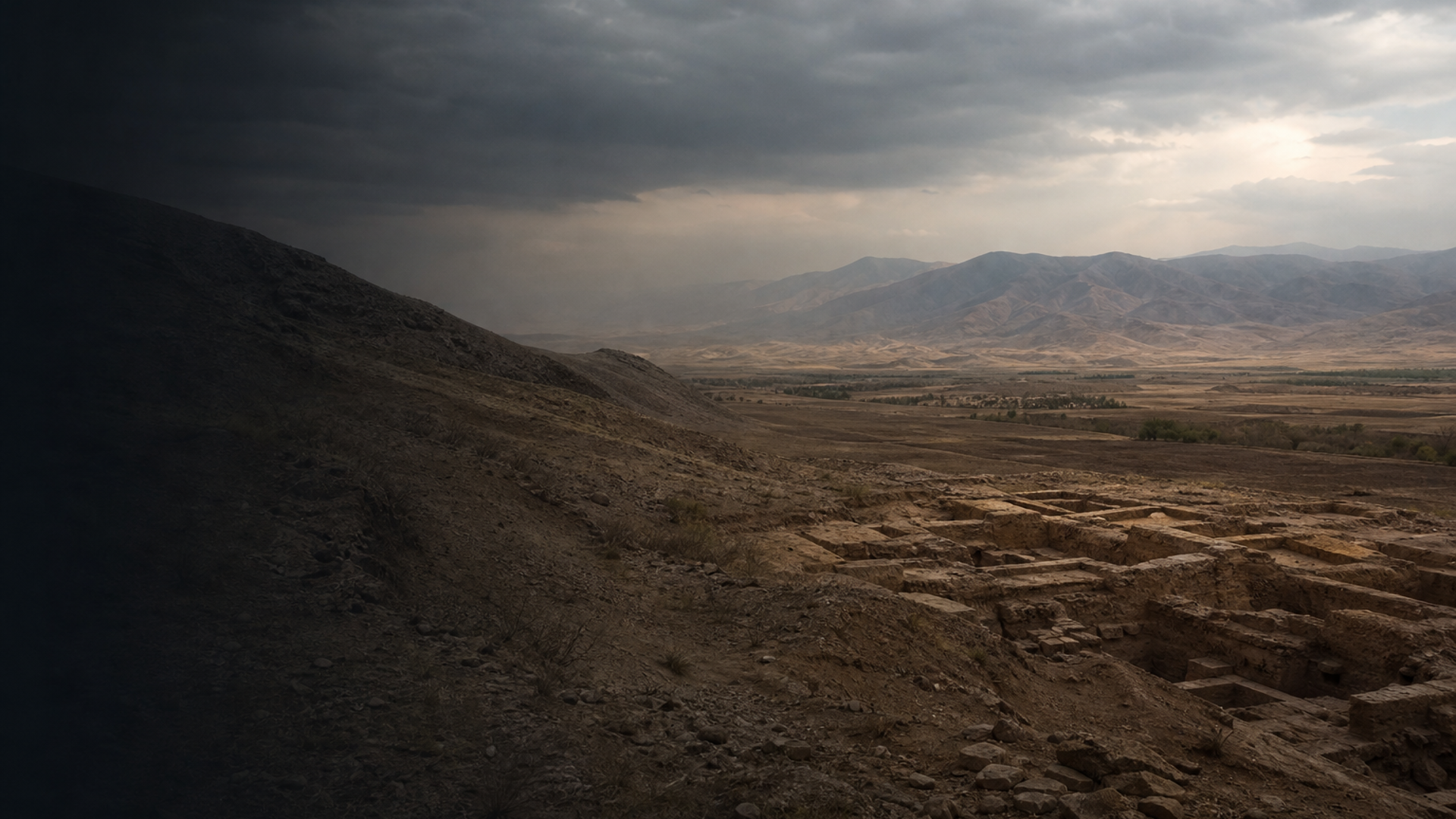
Twenty individuals sampled from Hasanlu provide a moderate but informative window into maternal and paternal diversity across the site's Iron Age range. Maternal lineages are relatively diverse: mtDNA haplogroups include J (4 samples), U (4), H (3), T (2), and HV (1). These haplogroups are widespread across the Near East and into West Eurasia and often appear in both Bronze and Iron Age contexts across the region; their presence at Hasanlu is consistent with a population carrying a mixture of Near Eastern and broader West Eurasian maternal ancestries.
Paternal resolution is limited: only a single reported Y‑DNA assignment (R) is noted among the dataset. With one Y call, any inference about patrilineal structure or male-mediated migrations remains highly tentative. Autosomal ancestry (genome-wide) would be required to resolve admixture proportions and connections to neighboring polities or steppe-derived gene flows; if available, such data could test whether Hasanlu's people reflect continuity from local Chalcolithic/Bronze Age populations or admixture with northern/steppe groups.
Because the sample size is modest (n=20) and Y coverage is sparse, conclusions must remain cautious. Nevertheless, the mtDNA profile underscores continuity with broader Near Eastern maternal lineages and highlights the value of combining stratigraphic context with genetic data to read population dynamics over centuries.
Bullets
- mtDNA diversity dominated by J, U, H, T, HV, suggesting Near Eastern and West Eurasian maternal ties.
- Y-DNA limited to one R assignment: patrilineal patterns remain highly tentative.