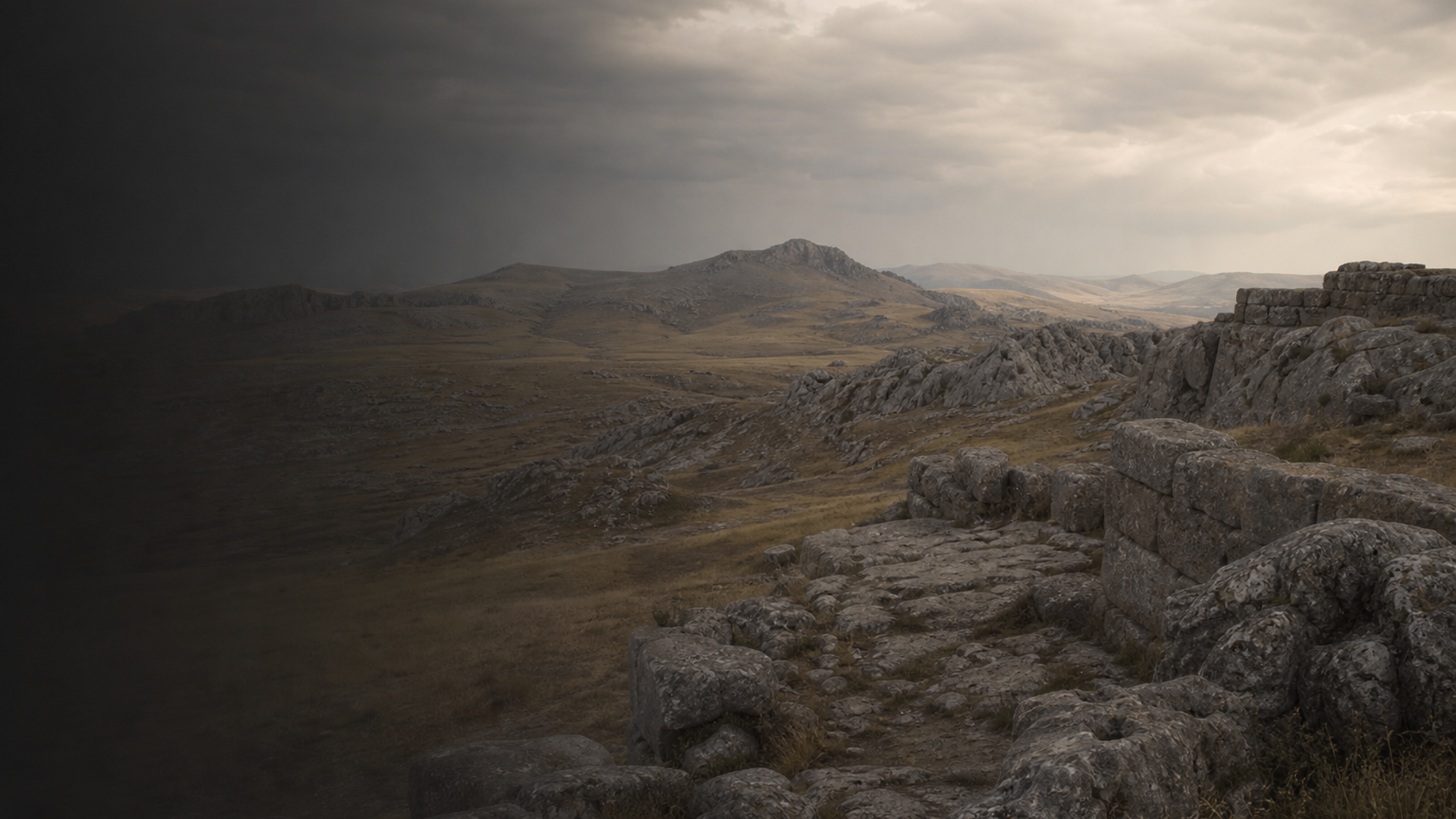
Archaeological traces from the Roman-era layers at Boğazköy suggest a lived environment woven between the ruins of empire. People moved among monumental stone facades and terraces, exploiting ancient infrastructure while practicing daily routines typical of central Anatolia: small-scale farming on upland plots, local craftsmanship, and episodic participation in regional markets. Material culture from comparable Roman-period Anatolian sites—pottery forms, metal tools and orthodoxes of domestic architecture—provide analogues for life here, though direct evidence at Hattusa is patchy.
Archaeological data indicates religious and commemorative continuity: sanctuaries and sacred enclosures in the Hittite core appear to have retained local significance, attracting visits, offerings or maintenance. Such ritual persistence could have anchored households and itinerant groups, creating a mosaic of short-term habitation and long-term reverence. Social life likely blended Roman provincial administrative ties with enduring local traditions: language, rites and kinship practices adapted to new political realities while preserving elements of older Anatolian identity.
Given the limited excavation evidence for Roman-period domestic assemblages at Hattusa, reconstructions of everyday life remain probabilistic. The three genetic samples provide complementary human scale to this archaeological picture, hinting at the people who inhabited those stone corridors and fields.